Trump Faces Backlash After Illegal Coordination Claim Over MAGA Inc. Funds
President Trump’s claim that MAGA Inc. funds are ‘his money’ raises legal alarms about illegal Super PAC coordination ahead of midterms.
The White House/Wikimedia Commons
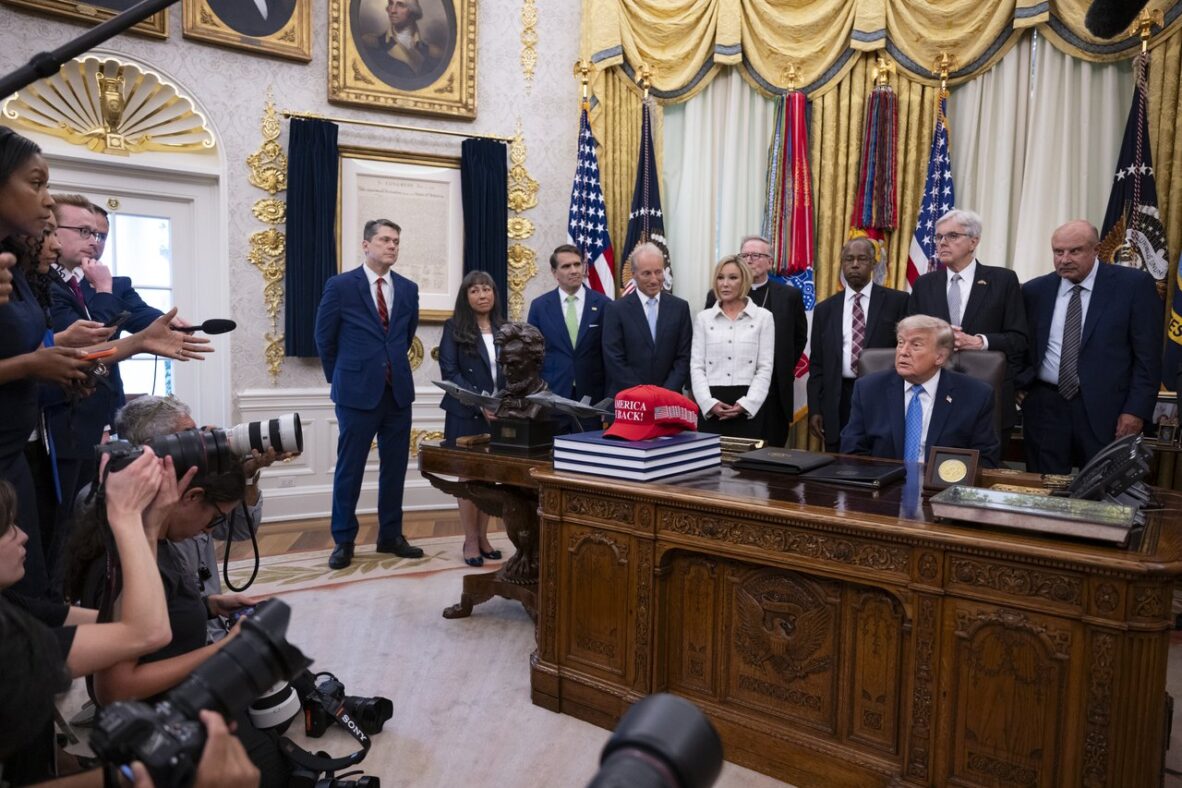
President Donald Trump sparked swift criticism on September 4, 2026, after declaring in the Oval Office that the funds controlled by his MAGA Inc. Super PAC are “my money,” a statement experts warn could imply illegal coordination with his campaign ahead of the 2026 midterm elections. The controversial comment has drawn renewed scrutiny over the blurred lines between Trump’s personal finances and political fundraising operations.
Trump’s Statement Raises Legal Red Flags
During a Friday press briefing, President Trump responded to questions about MAGA Inc., the Super PAC supporting Republican candidates in the upcoming midterms. Trump claimed, “This money from MAGA Inc. This is my money that I control. We have around $1 billion that I can spend.”
Legal experts and political watchdogs immediately flagged the assertion as problematic. By law, Super PACs operate independently and are prohibited from coordinating directly with candidates or campaigns. Trump’s statement suggested a direct control over funds that legally belong to the Super PAC, raising questions about potential violations of campaign finance laws.
“It’s illegal to coordinate with Super PACs,” said Melanie D’Arrigo, a former Democratic congressional candidate and healthcare advocate. “And Trump gutted the agency that polices and investigates that.” The reference is to the Federal Election Commission (FEC), which has seen diminished enforcement capacity under Trump’s administration.
Potential Legal and Political Consequences
Axios White House reporter Marc Caputo explained the gravity of the situation, noting that it is unlawful for Trump to use Super PAC and nonprofit political funds for unauthorized purposes. However, Caputo added, “The president could theoretically do that anyway – take the money, as much as $800 million (he says about a billion) – and then self-pardon.” This highlights the unprecedented legal and constitutional questions surrounding Trump’s actions as sitting president.
Political analysts and journalists have reacted with a mix of disbelief and satire. Progressive commentator Molly Jong-Fast responded with laughter, while Eric Michael Garcia, bureau chief for The Independent, joked about Senate Majority Leader John Thune’s (R-SD) presumed frustration with the unfolding scandal.
“Trump could illegally pocket the hundreds of millions in this Super PAC, and Republicans in Congress will pretend like it’s not happening while Susan Collins writes a strongly worded letter telling Trump to cut it out,” lamented columnist Ben Palmer, underscoring perceived inaction among Republican lawmakers.
Trump’s Midterm Strategy and Use of Super PAC Funds
When questioned about how he plans to use the substantial funds, Trump said, “I’m going to spend whatever amount of money necessary to try and help us,” adding, “I think we have a chance at doing well in the midterms.” He indicated a campaign tour to boost GOP candidates in competitive districts, estimating about half a billion dollars would be spent on these efforts.
The MAGA Inc. Super PAC has been unusual in its reluctance to share funds with other GOP contenders, concentrating resources instead on Trump-aligned candidates. This approach has raised internal Republican tensions and concerns about the fairness and legality of campaign finance operations this election cycle.
Broader Implications for Campaign Finance Enforcement
Trump’s comments come amid ongoing debates over the weakening of federal agencies responsible for enforcing political finance laws. Critics argue that with the FEC’s diminished capacity and Trump’s direct control over related nonprofits, the traditional safeguards against illegal campaign coordination are eroding.
Advocates for campaign finance transparency warn that Trump’s actions could set a dangerous precedent, further blurring the lines between personal wealth, political fundraising, and official campaign efforts. This may complicate efforts to ensure fair elections and accountability ahead of the critical 2026 midterms.
As the controversy unfolds, questions remain about whether any formal investigations will be launched, and how Congress—controlled by Republicans—will respond to allegations of illegal coordination. For now, Trump’s blunt claim of ownership over Super PAC funds has drawn a swift warning from critics and legal observers alike.