President Trump Claims ‘Hundreds of Billions’ Made for U.S. in AI-Fueled Truth Social Posts
President Trump posted AI-generated images claiming huge stock market gains and depicting U.S. dominance amid ongoing tensions with Iran.
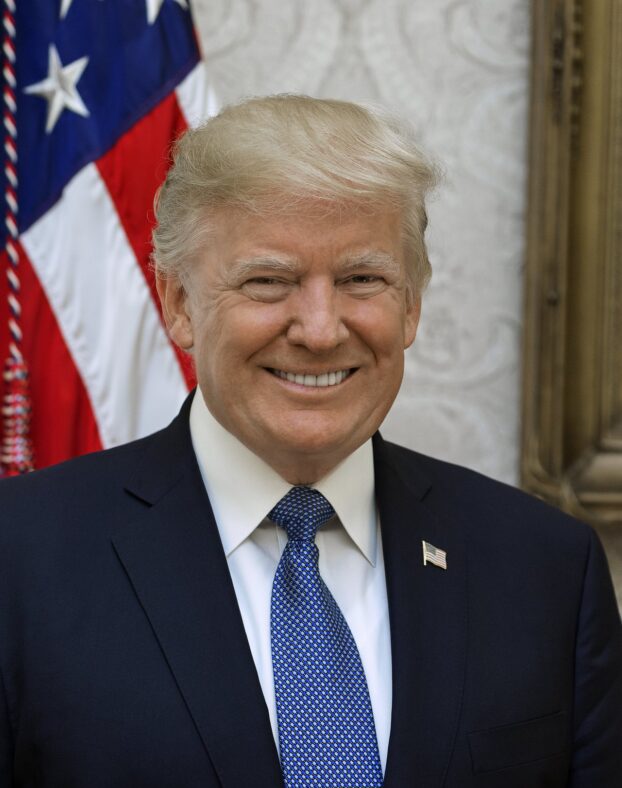
Shealeah Craighead/Wikimedia Commons
President Donald Trump spent much of Sunday, September 6, 2026, sharing a series of AI-generated images and bold claims on his social media platform, Truth Social. Among the posts, Trump asserted he has generated “hundreds of billions of dollars” on stocks and other investments for the United States, while also depicting himself as a heroic figure amid ongoing conflict with Iran.
Trump’s Unsubstantiated Financial Claims
Throughout the day, the 80-year-old president posted dozens of AI-crafted images and messages, including one showing him monitoring stock market activity inside the White House. The caption boldly stated that Trump had made “hundreds of billions of dollars on stocks, and many other type holdings, for the U.S.A., not myself.” However, these claims were not accompanied by any verifiable evidence.
Trump’s administration notably took a 10% ownership stake in semiconductor company Intel in August 2025, an investment now worth over $50 billion, which may be the closest factual basis for his assertions. Still, experts and critics remain skeptical of the broader financial claims, especially given the lack of transparency and documentation.
Additionally, the Trump Media parent company’s controversial “Truth API” feature, which charges $100,000 monthly for early access to policy announcements potentially affecting financial markets, has drawn scrutiny. In July 2026, several U.S. senators called for a Securities and Exchange Commission investigation to determine whether this service violates federal securities laws.
AI Imagery Amplifies Trump’s Portrayal as National Hero
Alongside financial boasts, Trump used AI images to create a dramatic, larger-than-life persona. Several posts depict him as an action hero, including one where he appears alongside George Washington on horseback, and another showing him as a wrestler draped in an American flag and a MAGA hat reminiscent of Hulk Hogan.
Other images portray Trump commanding futuristic robots with the Capitol in the background or leading a Space Force operations center. This visual campaign aligns with his long-standing “Make America Great Again” messaging, emphasizing strength, leadership, and American dominance.
Depictions of U.S. Dominance and Iran Conflict
Trump’s AI posting spree also included striking images suggesting sweeping U.S. territorial claims. One image labels the Strait of Hormuz a “new U.S. Territory,” while another renames Lake Ontario as “Lake America.” The Moon was also featured, with an American flag and the phrase “The Moon is Ours,” following an executive order Trump signed to rename the lake, which drew criticism from Canadian Prime Minister Mark Carney.
Several AI-generated visuals also focused on Iran, showing explosions destroying vessels and infrastructure, maps labeling Iran a “Failing Nation,” and charts claiming Iran’s currency is “destroyed.” These posts come amid the ongoing U.S.-Iran conflict, now over six months into major combat operations initiated by the U.S. and Israel.
While Iran’s economy has faced contraction and inflation spikes during the war, experts caution against assuming imminent collapse. Despite Trump’s vivid portrayals, there remains little public indication that either side is moving toward negotiations.
Criticism and Calls for Transparency
The Trump administration did not respond immediately to requests for comment on the AI images or the financial claims. Critics argue that the president’s use of AI-generated content on official and social media channels blurs the line between fact and fiction, potentially misleading the public.
Financial watchdogs remain concerned about the Truth API’s role in offering early market-moving information to select clients. The SEC’s pending review could lead to regulatory action if violations are found.
President Trump’s AI-driven social media activity highlights the increasingly complex intersection of technology, politics, and finance in 2026, raising questions about accountability and the shaping of public narratives.