Carney Draws Red Line on Trump Trade Deal Over Canadian Auto Jobs
Canadian Prime Minister Mark Carney insists on protecting auto jobs in trade talks with President Trump amid Stellantis factory dispute.
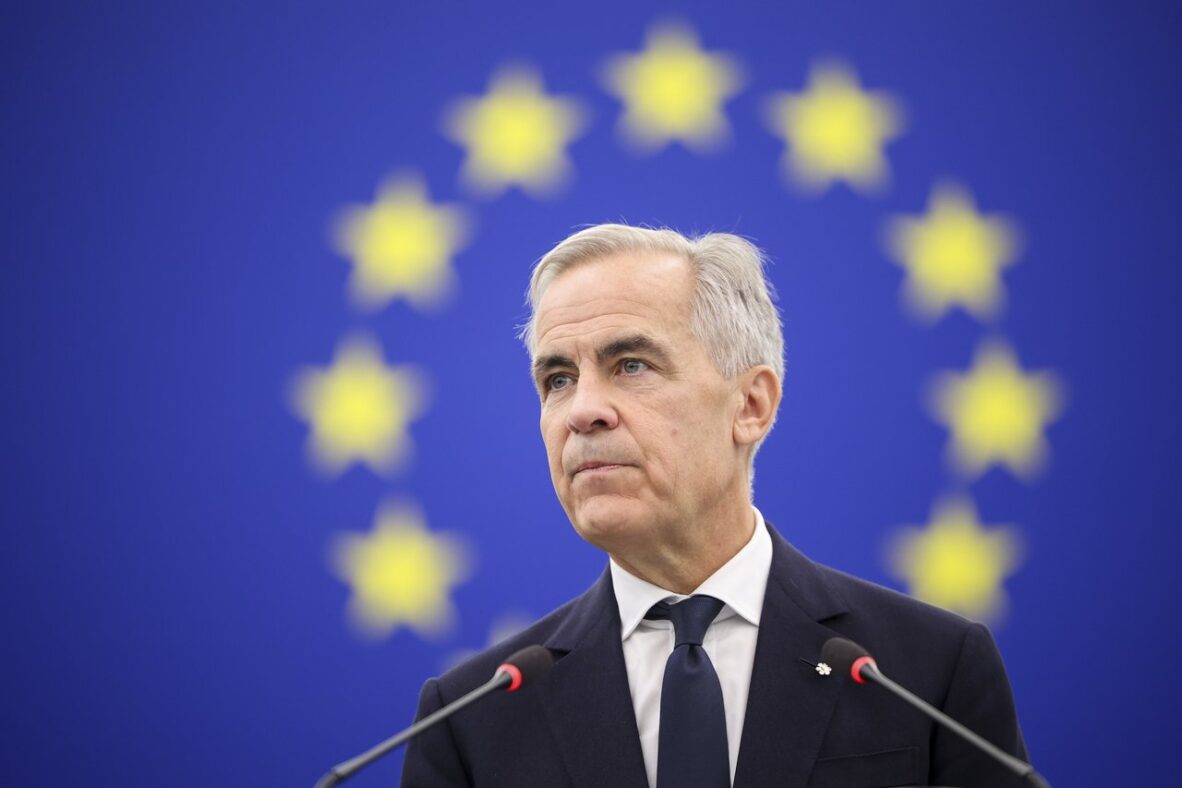
European Parliament/Wikimedia Commons
Canadian Prime Minister Mark Carney has firmly stated that any trade deal with President Donald Trump must protect Canada’s automotive industry, as Ottawa works to prevent the sale of a major car factory in Brampton, Ontario. The dispute arises amid the transfer of Jeep Compass production to Illinois and the laying off of more than 2,000 Canadian workers.
Carney’s Firm Stance on Auto Industry Protection
Speaking at a press conference in Manila ahead of the Association of Southeast Asian Nations (ASEAN) summit, Carney emphasized that safeguarding Canadian manufacturing jobs is a non-negotiable element of any trade agreement with the United States. “This government will not settle for a deal with the United States that is not consistent with a viable Canadian auto sector,” he said.
He acknowledged progress in negotiations but underscored the ongoing challenges. “We’re making progress. We’re not there yet,” Carney remarked about talks with Washington, which resumed after a suspension in August due to last-minute U.S. demands deemed unacceptable by Canada.
Stellantis Factory Sale Sparks Government Action
The immediate cause of tension is Stellantis’ planned sale of its Brampton assembly plant to Canadian armoured-vehicle maker Roshel. Stellantis abandoned plans to produce the Jeep Compass at the plant, shifting production to Illinois instead and resulting in over 2,000 layoffs in Canada.
Canada’s Industry Minister Mélanie Joly has accused Stellantis of breaching a funding agreement related to up to C$529 million ($370.6 million) committed by Ottawa in 2022 to retool the Brampton and Windsor plants for electric vehicle production. Joly stated, “When it comes to Stellantis, our position is clear: they cannot close the plant.”
Stellantis has proposed repaying C$24 million ($17 million) in federal funding tied to Brampton, but Canadian officials say the company may owe much more. Ottawa has given Stellantis 30 days to address these alleged breaches or face legal action to recover funds.
Efforts to Retain Factory Jobs
Carney confirmed that the federal and Ontario governments are preparing an “aggressive package” to persuade Stellantis to reconsider the sale. He discussed this plan with Ontario Premier Doug Ford the weekend before the ASEAN summit.
“Make no mistake, the expectation is that Stellantis fully respects its engagements to the workers and to Canada,” Carney said. Meanwhile, Stellantis argues the sale will return the factory to productive use, and Roshel has promised to prioritize former plant employees when hiring begins, with potential to support more than 2,000 jobs.
Political Fallout and Broader Trade Strategy
The dispute has drawn criticism from Conservative opposition Leader Pierre Poilievre, who called for Minister Joly’s dismissal over the loss of Canadian auto jobs and accused the Liberal government of failing to hold Stellantis accountable.
In parallel with the North American trade tensions, Carney announced two significant free trade breakthroughs in Asia. Canada has concluded negotiations for an agreement with the Philippines, aiming for a 2027 signing, which could triple Canadian exports to that country by 2035, benefiting agriculture and forestry sectors.
Canada has also nearly finalized a free trade deal with the Association of Southeast Asian Nations (ASEAN), a market of nearly 700 million people and an economy worth almost C$6 trillion. Ottawa estimates this agreement could add nearly C$2 billion ($1.4 billion) to Canada’s economy and create almost 14,000 jobs, particularly in agriculture and manufacturing, with hoped-for implementation after further negotiations and ratification.
Carney highlighted the urgency and ambition of these efforts, saying, “Two agreements in one year: that is the speed and ambition this moment demands.”
As Canada presses to protect its automotive sector at home, it simultaneously broadens its economic horizons abroad, underscoring the high stakes of trade policy in a changing global landscape.