Federal Judge Rules Only Congress Can Rename Kennedy Center; Trump’s Name Removed
A federal judge ordered removal of Trump’s name from the Kennedy Center, ruling only Congress can rename the national memorial.
Gedalia Vera/Wikimedia Commons
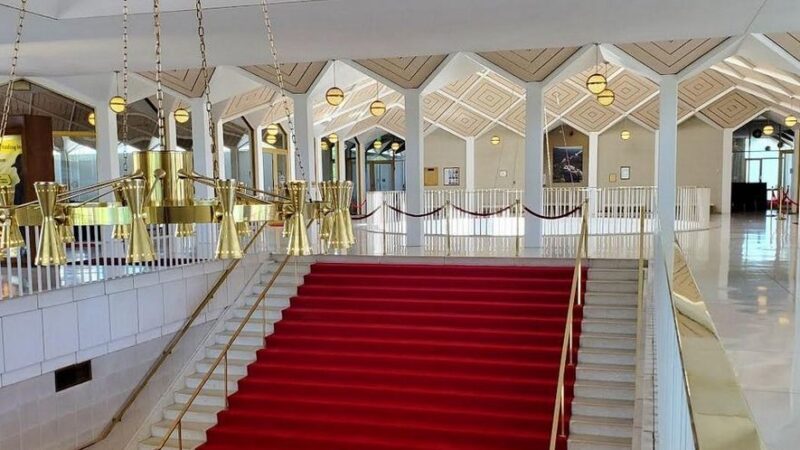
The Kennedy Center in Washington, D.C., is once again bearing its original name after a federal judge ruled that only Congress has the authority to rename the national memorial. Workers removed President Donald Trump’s name from the building on Saturday following the court order, ending a controversial renaming effort by the center’s board.
Judge’s Ruling on Authority to Rename
U.S. District Judge Christopher Cooper ruled on May 29 that the Kennedy Center’s board lacked the authority to rename the John F. Kennedy Center for the Performing Arts without congressional approval. Cooper wrote, “Congress gave the Kennedy Center its name, and only Congress can change it.” The judge also found that the board could not install a memorial for Trump at the center without Congress authorizing it.
This ruling clarified that the Kennedy Center, as a federally established memorial and cultural institution, cannot be rebranded by its board alone. The decision came after President Trump’s handpicked board voted to add his name to the venue following his public suggestion in an August post on Truth Social.
Removal of Trump’s Name Completed After Deadline
Construction crews began removing the large letters spelling out Trump’s name early on the Saturday after the court deadline. The Justice Department had requested a 12-hour extension past the original June 12 deadline due to weather delays, expecting to finish by early June 13. By Saturday, an official confirmed to the court that all required removals were complete, including changes to the Kennedy Center’s website, which reverted to its prior branding.
The visible removal of Trump’s name from the building’s facade marks the most public sign of the court ruling. The letters no longer appear anywhere on the premises or in official online materials.
Ongoing Disputes Over Kennedy Center’s Operations
The legal battle over the name has not settled broader disagreements about the center’s future. Shortly after the judge blocked the renaming, the Kennedy Center board voted to temporarily close the venue, citing financial difficulties and the need for structural repairs. However, a court blocked the planned two-year closure starting in July.
Rep. Chellie Pingree, ranking Democrat on the House Appropriations subcommittee overseeing the Kennedy Center, criticized the administration’s handling of the center’s programming, ticket sales, and workforce. She called for maintenance decisions to be made transparently with congressional oversight. The exact scope and timing of needed repairs remain unclear.
Significance of the Naming Decision
The ruling emphasizes that changing the name of a congressionally established memorial requires congressional action, not just a board vote. While public buildings often carry political symbolism, national memorials like the Kennedy Center have an added legal constraint protecting their designated identity.
For visitors, the change is straightforward: the building now presents itself plainly as the Kennedy Center without Trump’s name. For officials and observers, the case highlights ongoing tensions about how much control a presidential administration can exert over federally established institutions through appointed boards.
The removal of President Trump’s name resolves the immediate issue of signage and branding but leaves open questions about the center’s repair needs, potential closure plans, and governance going forward.
The Kennedy Center saga underlines that federal landmarks’ names are protected by law and that only Congress can authorize changes to those names.