House Speaker Mike Johnson Urged to Defend Ilhan Omar’s Rights After FBI Raid
Federal agents raided Rep. Ilhan Omar’s home last week, raising calls for House Speaker Mike Johnson to protect her legislative rights.
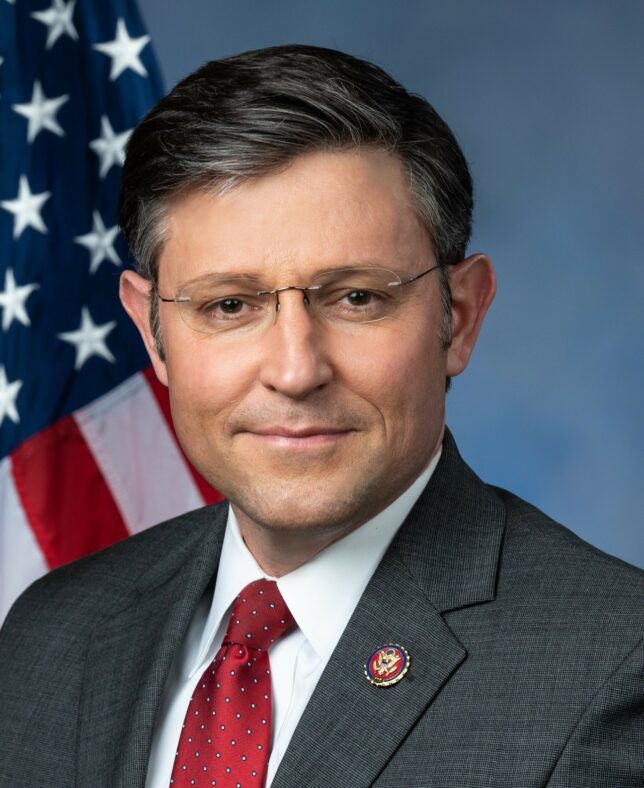
Mike Johnson/Wikimedia Commons
Federal agents seized Rep. Ilhan Omar’s laptop and cellphone during a raid on her Washington residence last week. The incident has sparked debate over congressional protections and the role of House Speaker Mike Johnson, R-La., who has yet to direct legal intervention on Omar’s behalf. Critics argue Johnson should act now to defend Omar’s rights as a member of Congress amid allegations tied to her immigration paperwork.
Controversy Over DOJ’s Actions Against Omar
The Trump administration’s investigation centers on allegations concerning Omar’s immigration documents, but The Washington Post reported these claims were investigated and dismissed years ago. Despite this, the Justice Department executed a search warrant at Omar’s home, raising questions about potential political motives. Omar’s attorneys claim the DOJ violated constitutional protections for legislators, specifically under Article I, Section 6, clause 1, which shields members of Congress from prosecution related to their legislative acts.
Omar recounted that federal agents requested she sign a document waiving her rights under the speech and debate clause, describing the request as “obnoxious.” She expressed disbelief at the demand, emphasizing her refusal to comply.
Historical Precedent and Congressional Protections
Legal precedents and Supreme Court rulings broadly extend the speech and debate clause protections to congressional acts, their staff, and related documents. The House has historically intervened to protect its members from executive overreach, even when it required bipartisan cooperation.
A comparable case involved Rep. Scott Perry, R-Pa., whose phone was seized in August 2022 during investigations into the January 6 Capitol attack. The House filed motions and legal briefs in early 2023 to assert Perry’s rights under the speech and debate clause, with bipartisan support from House Minority Leader Hakeem Jeffries, D-N.Y., and House Minority Whip Kathleen Clark, D-Mass. This set a precedent recognizing lawmakers’ personal phones as extensions of their offices, reinforcing Omar’s right to review seized materials to protect legislative content.
GOP Leadership’s Mixed Response
Republicans have vigorously criticized special counsel Jack Smith’s investigations and subpoenas targeting phone records of some members, accusing the Biden-era DOJ and Smith of breaching the speech and debate clause. However, the GOP’s response to Omar’s device seizure has been muted.
Minnesota’s House Majority Whip Tom Emmer expressed support for the investigation without raising separation of powers concerns. Meanwhile, Politico reported that House Speaker Mike Johnson has not yet instructed House General Counsel Matthew Berry to intervene on Omar’s behalf. Observers suggest Johnson might fear political fallout within the GOP caucus ahead of potentially challenging elections.
The Call for Bipartisan Defense of Congressional Rights
Despite political differences, legal experts and lawmakers stress the importance of protecting all members of Congress from executive branch overreach. The House as an institution benefits from ensuring its members can perform legislative duties free from intimidation or unlawful investigation.
Johnson has the authority to direct Berry to act in defense of Omar’s constitutional rights. Support from Democrats Jeffries and Clark could provide sufficient momentum to start that process. Critics argue Johnson’s duty to safeguard the privileges of a fellow House representative should override partisan disagreements or tactical considerations.
As the situation develops, the spotlight remains on Johnson’s leadership and his willingness to uphold congressional independence, even when it involves a Democrat like Ilhan Omar.
The stakes go beyond Omar’s case, touching on the broader principle that lawmakers must be free to debate and legislate without fear of retaliation from the executive branch.