Justice Ketanji Brown Jackson Dissents as SCOTUS Allows NH Ban on Student IDs for Voting
Justice Jackson dissents Supreme Court order permitting New Hampshire to ban student IDs in November midterms.
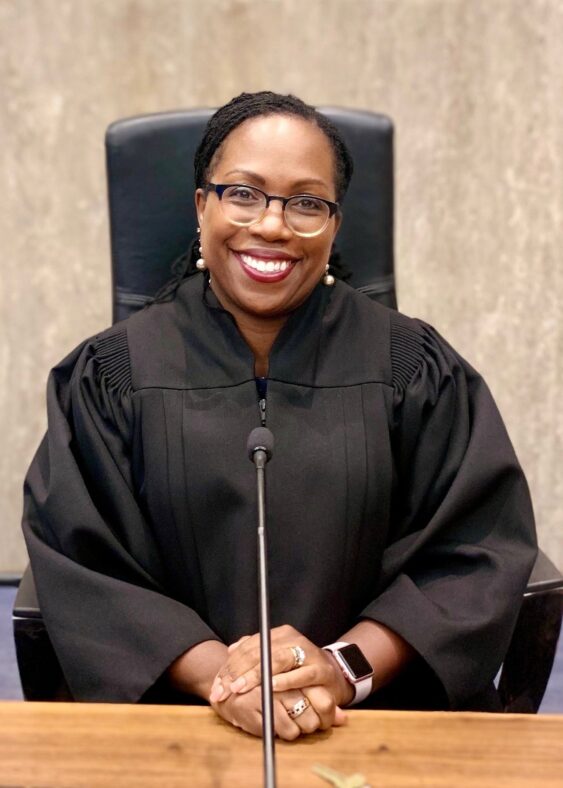
H2rty/Wikimedia Commons
Supreme Court Justice Ketanji Brown Jackson was the lone dissenting vote in a Supreme Court order issued just 12 days before the November midterm elections, which permits New Hampshire to fully ban student IDs as a valid form of voter identification.
Supreme Court Order and Jackson’s Dissent
The Supreme Court granted an emergency appeal requested by New Hampshire’s Republican Secretary of State David Scanlan, effectively allowing the state’s recently passed law to stand. This law prohibits student IDs from being used as backup identification to cast ballots in the upcoming midterms. Justice Jackson wrote, “I respectfully dissent because—even, and perhaps especially, when an election is looming—I would not disturb a clearly justifiable federal-court order issued to ensure that the public receives accurate information about a State’s electoral processes.” Her dissent highlights concerns about undermining election integrity and voter rights so close to an election.
Background on New Hampshire’s Student ID Law
Earlier this year, New Hampshire enacted legislation that disallows student IDs as acceptable voter identification. Initially, a federal judge allowed the law to stand, but then reversed the decision earlier this month, blocking the law temporarily. This reversal prompted an emergency appeal by Secretary of State Scanlan, which the Supreme Court granted, reinstating the ban just weeks before Election Day.
Legal Reactions and the Purcell Principle
Legal counsel for The Coalition For Open Democracy, the plaintiff challenging the ban, condemned the Supreme Court’s order, calling it “wrong.” They argued that the decision disrupts nearly three weeks of an injunction that protected student voters, injecting confusion into the election process. Their statement praised Justice Jackson for “stand[ing] for the Constitution, the right to vote, and a rational application of Purcell.” The Purcell principle advises courts against changing voting rules close to an election to avoid confusion and disenfranchisement.
Political Context and Election Implications
The ruling comes in the midst of a highly contested midterm election cycle. New Hampshire’s open U.S. Senate seat is rated as lean Democrat by the Cook Political Report, while the governor’s race is considered likely Republican. President Donald Trump, who lost New Hampshire in the 2024 presidential election to then-Vice President Kamala Harris, is now in his second term. The ban on student IDs could impact young voters’ ability to participate in the election, at a time when turnout and voter access remain central political issues.
The Supreme Court’s order underscores the growing tensions surrounding voting rights and election administration as the nation approaches the midterms, with Justice Jackson standing uniquely opposed to the majority’s decision affecting New Hampshire’s young voters.