Michigan Senate Candidate El-Sayed Attributes Israel Questions to Bias Over Name and Faith
Michigan Senate hopeful Abdul El-Sayed claims media scrutiny over Israel stems from his name and faith, deflecting focus from state issues.
Conlan Houston/Wikimedia Commons
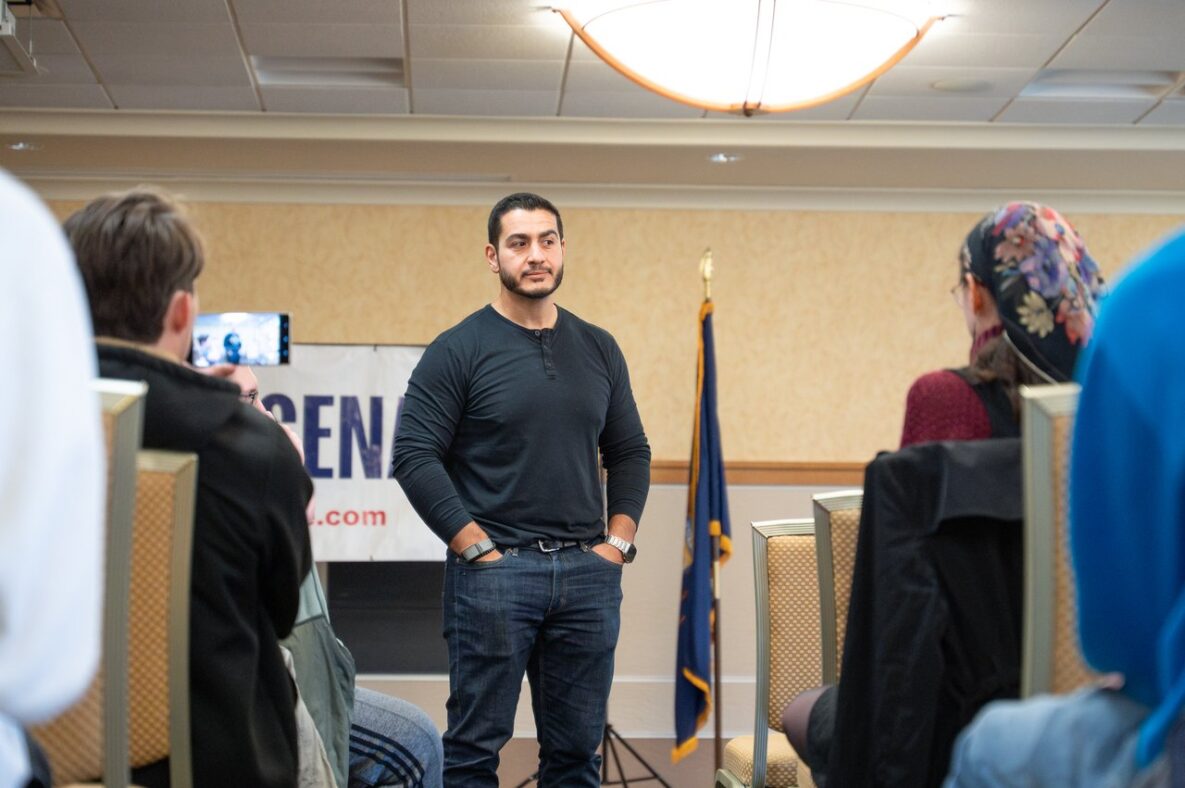
Michigan Democratic U.S. Senate candidate Abdul El-Sayed pushed back against persistent media questions about his stance on the Israel-Hamas conflict, suggesting that his Muslim faith and name are driving the focus rather than his policy positions. Speaking on Detroit Public Radio’s “MichMash” podcast in early September 2026, El-Sayed criticized the press for emphasizing a foreign conflict over pressing local issues affecting Michigan residents.
El-Sayed Challenges Press Focus Amid Campaign
During his interview with host Zach Gorchow, El-Sayed expressed frustration with repeated inquiries about the Israeli-Palestinian conflict. While he acknowledged his support for equal rights and self-determination for both Jewish Israelis and Palestinians, he declined to engage extensively on the topic. Instead, he pivoted to concentrate on domestic concerns, emphasizing the economic hardships facing Michigan’s 10 million residents.
“This has been hashed and rehashed,” El-Sayed told Gorchow. “I’m focused on what’s happening for the 10 million people in this state.” He criticized the media for making the race about a conflict thousands of miles away rather than food insecurity and affordability struggles at home.
Linking Media Scrutiny to Identity
El-Sayed suggested that the persistent questioning is not random but connected to his identity as a Muslim and the perceived implications of his name. “It tends to be the first question everybody likes to ask me,” he said. “I wonder why. I mean, does it have something to do with my name? Maybe, you know, how I pray?”
He implied that his faith and background may be causing the press to disproportionately spotlight his views on Israel, overshadowing other campaign issues. El-Sayed stopped short of explicitly labeling the media focus as racist or biased but made clear he felt singled out.
Campaign Stance on Israel and Aid
Throughout his 2026 Senate campaign, El-Sayed has maintained a firm position opposing aid to Israel amid the ongoing Israel-Hamas war. He has described donations from pro-Israel groups such as AIPAC as “legalized bribery,” a stance that has drawn controversy within Michigan’s Democratic ranks and beyond. This position has contributed to a drop in support among Jewish voters in the state, who represent roughly 1.3% of Michigan’s population, according to the Jewish Virtual Library.
Despite the backlash, El-Sayed has remained consistent, asserting that his campaign’s focus is on Michiganders’ needs rather than foreign policy debates. “It’s fascinating to me that I’m running to represent 10 million people who live here, and you want to ask about people living somewhere else,” he said.
Political Implications and Media Strategy
Jason Mudd, CEO of Axia Public Relations, commented on El-Sayed’s media approach, noting his ability to pivot back to local issues as a sign of message discipline. However, Mudd advised that directly naming perceived bias might improve El-Sayed’s communications strategy. “He’s pointing to bias,” Mudd said, “but he hasn’t named it outright, which weakens the framing.” He also suggested El-Sayed should clarify his policy stance more fully when the topic arises.
With Republicans controlling the White House under President Donald Trump’s second term and holding majorities in Congress, Michigan Democrats are watching closely as El-Sayed’s campaign unfolds in this pivotal midwestern battleground.
As El-Sayed continues his Senate bid, the tension between addressing local voter concerns and responding to national and international issues such as the Israel-Hamas war remains a defining challenge of his candidacy.