President Trump and Sons Deepen Investments in AI Economy Amid Industry Surge
President Trump and his sons have increased investments in AI and related tech sectors as the administration pushes rapid development.
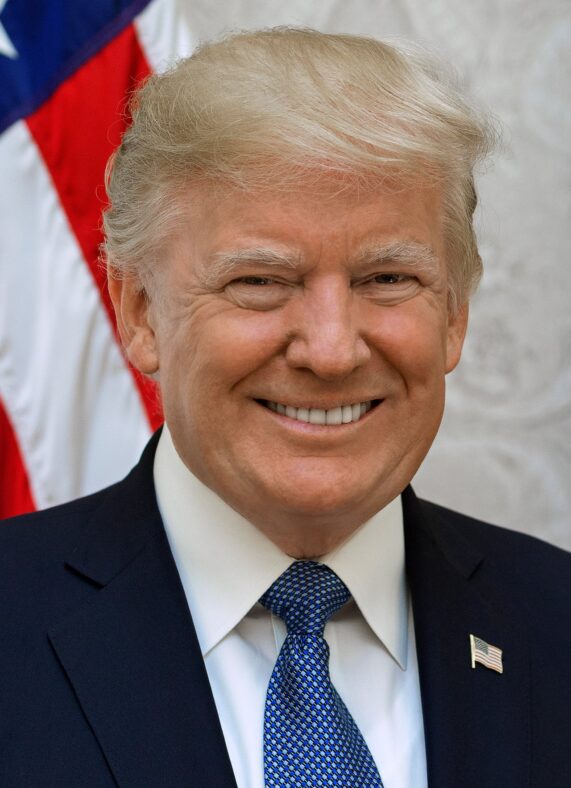
Shealeah Craighead/Wikimedia Commons
President Donald Trump and his sons have significantly expanded their investments in the artificial intelligence economy in 2026, even as the administration resists mounting calls to slow the rapid development of AI technologies. This growing financial stake highlights the Trump family’s deepening ties to the booming AI sector, reflecting a convergence of personal business interests with national technology policy debates.
Trump’s Push for Accelerated AI Development
Since returning to the White House for his second term in January 2025, President Trump has surrounded himself with key technology executives and investors who advocate for speeding up AI innovation. Influential figures such as Nvidia CEO Jensen Huang, Meta’s Mark Zuckerberg, and venture capitalist David Sacks have pushed the administration to prioritize AI advancement to maintain America’s edge over China’s growing technological capabilities.
President Trump has publicly voiced concerns about ceding economic and technological leadership to China, framing AI development as a critical national security and economic priority. The president has also celebrated the stock market’s record highs, largely driven by AI-related companies, reinforcing his administration’s hands-off stance on regulatory slowdowns.
Financial Interests and Potential Conflicts
Unlike recent presidents who placed their assets in blind trusts, President Trump continues to actively manage his investments, including frequent buying and selling of stocks connected to the AI sector. Financial disclosures reveal nearly 30,000 securities transactions since his second inauguration, with numerous purchases in companies vital to AI infrastructure such as Dell Technologies, Micron Technology, and GE Vernova.
These companies supply the critical chips, servers, and energy infrastructure required to power data centers and AI systems. However, the president’s ongoing financial involvement in these sectors raises questions about potential conflicts of interest as his administration crafts policies that could impact the valuation of these investments.
White House spokesman Davis Ingle has denied any conflicts, stating that the president’s investment accounts are managed by independent portfolio managers using algorithm-driven models replicating major indexes. He emphasized that neither President Trump nor his family members have input on investment decisions or timing of trades.
Trump Family Business Expands AI Footprint
Beyond the president’s personal portfolio, Trump family-controlled enterprises are actively increasing their exposure to the AI economy. Trump Media & Technology Group, which owns Truth Social, recently announced a merger with a nuclear fusion company aiming to develop power plants designed to meet surging electricity demand caused in part by AI data centers.
President Trump’s sons, Donald Trump Jr. and Eric Trump, are also major players in AI-related ventures. Through investment firms like 1789 Capital and American Ventures, they are backing projects centered on digital infrastructure, including data center real estate. Notably, 1789 Capital closed a $1.2 billion fund focusing on such investments, with Trump Jr. listed as a partner involved in these deals.
Market Volatility and AI Risks
Despite the Trump family’s bullish stance on AI, the sector has faced volatility recently. Shares in key companies tied to AI infrastructure dropped amid a broader sell-off after prominent technology leaders warned about the risks of unchecked AI development. While it remains unclear whether President Trump still holds all his disclosed AI-related shares, the administration continues to advocate for rapid innovation rather than regulatory caution.
This approach contrasts with voices urging a slowdown or tighter government oversight to address ethical and safety concerns posed by powerful AI systems. As AI’s economic footprint grows, the Trump administration’s policies and the family’s investments remain closely intertwined, underscoring the complex dynamics shaping America’s AI future.
The Trump family’s expanding role in AI highlights the intersection of business interests and national policy at a pivotal moment for technology in the U.S. As debates over AI regulation intensify, the administration’s dual stance of promotion and personal investment will likely remain a focal point for scrutiny.