President Trump Waives Russia Sanctions, Faces Bipartisan Backlash
President Trump’s decision to waive new Russia sanctions draws bipartisan criticism amid ongoing Ukraine conflict.
The White House/Wikimedia Commons
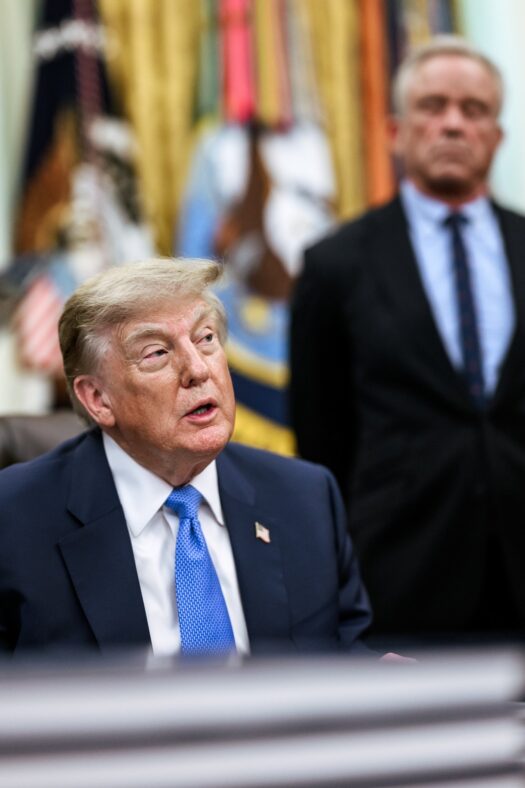
President Donald Trump is encountering bipartisan opposition after he waived new sanctions on Russia just two days before they were set to take effect. The sanctions had been approved by Congress and signed into law by Mr. Trump on Sept. 18, in legislation championed by the late Republican Senator Lindsey Graham. The president’s waiver, issued in an executive order on Friday, has drawn sharp criticism from lawmakers across the political spectrum amid ongoing Russian attacks in Ukraine.
Details of the Sanctions and Waiver
The sanctions legislation aimed to penalize top Russian figures and major buyers of Russian oil and gas, as the U.S. pursues an end to Russian President Vladimir Putin’s four-year war in Ukraine. Although the law granted President Trump the authority to waive parts of the sanctions if doing so was certified as “in the national interests of the United States,” the executive order did not elaborate on the rationale behind the decision.
On Friday, Mr. Trump stated, “I am hereby waiving the application of such sanctions, restrictions, and duties provided for in the Graham Act. I have submitted to the Congress a certification that the issuance of such a waiver at this time is in the national interests of the United States.” This move followed a prior easing of sanctions on Russia’s energy sector and a deal to import 300,000 tons (about 2.2 million barrels) of Russian diesel to the U.S. market.
Lawmakers Express Strong Disapproval
Several Republican senators and representatives have criticized President Trump’s decision. North Carolina GOP Senator Thom Tillis called the waiver “beyond irresponsible” and “unconscionable,” accusing the administration of capitulating to Vladimir Putin. Tillis added, “If the president wants to actually bring down energy prices, he can do it by solving the Iran problem, not by doing a solid for Vladimir Putin.”
Texas Senator John Cornyn said, “Lindsey would be appalled,” referring to the late Senator Graham, and labeled assistance to Putin as “reckless,” warning that Putin’s ambitions extend beyond Ukraine to NATO allies. North Dakota Senator Kevin Cramer echoed concerns on “Face the Nation,” saying, “capitulating to a bully generally means they’re going to make more demands going forward.”
House Republicans also condemned the waiver. Nebraska Representative Don Bacon said the president is “prolonging the war, not ending it,” and claimed Mr. Trump’s “agenda is dead.” Former House Foreign Affairs Committee Chairman Michael McCaul urged reconsideration, noting Putin’s historical contempt for American concessions and increased violence against Ukrainians.
Democratic Representative Gregory Meeks, top Democrat on the House Foreign Affairs Committee, expressed that the waiver was unsurprising, stating that President Trump “has had the power to sanction Russia for years. What he lacks is the will.” Senate Minority Leader Chuck Schumer also condemned the move as “giving the Russian economy life support” and called it a “deal with the devil.”
Context of the Ongoing Conflict and Energy Concerns
President Trump’s waiver comes as Russia continues strikes on Ukraine’s civilian infrastructure. Ukrainian President Volodymyr Zelenskyy reported recent attacks on energy facilities, medical clinics, schools, metro stations, and residential buildings. Despite these attacks, Mr. Trump expressed frustration with Ukraine, telling reporters on the White House South Lawn, “Russia, frankly, has been fine on Ukraine, they haven’t been doing much,” and added, “We’ve given a lot to Ukraine, they’ve given us nothing.”
The 300,000 tons of diesel the U.S. is purchasing from Russia accounts for about half of the country’s daily diesel consumption of 4.1 million barrels. However, given significant damage to Russia’s refining capacity caused by the Ukraine war, experts question how reliably Russia can deliver the fuel. Analysts also warn the diesel deal will not compensate for broader oil supply disruptions related to the conflict in Iran.
Reactions From Ukraine and Future Implications
Ukraine’s President Zelenskyy criticized the waiver, highlighting it contradicts the intent of the Lindsey Graham Act. Earlier in the month, Mr. Trump suggested Ukraine should “get a new leader.” Zelenskyy said last week he expects such actions that undermine the sanctions will continue.
The waiver decision is seen by many lawmakers as undermining efforts to pressure Russia to end its aggression against Ukraine. GOP and Democratic leaders alike warn that easing sanctions emboldens Putin and prolongs the suffering of innocent civilians in Ukraine.
As President Trump’s administration faces mounting pressure over its energy policies and handling of the Russia-Ukraine conflict, the political fallout is likely to intensify leading up to the midterm elections.