Secret Russian Funding Revealed in Trump-Alaska Energy Project
A Trump-era Alaska natural gas project secretly funded by sanctioned Russian firm Novatek raises legal and geopolitical concerns.
The White House/Wikimedia Commons
A multibillion-dollar natural gas project in Alaska backed by the Trump administration has been exposed for secretly receiving funding from a Russian company under U.S. sanctions, according to a recent report. The project, led by American startup Polar LNG, aims to extract and export natural gas from Alaska’s North Slope using Russian technology, yet at least some financing originated from Novatek, a major Russian energy firm. The revelation has sparked scrutiny over legal violations and geopolitical risks amid ongoing tensions with Russia.
Polar LNG’s Concealed Russian Investment
Polar LNG, which presents itself as a distinctly American energy venture, is attempting to acquire Russian technology to develop Alaska’s natural gas reserves and supply allied countries. Joel Riddle, the company’s former chief executive who resigned last month, disclosed to The New York Times that he was misled about the source of the startup’s funding. While he believed the money came from a firm in the United Arab Emirates, he later learned that at least a portion originated from Novatek, a Russian energy giant currently under partial U.S. sanctions.
Novatek’s involvement raises serious legal and regulatory questions, as the U.S. Treasury Department must approve any use of equipment from sanctioned companies. A sanctions bill named after the late GOP Senator Lindsey Graham targets Novatek due to its close ties to Russian President Vladimir Putin. Despite this, President Donald Trump waived these sanctions last week, allowing the project to move forward.
Trump’s Inner Circle and Russian Negotiations
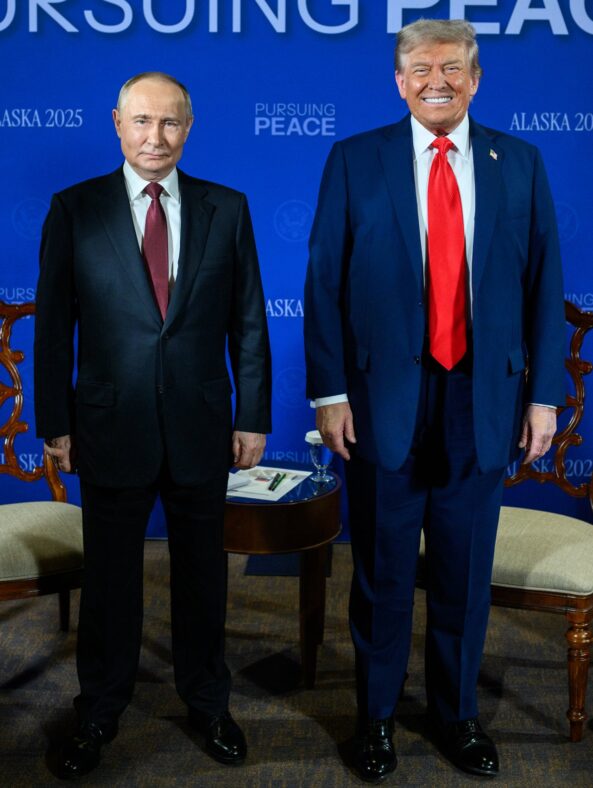
Trump’s special envoys, Steve Witkoff and Jared Kushner, reportedly discussed the Polar LNG project with Vladimir Putin during talks last month aimed at ending Russia’s war on Ukraine. Sources familiar with the negotiations told The New York Times that this blending of diplomacy and business interests exemplifies how Trump’s team mixed the goal of peace with commercial ventures. Critics argue this approach complicates U.S. foreign policy and undermines efforts to isolate Russia economically.
Novatek has recently announced plans to become a “minority shareholder” in Polar LNG, potentially giving a sanctioned Russian company a stake in U.S. natural gas production. This move has alarmed federal officials and legal advisors, as a memo from law firm Baker Botts warned that any perceived connections to Novatek could jeopardize regulatory licenses and approvals necessary for the project.
Concerns from Experts and Officials
Industry consultant Ilya Zaslavskiy, who studies Russian sanctions and energy policy in Washington, criticized Polar LNG’s dealings with Novatek. He told The New York Times, “Any approach by Novatek to transfer technology should be seen as a Kremlin attempt to co-opt U.S. policymakers in order to undermine U.S. foreign policy toward Ukraine and our allies.”
Federal officials have reportedly expressed concern that some Polar LNG investors may be acting on Novatek’s behalf, complicating the project’s regulatory path. Despite repeated requests, the White House has not issued an immediate response to these revelations.
Legal and Geopolitical Implications
The involvement of Novatek, a company under U.S. sanctions, in a major Alaska energy project presents significant challenges. The sanctions bill targeting Novatek reflects bipartisan efforts to restrict Russia’s influence amid its ongoing war in Ukraine. By waiving these sanctions, President Trump’s administration has raised questions about the intersection of politics, business, and national security.
The potential for a sanctioned Russian firm to hold a stake in U.S. natural gas production also complicates diplomatic efforts to isolate Russia economically. Legal experts warn that perceived ties to Novatek could threaten the necessary licenses and approvals for Polar LNG, potentially stalling or derailing the project.
This latest development underscores the complex and often controversial nature of energy diplomacy involving Russia, U.S. policy, and private business interests.