Senate Democratic Leader Chuck Schumer Faces Growing Opposition Ahead of Leadership Vote
Senate Democratic leader Chuck Schumer confronts mounting criticism from progressives and centrists ahead of December leadership vote.
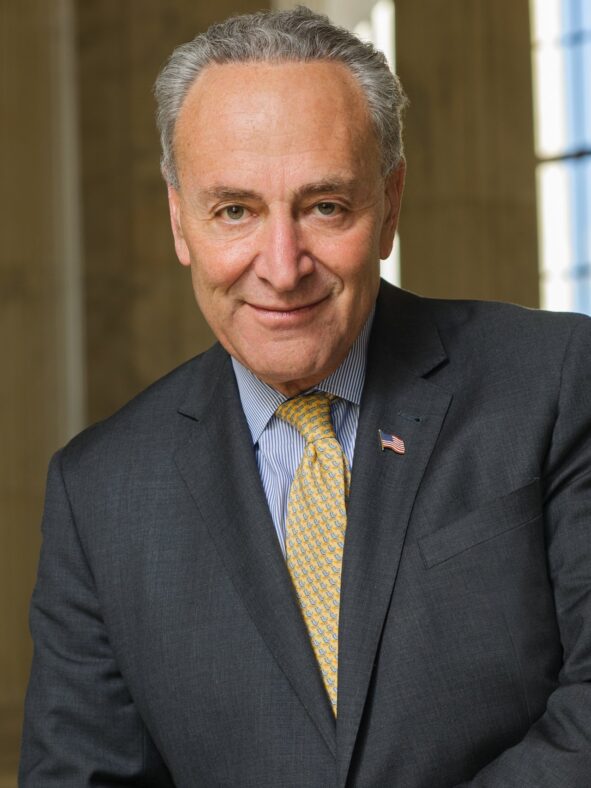
U.S. Senate Photographic Studio/Jeff McEvoy/Wikimedia Commons
Senate Democratic leader Chuck Schumer is encountering significant resistance from within his own party as Democratic senators prepare to elect their leadership in early December. Key figures from both progressive and centrist wings have voiced doubts about Schumer’s ability to lead the caucus into the next congressional session, signaling internal party tensions ahead of the new Congress taking office on January 3, 2027.
Broadening Discontent Among Democrats
Schumer, who has served as the Senate Democratic leader since 2017, is facing criticism from prominent voices, including former presidential candidate Senator Bernie Sanders. Sanders, while expressing personal admiration for Schumer’s work ethic, publicly declared that he will not support Schumer’s reelection as Democratic leader. “The time is now for change,” Sanders stated, emphasizing his belief that Schumer has not sufficiently championed an economy that benefits all Americans.
Other senators such as Michigan’s Elissa Slotkin have also called for new leadership. Slotkin suggested that if Schumer runs unopposed, Democrats should withhold quorum to block the leadership vote, demanding a “concrete plan that’s definitively different” to earn her support. Centrist Senators Mark Warner and Raphael Warnock have withheld endorsement, with Warner praising Schumer’s fundraising efforts but stopping short of backing him for another term.
Calls for a More Unified and Effective Leadership
Critics of Schumer’s leadership argue that the party lacks a coherent national message and is struggling to connect with voters on critical issues. Concerns include Schumer being perceived as too lenient in opposing Republican initiatives. Senator Chris Van Hollen urged the caucus to await a clear vision from Schumer before offering their support, warning against any “coronation” without a full caucus discussion.
Warnock emphasized the urgent need for leadership that will actively fight for voters, describing the current moment as an “inflection point.” He expressed openness to hearing from any caucus member who wishes to lead, reflecting a wider sense of uncertainty within the party about its future direction.
Upcoming Leadership Vote and Democratic Caucus Dynamics
Democratic senators, including those newly elected in the November 2026 midterms, will convene in a closed-door meeting in early December to select their Senate leadership by secret ballot. Schumer remains confident in his chances, stating on November 10 that he expects to be reelected and highlighting the caucus’s unity on key issues like reducing costs, ending corruption, and addressing war.
Despite Schumer’s confidence, the visible opposition from influential senators and the strategy discussions around quorum highlight the potential for a contested leadership vote. The outcome will shape not only the Senate’s legislative agenda but also the broader Democratic Party’s political strategy heading into future election cycles.
Voices of Resistance and Their Demands
Several senators have signaled a readiness to support alternative leadership if presented with a compelling plan. Sanders, Slotkin, and Van Hollen have all voiced openness to new leadership, with Slotkin explicitly requiring evidence of governance that represents all members of the caucus from blue, purple, and red states.
Warnock and Warner have withheld support but have not publicly called for a leadership change, preferring to keep their options open. Many senators-elect are also withholding endorsements as they evaluate the direction of the caucus.
As the leadership election approaches, the Democratic Senate caucus faces a pivotal decision that could redefine its priorities and approach in the face of Republican control of the House and Senate.