Trump Administration Official May Face Jail Over DOJ Contempt Inquiry Interference
Sen. Whitehouse warns a Trump official may have secretly stalled a DOJ inquiry, with legal analysts saying ‘people are going to jail.’
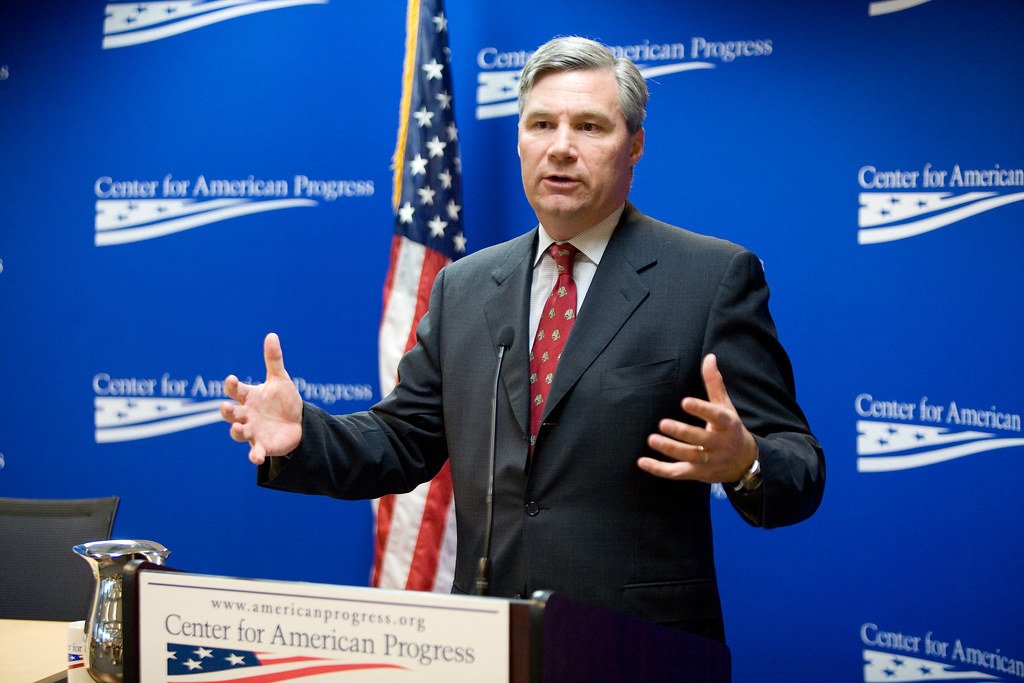
Center for American Progress/Flickr
Senator Sheldon Whitehouse (D-RI) has raised serious concerns about potential secret communications between a Trump administration official and a federal appeals judge that may have delayed a Department of Justice (DOJ) contempt inquiry. Speaking on the Legal AF podcast, Whitehouse outlined a scenario involving Judge Neomi Rao, a Trump appointee, suggesting such interference could lead to criminal consequences.
Allegations of DOJ and Judicial Interference
During the podcast, Whitehouse hypothesized that if a MAGA official contacted Judge Rao or her chambers, resulting in an administrative stay that stalled the Senate Judiciary Committee’s investigation into DOJ misconduct, it would be a serious legal issue. He emphasized the gravity of such an action, stating, “ask any judge how big a deal that is.” Legal analyst Michael Popok, co-anchor of Legal AF, responded emphatically: “As I said, people are going to jail.”
Whitehouse also expressed skepticism about claims denying any contact between Trump allies at the DOJ and the judges involved, calling such denials “a stretch.” This suggests ongoing suspicions that political appointees may have influenced judicial processes to delay accountability.
Background on the DOJ Contempt Inquiry and Key Figures
The inquiry centers on allegations that Trump administration officials defied a March 2025 court order by continuing deportation flights to El Salvador. Chief U.S. District Judge James Boasberg has been attempting for over a year to determine whether this defiance occurred. A whistleblower alleged that Emil Bove, a former top DOJ official now serving as a federal appeals judge, told colleagues the department might have to tell courts “f— you,” though Bove denies recalling this statement.
In April 2025, a three-month administrative stay paused Boasberg’s inquiry after a panel including Judge Rao and fellow Trump appointee Gregory Katsas issued a dissent. During this pause, Bove was confirmed to the Third Circuit by a narrow 50-49 Senate vote. Later that year, Whitehouse sought records of communications between these judges’ chambers and political DOJ appointees, but received “radio silence” in response.
Senate and Judicial Responses to the Controversy
Senators Sheldon Whitehouse and Richard Blumenthal (D-CT) pressed the D.C. Circuit’s chief judge, Sri Srinivasan, about the stay and any related communications. Their inquiries about contact between judges and DOJ political appointees were met with silence. In April, a panel including Judge Rao and Justin Walker ordered Boasberg to end the inquiry, but the full D.C. Circuit later overturned that ruling in June. Arguments on whether Boasberg can resume the inquiry were held on September 29, with a ruling still pending.
Potential Congressional Investigations and Oversight
Whitehouse indicated that if Democrats regain control of the House, Rep. Jamie Raskin (D-MD) is likely to chair the House Judiciary Committee. He noted that unlike Senate subpoenas, Raskin’s committee subpoenas cannot be filibustered, giving Democrats “multiple ways of getting into the information of what exactly took place.” This suggests that Congress could intensify investigations into the DOJ and judicial conduct related to the stalled contempt inquiry.
The ongoing controversy highlights tensions between the DOJ, the judiciary, and political appointees, with serious legal and political ramifications as investigations continue.