Partial Win for Trump as U.S. Escorts Restore Some Shipping Through Hormuz Strait
After weeks of disruption, U.S. naval escorts are enabling more oil tankers to pass through the Strait of Hormuz, easing global supply fears.
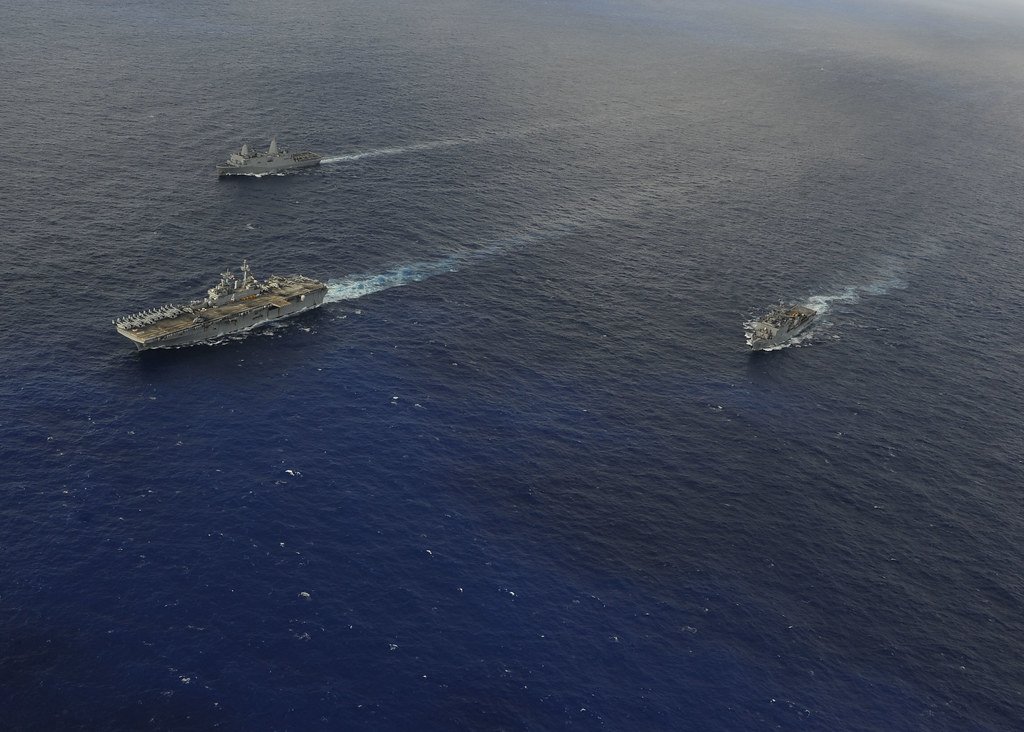
SurfaceWarriors/Flickr
After weeks of near standstill due to escalating conflict between the U.S. and Iran, shipping traffic through the critical Strait of Hormuz is slowly recovering in July 2026. This improvement is not due to any easing of tensions by Tehran but rather the increased presence of American naval escorts protecting commercial vessels navigating the strategic waterway, which carries a significant portion of the world’s oil and liquefied natural gas.
U.S. Naval Escorts Increase Amid Rising Global Energy Demands
Shipping companies and crews have grown more willing to risk passage through the Strait of Hormuz, largely because of expanded U.S. military escort operations. This marks a tentative but important shift in a market that has been rattled by nightly missile and drone exchanges between Washington and Tehran. According to data from Kpler, 14 commodity vessels crossed the strait in both directions on July 29, up from fewer than 10 last week, though still far below pre-conflict levels.
Energy Secretary Chris Wright confirmed on Bloomberg Radio that the U.S. government is actively safeguarding oil and gas shipments through the waterway, which is vital to global energy stability. Wright noted that around 6.5 million barrels of oil per day are currently moving out of the Persian Gulf, an improvement but still only about one-third of the roughly 20 million barrels that flowed daily before the conflict began.
Strategic Importance of the Strait of Hormuz
The Strait of Hormuz is one of the world’s most important maritime chokepoints, located between the Persian Gulf and the Gulf of Oman. Approximately one-fifth of the world’s traded crude oil passes through this narrow waterway. Because of its strategic importance, any disruption can cause immediate spikes in global oil prices and threaten energy security worldwide.
Despite ongoing hostilities—marked by continuous U.S. air and naval strikes on Iranian military targets—the resumption of escorted shipping has provided some relief to already strained global markets. However, the number of vessels transiting remains far below the level needed to fully stabilize supplies. The current figures highlight the fragility of the situation and the high stakes involved in maintaining open and secure maritime routes.
Military Assets Supporting Maritime Security
The U.S. Navy’s presence in the region has grown recently, with amphibious assault ships such as the USS Tripoli and USS Boxer deployed to support operations in the U.S. 5th Fleet area of responsibility. These vessels are equipped with advanced aircraft, including F-35B Lightning II jets, which provide aerial surveillance and protection for convoys passing through the strait.
Such deployments underscore the U.S. commitment to ensuring the free flow of commerce through this vital corridor. However, the situation remains highly volatile, as Iran continues missile and drone attacks on U.S. and allied forces in the region, prompting nightly retaliatory strikes.
Economic and Political Implications
The partial restoration of tanker traffic through the Strait of Hormuz serves as a strategic win for the Biden administration and former President Donald Trump’s policies emphasizing military strength and protection of energy supplies. By increasing naval escorts, the U.S. has mitigated some of the worst-case scenarios predicted for global oil markets amid the conflict.
Still, experts warn that until diplomatic progress is made, the risk of further escalation—and potential disruptions—remains high. Energy markets continue to watch closely, as any renewed closure or blockage could trigger sharp price spikes and economic instability worldwide.
While the increased U.S. naval escort operations signal a cautious improvement in maritime traffic through the Strait of Hormuz, the overall outlook remains uncertain. The ongoing conflict between the U.S. and Iran shows no signs of abating, and the global energy supply chain remains vulnerable to the volatile situation in the Persian Gulf.