U.S. Congressman Alleges IDF Backed Settlers Detaining Him in West Bank Visit
Rep. Ro Khanna says Israeli forces sided with armed settlers detaining his group near Khirbet Zanuta; IDF denies any involvement.
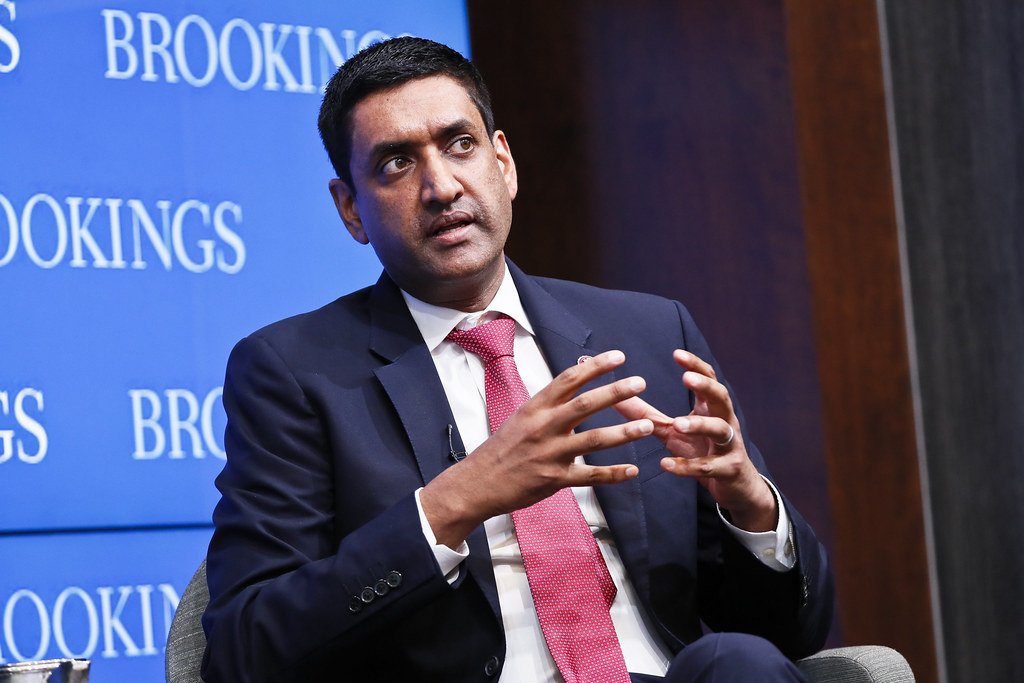
BrookingsInst/Flickr
Rep. Ro Khanna, a U.S. congressman from California, on July 8, 2026, accused the Israel Defense Forces (IDF) of siding with armed settlers who detained his delegation near the Palestinian hamlet of Khirbet Zanuta in the southern West Bank. The IDF has strongly denied the claims, stating that its troops intervened to disperse settlers and reopen a blocked road, not to assist in any detention. This conflicting narrative has intensified scrutiny of security and political tensions in the occupied West Bank.
Congressman Khanna’s Account of the Incident
During a visit aimed at observing conditions faced by Palestinians in Area C of the West Bank, Khanna’s group, which included other Americans and local Palestinian guides, encountered armed settlers near Khirbet Zanuta. Khanna described how settlers carrying U.S.-made M4 rifles stopped their vehicle and held them for more than an hour. He asserted that the settlers called the Israeli military, but when soldiers arrived, they sided with the settlers rather than assisting Khanna’s delegation.
Khanna characterized the episode as a form of detention and used it to highlight what he called the harsh realities Palestinians endure amid ongoing settler pressure. His remarks were reported by major outlets including Reuters, ABC News, and CBS News. Khanna framed the visit as an effort to get an “unfiltered” perspective of the occupation, underscoring concerns over the role U.S. military aid plays in enabling such incidents.
IDF’s Contradictory Version of Events
The Israeli military issued a statement via the Associated Press disputing Khanna’s claims. According to the IDF, troops were dispatched after receiving reports that Israeli civilians were blocking vehicles near Khirbet Zanuta. The military said its soldiers, accompanied by police officers, quickly dispersed the settlers and reopened the road, emphasizing that the troops did not participate in any blockade or detention.
The IDF also noted that the identity of an armed individual caught on camera during the incident was under investigation. The military’s account presents the soldiers as neutral enforcers of order rather than collaborators with settlers, contradicting Khanna’s assertion that the troops sided with the armed group.
Context of Rising Tensions in the West Bank
Khirbet Zanuta has become emblematic of the broader conflict in Area C, where Palestinian communities face restricted access, home demolition threats, and frequent confrontations with settlers. Since the outbreak of the Gaza war in 2023 following the Hamas attack on Israel, settler violence in the West Bank has reportedly increased, intensifying fears and instability for Palestinian residents.
Khanna’s visit, arranged through Palestinian-led organizers rather than official Israeli channels, highlights the ongoing international debate over conditions in the occupied territories. The incident underscores the challenges Palestinians face amid contested authority and security responsibilities shared between Israeli forces and settler groups.
Political Implications for U.S.-Israel Relations
The episode carries significant political weight in the United States, where Khanna is a prominent Democrat with growing influence over foreign policy discussions. His experience has added momentum to calls within the Democratic Party to reassess and potentially condition U.S. military aid to Israel, particularly in light of concerns about civilian protection and the use of American-made weapons by settlers.
While U.S. support for Israel’s security remains broadly bipartisan, tensions have risen as some lawmakers question how aid is employed amid increasing settler violence. Khanna’s highlighting of U.S.-manufactured rifles being present during the incident has fueled debate over accountability and transparency in military assistance programs.
Unresolved Questions and Ongoing Dispute
Despite media coverage, many details about the July 8 incident remain unclear. Precise timelines, the number of settlers and soldiers involved, and whether any formal detention occurred have not been independently verified. The IDF has yet to release a detailed incident log, and Khanna’s office has primarily relied on interviews and social media to describe the event.
As of July 13, 2026, no impartial investigation findings have been made public. The starkly contrasting narratives from Khanna and the Israeli military illustrate the complexities and sensitivities surrounding security operations and settler-Palestinian interactions in the West Bank.
The incident near Khirbet Zanuta continues to resonate within broader discussions on the Israeli-Palestinian conflict, U.S. foreign policy, and the human rights conditions endured by Palestinians under occupation.