Bill Maher Criticizes Media Reluctance to Use ‘Terrorism’ on 9/11 Anniversary
Bill Maher sharply criticized media guidelines that avoid the terms ‘terrorism’ and ‘terrorists’ in 9/11 coverage, sparking debate over language and politics.
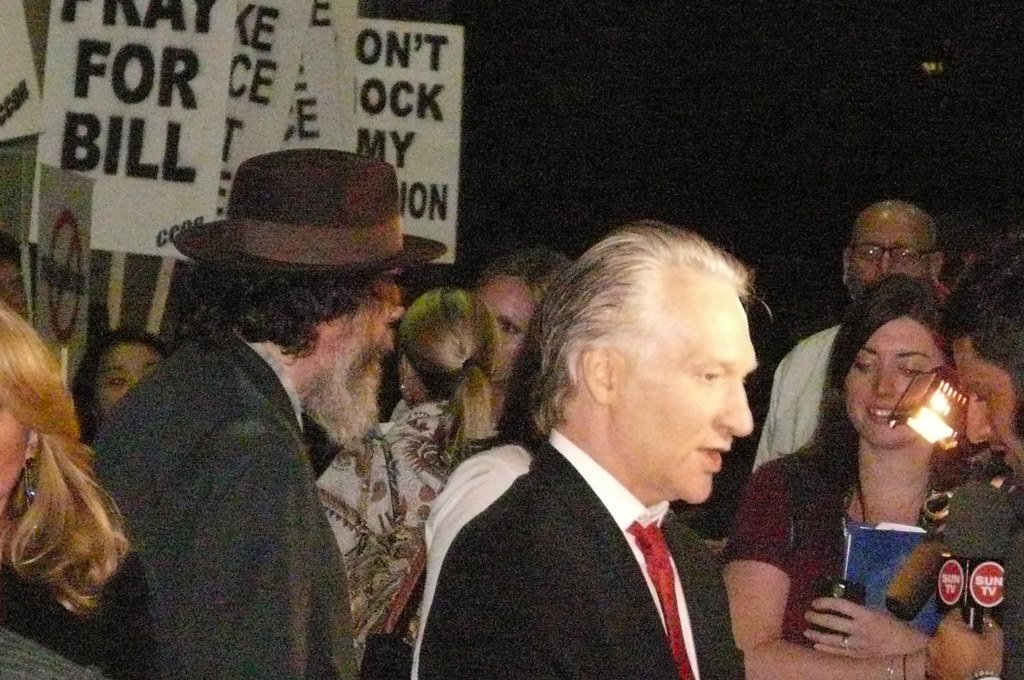
christopherharte/Flickr
Comedian and political commentator Bill Maher took aim at media outlets on Friday for their continued hesitation to label the September 11, 2001 attacks as ‘terrorism’ or to call the perpetrators ‘terrorists.’ Speaking on the 25th anniversary of the attacks, Maher challenged editorial policies that downplay the language surrounding one of the deadliest acts of violence in recent American history.
Maher Targets Journalism Style Guides on Terrorism Language
Maher referenced style guidelines issued by prominent journalism organizations, including the Asian American Journalists Association, the National Association of Black Journalists, the National Association of Hispanic Journalists, and the South Asian Journalists Association. These groups have recommended avoiding the words ‘terrorism’ and ‘terrorists’ unless directly quoting sources, citing concerns that the terms are ’emotionally and politically loaded.’
Highlighting the incongruity, Maher sarcastically compared the hesitance to use ‘terrorism’ with not putting ‘soccer’ in quotes despite its emotional significance worldwide. He also pointed to similar editorial instructions from the Canadian Broadcasting Corporation, which urged journalists to describe the attacks as “passenger jet crashes” rather than explicitly calling them terror attacks.
Defining Terrorism and Critique of Media Hesitation
Maher emphasized the clear definition of terrorism as the use of violence against civilians to pursue ideological goals, questioning why the media avoids the term in describing the actions of the 19 hijackers who killed 2,977 people in 2001. He mocked euphemistic language such as “unruly passengers” or a “wrong turn” to highlight what he sees as obfuscation.
He extended his critique to the British Broadcasting Corporation (BBC), which similarly advises journalists to avoid labeling acts as terrorism without attribution, fearing it appears as a “value judgment.” Maher called this approach “a barrier to understanding lying,” underscoring his frustration with political correctness in journalism.
Political and Cultural Context in Maher’s Commentary
Maher linked the media’s language caution to broader cultural shifts he attributes to the Democratic Party’s influence. He recalled the backlash he faced shortly after 9/11 when he argued that the terrorists weren’t cowards because they knowingly sacrificed their lives—a position that contributed to the cancellation of his ABC show, “Politically Incorrect.”
He criticized what he sees as moral confusion within the party, noting the ongoing conflict in Gaza as an example where narratives are contested. Maher rejected characterizations of the conflict as genocide, calling it a “counter-attack in a war” and lamented the Democratic Party’s stance, calling it one of their “worst moments” since the post-Civil War era.
Public Opinion and Legacy of 9/11 Reflected in Maher’s Remarks
To underscore the lasting impact of 9/11 and the complexities surrounding its memory, Maher cited a 2023 poll revealing that 20 percent of Americans aged 18-29 hold a positive view of al-Qaeda founder Osama bin Laden. He used this statistic to argue that the cultural and political environment has shifted significantly since 2001, complicating how the attacks are discussed today.
Maher’s comments came as the nation marked the 25th anniversary of the attacks, a moment of reflection on the clash between radical Islamism and Western liberalism. His blunt language and sharp critique highlight ongoing debates about media responsibility, political correctness, and how history is framed in the public discourse.
Bill Maher’s remarks serve as a reminder of the contentious nature of language in journalism and politics, particularly when addressing events as significant and sensitive as 9/11. His call for clarity and honesty in describing terrorism continues to resonate amid evolving cultural norms and political divisions.