Commerce Secretary Lutnick Faces Criticism Over Nvidia Chip Export Oversight
Commerce Secretary Howard Lutnick is under scrutiny for failing to stop Nvidia AI chips from reaching China amid export control concerns.
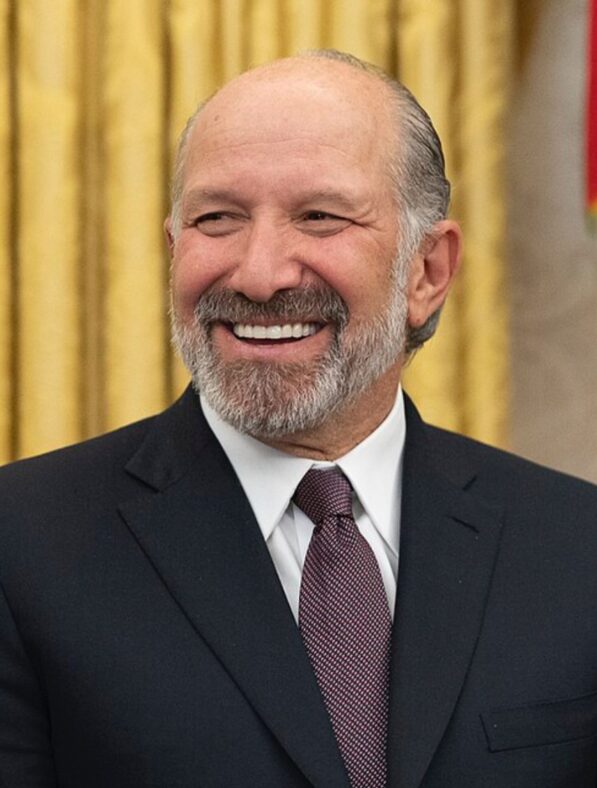
The White House/Wikimedia Commons
Commerce Secretary Howard Lutnick is facing increasing criticism over the Commerce Department’s failure to prevent Nvidia’s advanced AI chips from being diverted to China. Questions have emerged about Lutnick’s ties to Chinese companies and his relationship with Nvidia’s former CEO Jensen Huang amid allegations that U.S. export controls were not enforced effectively.
Allegations of Export Control Failures
Under Lutnick’s leadership, the Commerce Department oversees the regulation of sensitive technology exports, including AI chips. However, critics point to a lack of action in placing Megaspeed International—a Singapore-based company suspected of illegally shipping Nvidia’s most advanced AI chips to Chinese entities—on the Entity List, which would restrict its access to U.S. technology. The Department of Commerce has not added any company to this list since October 2025.
In 2024, during the Biden administration, the Commerce Department’s Bureau of Industry and Security initiated an investigation into Nvidia’s chip sales to Megaspeed. However, the probe was quickly transferred to the Department of Justice, which declined to comment. Treasury Secretary Scott Bessent reportedly confronted Lutnick last week over the department’s failure to list Megaspeed as a restricted entity.
Connections to Nvidia and China Under Scrutiny
Lutnick’s previous roles and business ties have come under intense examination. Before his appointment as commerce secretary, he was chairman and CEO of Cantor Fitzgerald, which held about $1.2 billion in Nvidia stock. Lutnick also developed a close relationship with Jensen Huang, Nvidia’s former CEO, who resigned amid reports of multiple affairs, including one with Alice Huang—believed by U.S. authorities to be a Chinese spy and head of Megaspeed.
In addition, Lutnick ran BGC Group, which held a 33% stake in a joint venture with China Credit Trust, a Chinese state-owned company. Cantor Fitzgerald, now overseen by his sons, has helped Chinese companies go public in the U.S. and invested in Satellogic, a satellite company contracted with a Chinese data science firm until 2033.
Political Pressure and Calls for Accountability
Senator Elizabeth Warren, ranking Democrat on the Senate Banking Committee, called on Lutnick and his deputy Jeffrey Kessler to explain why export control loopholes remain open following Huang’s resignation. Kessler led the Commerce Department’s investigation into Megaspeed.
Warren demanded immediate action to ensure U.S. advanced technology is not aiding China’s military and previously urged a pause on all export licenses for Nvidia chips bound for China. Experts such as Chris McGuire of the Council on Foreign Relations criticized the Commerce Department’s enforcement, stating, “The real scandal here is the lack of enforcement of export controls.” McGuire added that the department knew for a year about Alice Huang’s suspected espionage but took no action.
Senate Confirmation Concerns and Lutnick’s Stance
During Lutnick’s Senate confirmation hearing in 2024, senators questioned his potential conflicts of interest and ability to protect U.S. technology from the Chinese Communist Party. Senator Maria Cantwell pressed Lutnick on his investments in Chinese companies and Cantor Fitzgerald’s involvement with cryptocurrency firm Tether, which has significant operations in China.
Lutnick responded to concerns by stating, “I take a very jaundiced view of China. I think they only care about themselves and seek harm to us, and so we need to protect ourselves.” Before taking office in February 2025, he resigned from all corporate leadership roles, transferring control of his business interests to his children.
The growing scrutiny of Lutnick’s ties and the Commerce Department’s handling of Nvidia chip exports raises critical questions about U.S. technology security and export enforcement going forward.