Defense Secretary Pete Hegseth Faces Backlash Over Body-Shaming Post Amid Pentagon Turmoil
Defense Secretary Pete Hegseth draws criticism for mocking Canadian youth cadet, as Pentagon faces leadership crisis.
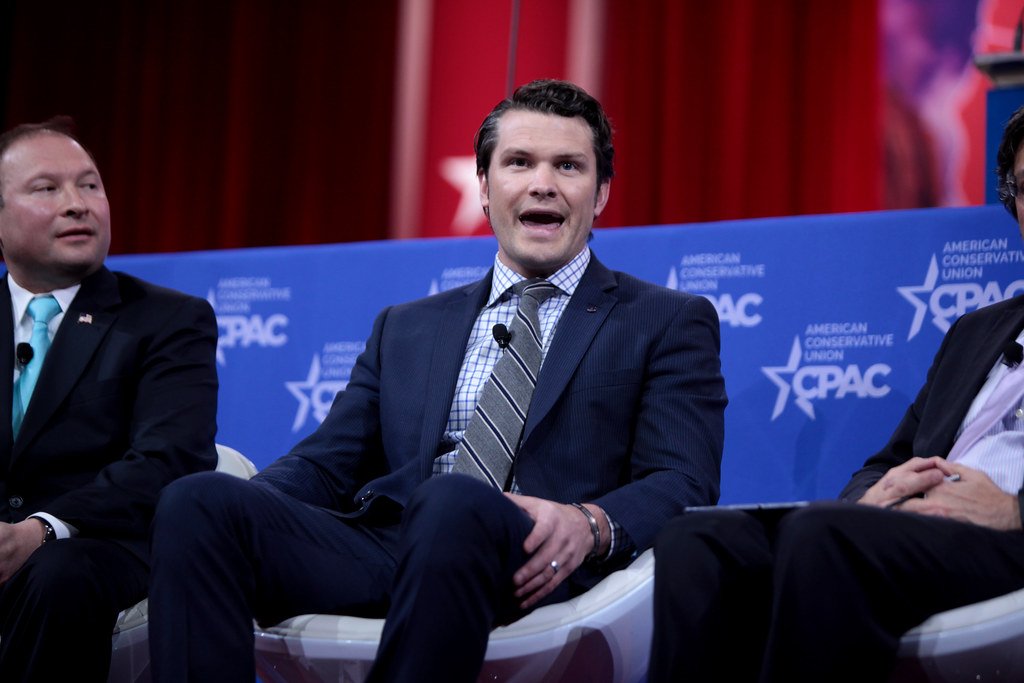
Gage Skidmore/Flickr
Defense Secretary Pete Hegseth is under fire for a recent social media post mocking a Canadian youth cadet instructor’s appearance, drawing widespread condemnation amid a growing leadership crisis at the Pentagon. The controversy comes as top officials continue to resign and internal conflicts threaten the stability of the U.S. Department of Defense under Hegseth’s tenure in 2026.
Vile Social Media Post Sparks Outrage
On Monday, Hegseth shared a photo originally posted by the Vernon Cadet Training Center in British Columbia, which depicts a smiling cadet receiving a medal. The Canadian facility is a youth program for ages 12 to 18 that teaches military-style leadership and drills under the Department of National Defense. However, Hegseth singled out one image, added a Canadian flag, and captioned it with the dismissive remark, “(this is real),” seemingly mocking the cadet’s physical appearance.
The post quickly drew backlash from veterans, military supporters, and social media users who criticized the Defense Secretary for body-shaming a volunteer-led youth group rather than focusing on his responsibilities. A Canadian veteran remarked, “The Secretary of Defense is body shaming cadet groups. This is a youth group, not a military unit. They are kids seeking adventure and service values.” Others questioned the appropriateness of Hegseth’s comments during a time of ongoing conflict, labeling the attack as “unhinged” and “embarrassing.”
Leadership Crisis Deepens at the Pentagon
Hegseth’s controversial post arrives amid escalating turmoil within the Pentagon’s top ranks. Army Secretary Dan Driscoll officially resigned on Monday after months of internal disputes, particularly over Army transformation efforts and troop readiness. Insiders report Driscoll’s departure was driven by frustrations with Hegseth’s interference, including the firing of generals tasked with critical modernization initiatives.
Driscoll, a close associate of Vice President JD Vance, is expected to fully exit the Department of Defense within days, further destabilizing the administration’s command structure. The Wall Street Journal and Fox News have highlighted concerns that Hegseth’s leadership style and policy decisions are hampering military effectiveness during a costly and politically fraught conflict with Iran.
Hegseth’s Controversial Policies and Public Image
Since assuming office, Hegseth has emphasized strict physical fitness standards for military personnel, openly denouncing “fat generals and admirals” and overweight troops. In 2026, he reinforced his stance on combat readiness by declaring that “weak men won’t qualify” for combat roles, and openly questioned the effectiveness of women in combat, a position that has attracted significant criticism.
Hegseth’s public persona is also shaped by his efforts to bolster his Christian conservative credentials, positioning himself as a potential 2028 presidential candidate. However, many observers see his recent social media antics and hardline policies as detrimental to the Pentagon’s cohesion and morale.
Wider Political Context and Fallout
The Defense Secretary’s disparaging post about Canadian cadets coincides with President Donald Trump’s aggressive trade and political moves targeting Canada, including the controversial renaming of Lake Ontario to “Lake America.” These actions have exacerbated diplomatic tensions between the two neighboring countries.
Critics argue that Hegseth’s attack on a youth program in an allied country is both inappropriate and counterproductive, distracting attention from pressing defense priorities. Calls for accountability have mounted, with some urging Pentagon leadership to focus on unity and strategic readiness rather than personal vendettas and divisive rhetoric.
As the Pentagon faces ongoing upheaval, the spotlight remains firmly on Pete Hegseth’s leadership style and the implications of his controversial behavior for the future of U.S. military effectiveness and international relations.