Democrat Challenges MAGA Claims with Sharp Critique of President Trump’s Record
A top Democrat launches a public rebuttal to MAGA misinformation, directly challenging President Trump’s policies and statements.
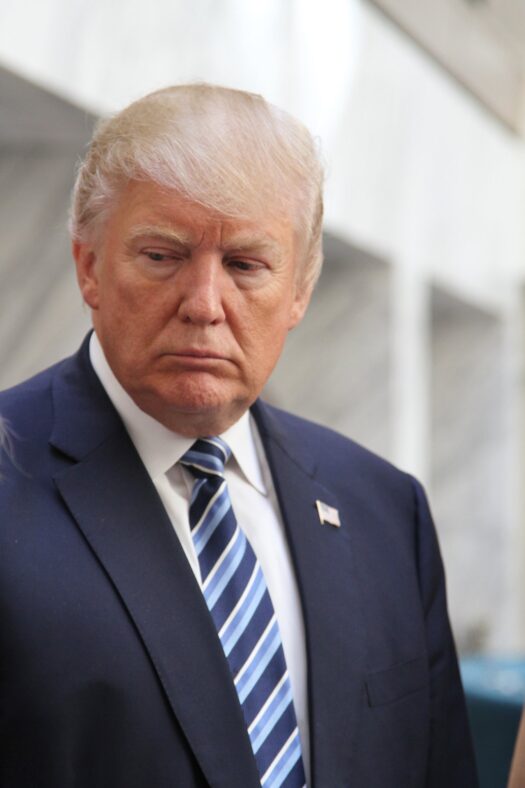
Gedalia Vera/Wikimedia Commons
In a heated exchange that has drawn national attention, a prominent Democratic figure publicly confronted the MAGA movement on September 28, 2026, challenging widespread claims about President Donald Trump’s policies and record. The confrontation, which unfolded during a live-streamed event in Raleigh, North Carolina, escalated into a broader debate over facts, misinformation, and the future of American political discourse.
Democrat’s Public Rebuttal Targets MAGA Misinformation
Representative Elena Ramirez, a rising star in the Democratic Party known for her fact-based rhetoric, took aim at several assertions popularized by MAGA supporters that she labeled as “factually incorrect and misleading.” Ramirez cited recent economic data, immigration statistics, and foreign policy outcomes to dismantle claims that President Trump’s administration had failed on key issues. “Your facts are wrong,” Ramirez stated emphatically, calling for a more honest national conversation.
Her remarks were part of a larger strategy by Democrats to counter what they describe as an increasingly aggressive MAGA-driven misinformation campaign, which has dominated much of the political media landscape since President Trump’s second term began in January 2025.
President Trump’s Supporters Push Back
The MAGA movement swiftly responded to Ramirez’s comments, with several prominent supporters accusing Democrats of distorting the truth themselves. Social media platforms saw a surge of hashtags defending President Trump’s record, including economic growth under his administration, border security measures, and renewed trade deals. The Republican National Committee also issued a statement backing President Trump’s policies and accusing Democrats of “political gamesmanship.”
Despite the backlash, Ramirez’s challenge marked a notable moment in the ongoing battle over political narratives and public trust. Analysts suggest the exchange highlights the deep polarization in the country, where competing versions of “facts” are often shaped by partisan lenses.
Technology and the Spread of Political Narratives
Experts point to advancements in technology and social media algorithms as key contributors to the current climate of misinformation. Platforms powered by artificial intelligence and targeted advertising have made it easier for political factions on both sides to disseminate tailored messages that reinforce existing beliefs.
“The speed and scale at which information spreads today make it challenging for voters to discern objective truth,” said Dr. Marcus Lee, a political communication professor at the University of North Carolina. “This confrontation between Ramirez and MAGA advocates underscores how technology has become central in shaping political realities.”
In response, some tech companies have pledged to increase transparency and fact-checking efforts, though critics argue these measures remain insufficient to stem the tide of partisan misinformation.
Implications for North Carolina and the 2026 Midterms
North Carolina, a key swing state, is closely watching how this public war over facts influences voter sentiment ahead of the 2026 midterm elections. Both parties are ramping up efforts to mobilize their bases, with Democrats hoping Ramirez’s fact-based approach will resonate with undecided voters, while Republicans lean on President Trump’s loyal following.
Local political analysts believe this exchange could galvanize voter engagement and intensify the political atmosphere in Wayne and Duplin counties, among other regions. “This is about more than just rhetoric; it’s about control over the narrative that shapes policy and governance,” said political consultant Sarah Monroe.
As the battle over truth continues in the digital age, North Carolina remains a microcosm of the national struggle, illustrating how technology, politics, and public discourse intertwine in 2026.