Federal Judge Allows Trump Defamation Suit to Proceed, Raising Legal Concerns
Federal Judge Steven Merryday ruled to let Trump’s defamation case against the New York Times proceed, sparking criticism from legal experts.
NASA/Bill Ingalls/NASA
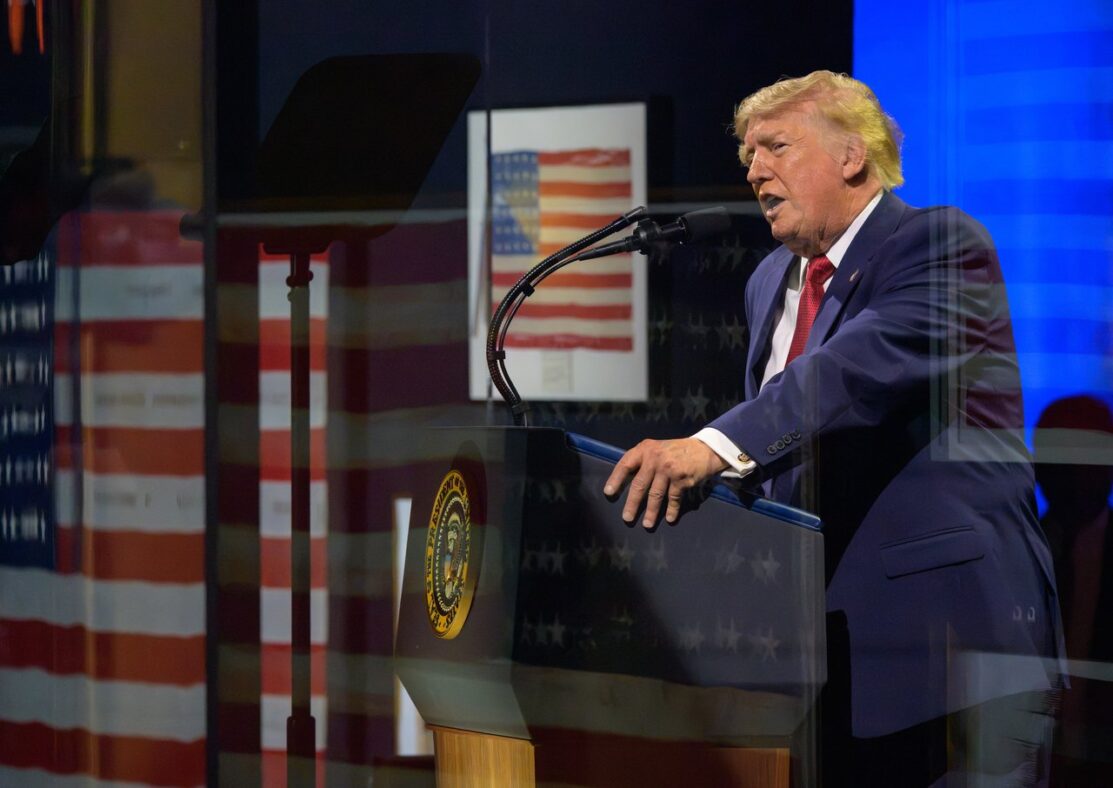
Federal Senior U.S. District Judge Steven Merryday has for the second time recently permitted President Donald Trump to continue his defamation lawsuit against major media defendants, including the New York Times and Penguin Random House. The judge’s ruling has prompted legal experts to voice serious concerns about the proper application of the “actual malice” standard in Florida courts.
Case Background and Judge Merryday’s Ruling
President Trump filed a $15 billion defamation lawsuit concerning statements made in the book “Lucky Loser” and two New York Times articles. His legal team alleges these statements falsely accuse him of criminal conduct, including receiving over $400 million from his father through fraudulent tax evasion schemes. Judge Merryday initially dismissed the complaint as “decidedly improper and impermissible” but allowed Trump to amend it, which he did.
In his recent ruling, Merryday identified seven statements that “quite plausibly and reasonably create an inference” the defendants knowingly relied on incomplete or minimal information. He emphasized that the defendants failed to obtain “an explicit opinion from a qualified source after a thorough examination of pertinent facts” and that this knowing failure is actionable under defamation law despite the protections established in New York Times Co. v. Sullivan.
Legal Experts Criticize the Judge’s Interpretation
The Freedom of the Press Foundation’s Chief of Advocacy, Seth Stern, criticized the ruling as a misapplication of the Supreme Court’s “actual malice” standard. He stated that the standard is designed to provide journalists breathing room and prevent courts from micromanaging their reporting processes.
Professor Roy Gutterman, director of the Tully Center for Free Speech at Syracuse University, expressed doubts about whether the ruling properly applies the “actual malice” standard. He pointed out that the Times’ reporting was based on extensive documentation and interviews, making it unlikely the publishers had serious doubts about the content. Gutterman called Trump’s damages request “outrageous” and described allowing parts of the complaint to proceed as a “serious concern under the First Amendment.” He also criticized a separate ruling by U.S. District Judge Jeffrey Kuntz concerning Trump’s lawsuit against the BBC, noting the troubling reliance on Justice Thomas’s dissent in applying Sullivan.
The “Actual Malice” Standard and Its Importance
Judge Merryday acknowledged that New York Times Co. v. Sullivan remains the controlling precedent, which requires a public official plaintiff to prove that defamatory statements were made with knowledge of falsity or reckless disregard for the truth. However, Merryday’s analysis involves a “second-guessing” approach, scrutinizing whether the defendants failed to seek qualified opinions before publishing — a move that legal experts warn undermines the legal protections intended to safeguard investigative journalism.
Implications for Press Freedom and Defamation Litigation
The ruling has reignited debate over how courts should balance protecting public officials’ reputations with safeguarding freedom of the press. Critics fear that permitting defamation claims based on alleged failures to obtain expert opinions could open the door for public officials to use lawsuits as tools to intimidate journalists and media companies.
Legal experts highlight that the “actual malice” standard is designed to prevent defamation suits from becoming prohibitively risky or expensive for the press. They caution that courts engaging in detailed assessments of journalistic processes risk chilling robust investigative reporting.
As Trump’s defamation case continues, legal observers will be watching closely to see how Florida courts apply the Supreme Court’s standards and what precedent this may set for future defamation lawsuits involving public officials.