Federal Judge Dismisses Kash Patel Defamation Suit, and ‘Googly-Eyed Kremlin’ Insult Officially Noted
A federal judge dismissed FBI Director Kash Patel’s defamation suit, cementing a colorful insult in the official court record.
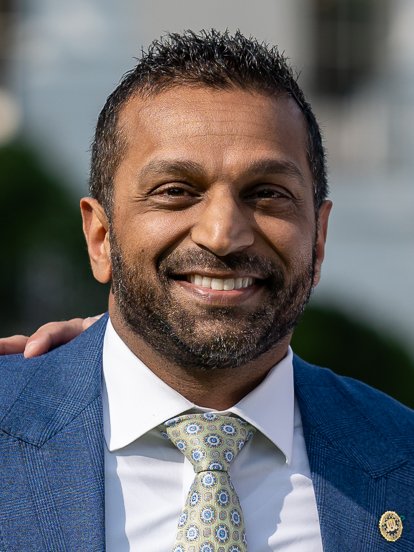
The White House/Wikimedia Commons
On Tuesday, a federal judge in Nevada dismissed FBI Director Kash Patel’s $10 million defamation lawsuit against blogger Jim Stewartson, ruling the court lacked jurisdiction over the case. The dismissal not only voided a prior default judgment in Patel’s favor but also immortalized Stewartson’s now-famous “googly-eyed Kremlin” insult in the official court documents.
Background of the Lawsuit and Insult
Kash Patel filed his defamation complaint against Jim Stewartson in June 2026 after Stewartson posted a series of tweets accusing Patel of sedition and incompetence. Among the remarks, Stewartson referred to Patel as a “blatantly incompetent chud” and a “googly-eyed Kremlin *****,” alleging Patel’s involvement in a conspiracy to incite the January 6, 2021, Capitol insurrection.
Stewartson, a California-based blogger and podcaster who describes himself as an “anti-disinformation activist,” did not respond to the initial lawsuit. This resulted in a default judgment in Patel’s favor in August 2025, awarding $250,000 in damages. However, Stewartson later challenged the court’s jurisdiction, arguing his posts were not targeted at Nevada residents, and that he had no meaningful ties to the state.
Judge Andrew Gordon’s Ruling and Legal Implications
Nevada Chief District Judge Andrew Gordon granted Stewartson’s motion to dismiss, concluding the federal court lacked personal jurisdiction over the defendant. With this ruling, the judge overturned the previous default judgment entered against Stewartson. A notable aspect of the order was the inclusion of Stewartson’s “googly-eyed Kremlin *****” insult in a court footnote, a move that has drawn significant public attention.
Following the ruling, Stewartson posted on X, formerly Twitter, stating, “PSA: Now that my case is settled, you are free to refer to @FBIDirectorKash as a ‘chud,’ a ‘googly-eyed Kremlin *****,’ and a ‘traitor’ without fear of legal repercussions!” The dismissal marks a significant legal victory for Stewartson and underscores challenges public figures face when attempting to litigate defamation claims related to social media commentary.
Context Amid Ongoing Legal Battles
Patel’s lawsuit dismissal comes amid another high-profile defamation case he filed against The Atlantic magazine. That $250 million suit, filed in 2026, centers on an April article accusing Patel of “excessive drinking” and erratic behavior. The Atlantic has responded by filing a motion to dismiss, labeling Patel’s claims as “meritless attacks on the First Amendment.”
These legal battles highlight the ongoing tensions between public officials and media or online critics in an era where digital speech is increasingly scrutinized. Patel’s efforts to defend his reputation through the courts have thus far met with mixed results.
Free Speech and Defamation in the Digital Age
The dismissal raises broader questions about jurisdiction and defamation law as it applies to online speech. Stewartson’s case emphasizes how courts are navigating challenges when speech crosses state lines and involves national figures. Legal experts note that defamation suits by public officials must overcome high burdens of proof, particularly when the statements in question are clearly opinionated or hyperbolic.
Stewartson’s colorful insults, while provocative, fall within a protected space of free expression, according to First Amendment advocates. The ruling thus reinforces protections for critics engaging in aggressive political commentary online, especially when posted outside the plaintiff’s home jurisdiction.
While Kash Patel’s defamation claim has been dismissed in Nevada, the ongoing legal actions and public discourse surrounding his role and reputation are far from over.