Former Trump Trade Advisor Files En Banc Petition After Contempt Conviction Appeal Fails
Former Trump trade adviser Peter Navarro pushes for Supreme Court review after D.C. Circuit denies his contempt conviction appeal.
Gage Skidmore/Wikimedia Commons
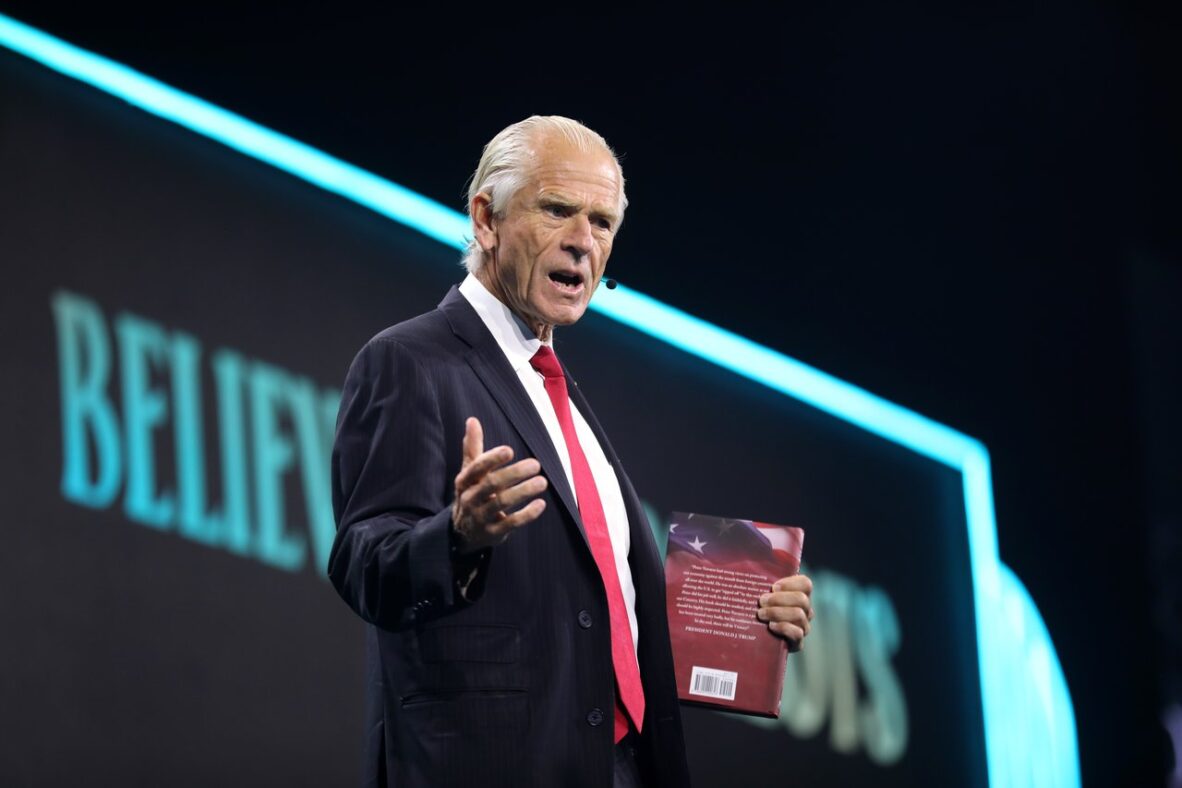
Peter Navarro, former senior trade adviser to President Donald Trump, is renewing his legal battle to overturn a contempt of Congress conviction after his appeal was rejected by the D.C. Circuit Court in mid-2026. He has now filed a petition for a rehearing before the full, or en banc, D.C. Circuit, arguing that the case raises a “question of exceptional importance” that ultimately requires Supreme Court intervention.
Background of Navarro’s Contempt Conviction
Navarro was convicted in January 2026 on two misdemeanor counts related to his refusal to comply with a subpoena from the House Select Committee investigating the January 6 Capitol attack. The charges stemmed from his failure to produce documents and appear for a deposition. Navarro asserted executive privilege to justify his noncompliance, but crucially, he did so unilaterally—without consulting the sitting president or reviewing the subpoena in question.
As a result of the conviction, Navarro served four months in jail and has since sought to overturn the verdict through successive appeals, all of which have failed to gain traction.
Legal Arguments and the Licavoli Precedent
Central to Navarro’s appeal is his challenge to the interpretation of the word “willfully” in the contempt statute. He and his legal team argue that the precedent set by the 1957 Licavoli v. United States case wrongly equates “willfully” with a deliberate and intentional refusal without requiring proof of bad faith or unlawful intent.
Navarro’s appellate attorney, Abhishek Kambli, contends that criminal statutes typically require proof that a defendant knew their actions were unlawful. Navarro believed he was protected by executive privilege, invoked on behalf of then-President Trump, and thus lacked the criminal intent necessary for contempt charges. Kambli’s petition stresses that Navarro and other former executive branch officials should have the opportunity to present such defenses regardless of the political context.
En Banc Petition Highlights a Growing Legal Problem
Navarro’s petition points to Judge Gregory Katsas’ comments in a similar case involving Steve Bannon, where Katsas acknowledged that the current legal framework presents “a serious problem.” Katsas, a Trump appointee to the D.C. Circuit, noted that only the Supreme Court can address the issue of whether good-faith but mistaken assertions of executive privilege or constitutional objections can lead to criminal contempt liability.
Navarro emphasizes that this controversy is not isolated, citing the recurrence of similar contempt cases in a politically charged climate, which makes the need for higher court clarity urgent.
What Navarro’s Petition Could Mean for Congressional Contempt Cases
If the Supreme Court accepts Navarro’s case, it could reshape how contempt of Congress statutes are applied, particularly regarding the standards for “willfulness” and executive privilege claims. This could have broad implications for congressional oversight powers and the protections afforded to former government officials.
The petition calls for a reassessment of whether criminal contempt charges should require proof of unlawful intent, potentially limiting convictions based solely on noncompliance when the defendant believed in good faith that their actions were lawful.
Political and Legal Context Moving Forward
Navarro’s ongoing legal fight occurs against the backdrop of heightened tensions between Congress and former Trump administration officials. It also highlights the challenges courts face in balancing executive privilege with congressional investigative authority. The Supreme Court’s potential involvement in this matter could provide much-needed guidance on these constitutional boundaries.
As Navarro presses forward with his petition, all eyes will be on the Supreme Court’s docket to see if it takes up the case and how it might clarify the contours of contempt law and executive privilege going forward.