French Government Extends Curfews After Weekend Riots Across Major Cities
French authorities impose extended curfews and increase police presence after violent weekend protests over soaring living costs.
U.S. Secretary of Defense/Wikimedia Commons
French authorities have extended curfews and increased police presence in major cities following violent riots that erupted over the weekend. The unrest, sparked by protests against rising living costs and demands for improved public services, has led to the torching of buildings and looting of thousands of businesses. As the government seeks to restore order, it faces growing political and financial challenges.
Escalating Police Measures Amid Unrest
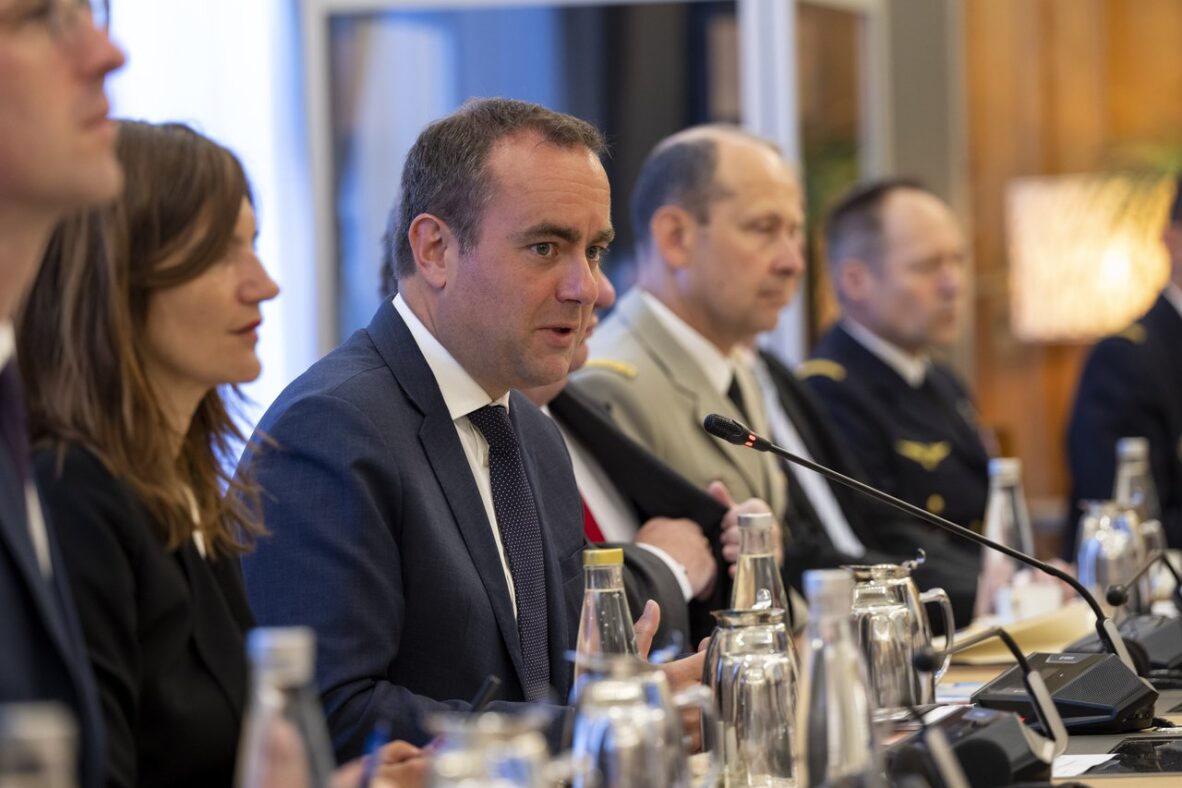
In response to the escalating violence during weekend demonstrations, Prime Minister Sébastien Lecornu announced a “massive” police deployment ahead of planned protests on Oct. 24. Interior Minister Laurent Nuñez admitted that authorities had underestimated the scale of the unrest and lost control in several cities during Saturday’s events. By Monday evening, over 2,500 people had been taken into police custody, according to Justice Minister Gérald Darmanin. Among the most severe incidents was the burning of a historic town hall in Limoges, located in central France.
To contain the violence, overnight curfews have been imposed in key areas such as Paris’ Place de la République and the Les Halles shopping district. Similar restrictions are in place in Lyon and other cities. Monday night saw no major incidents in Paris and Lyon, prompting authorities to extend these curfew measures further.
Macron’s Response: Balancing Dialogue and Accountability
President Emmanuel Macron addressed the nation on Sunday, distinguishing between peaceful protesters demanding better schools and working conditions and those who hijacked the demonstrations to commit violence. He blamed “radical far-left groups” and “criminals” for the unrest and vowed that “those who sought to bring down the republic will be held accountable.” While expressing willingness to listen to protesters’ demands, Macron emphasized the need for law enforcement to punish rioters.
Root Causes: Education, Living Costs, and Political Gridlock
The protests began in mid-September with high school students and teachers in Paris suburbs calling for solutions to overcrowded classrooms, deteriorating school buildings, and teacher shortages. The movement has since broadened to include trade unions and Yellow Vest activists, evolving into a wider campaign against high living costs and declining public services.
The government has responded with some concessions. On Oct. 8, the Ministry of National Education announced plans to deploy more than 3,000 substitute teachers to the most affected high schools and authorized several hundred additional hires. However, deeper reforms face significant hurdles due to France’s mounting public debt, which stood at nearly 3.6 trillion euros at the end of June, equating to 119% of the country’s annual economic output.
France’s budget deficit is expected to reach 5.4% of economic output this year, with efforts underway to reduce it to 5% in 2027. Interest payments alone are projected to rise by 12 billion euros next year, reaching 91.2 billion euros, tightening fiscal space for public services.
Compounding these issues, Macron’s allies lack a parliamentary majority. The current year’s budget was passed only in February after the government pushed it through without a final vote, surviving two no-confidence motions. Public support also remains low; an Ipsos poll conducted Oct. 7-8 showed Macron’s approval rating at just 15%, while far-right National Rally leader Marine Le Pen led first-round matchup polls with 33% to 35% support.
Looking Ahead to April Presidential Elections
The unrest unfolds as France prepares for presidential elections in April to choose a successor to Macron, who is ineligible to run for a third term. The ongoing social and economic challenges, coupled with political fragmentation and public dissatisfaction, set the stage for a highly contested election season.
As the French government struggles to balance public demands and maintain order, the extended curfews and increased police presence signal a determination to contain unrest while addressing the underlying causes remains a complex challenge.