Iran Claims Recovery of Undamaged US Warhead After July 9 Strikes and Says It Could Be a Major Intelligence Win
Iran reports finding an undamaged US missile warhead from recent strikes, calling it a potential intelligence breakthrough amid ongoing Gulf tensions.
Yena Kwon/Pexels
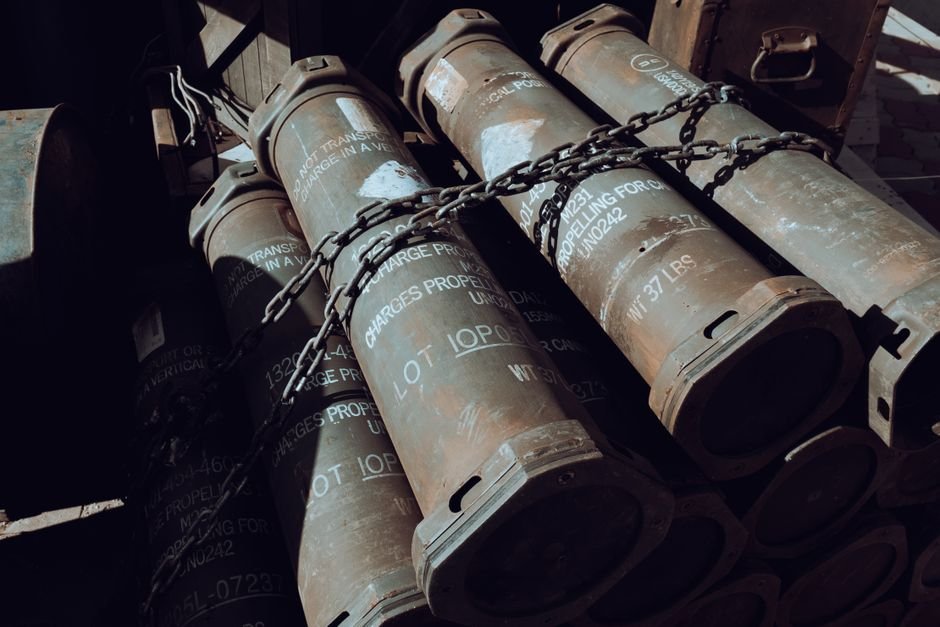
Iranian officials announced on July 11, 2026, that they recovered an intact American missile warhead from the recent U.S. strikes carried out on July 9 along Iran’s southern coast. This claim, if verified, could represent a significant intelligence gain for Tehran amid the ongoing military confrontation and heightened security risks across the Gulf region.
Details of the U.S. Strike Campaign and Iran’s Recovery Claim
The U.S. Central Command reported that on July 9, 2026, American forces launched a large-scale operation targeting approximately 90 Iranian military sites. These strikes focused on air defense installations, coastal surveillance equipment, missile and drone storage, naval assets, and logistical infrastructure along Iran’s strategic coastline.
Following these attacks, Iranian state media and officials stated they had retrieved an undamaged U.S. missile warhead. However, no independent verification or detailed information has been released regarding the exact location of the recovery, the type of munition, or the condition of critical components such as guidance systems or fuzing mechanisms. The absence of such specifics leaves key questions unanswered about the full implications of this find.
Potential Intelligence Value of an Intact Warhead
Defense analysts emphasize that recovering intact enemy ordnance can yield valuable technical intelligence. Such hardware offers insights into the design tolerances, materials, electronics, and countermeasures employed in U.S. missile technology. This information can assist Iran in improving its own missile programs, developing countermeasures, or reverse-engineering critical components.
Nonetheless, experts caution that the recovery of a single warhead does not necessarily shift the military balance. The true value depends on the warhead’s condition and the feasibility of exploiting its technology. Currently, the public record relies solely on Iranian claims without U.S. confirmation or independent assessments.
Regional Impact and Strategic Context
The July 9 strikes had a pronounced geographic impact in southern Iran, particularly in Bushehr province, a key area on the Gulf near vital maritime shipping routes. Explosions and military activity were reported there, underscoring the ongoing risks to both Iranian territory and international commercial transit through the Gulf.
Iran has also reportedly retaliated by targeting U.S. military infrastructure in neighboring Gulf states. The tension remains high, especially around the Strait of Hormuz, a critical chokepoint for global energy exports. These developments highlight the broader regional spillover of the U.S.-Iran conflict beyond direct strikes.
Uncertainty and Ongoing Assessments
U.S. intelligence agencies continue to evaluate the overall impact of the recent strike campaign on Iran’s missile capabilities. Reports indicate that despite sustained attacks, Iran retains substantial missile production and stockpiles. The Office of the Director of National Intelligence confirmed in March 2026 that the full effect of U.S. operations on Iran’s launch capacity remains under assessment.
This ongoing uncertainty means that while Iran’s claim of recovering an undamaged warhead is notable, its strategic significance is not yet clear. Both military powers are still gauging how the recent escalation is altering the balance of power and regional stability.
For observers and regional stakeholders, the situation remains fluid. Iran’s assertion of technical exploitation potential contrasts with the lack of U.S. confirmation and continuing military exchanges. What remains certain is that the Gulf region, including southern Iran’s Bushehr province and key maritime corridors, continues to be a focal point of conflict and international security concerns.