Justice Clarence Thomas Criticizes California Law on Implicit Bias Training
Justice Thomas dissents as Supreme Court rejects challenge to California’s implicit bias training mandate for physicians.
Uploaded image
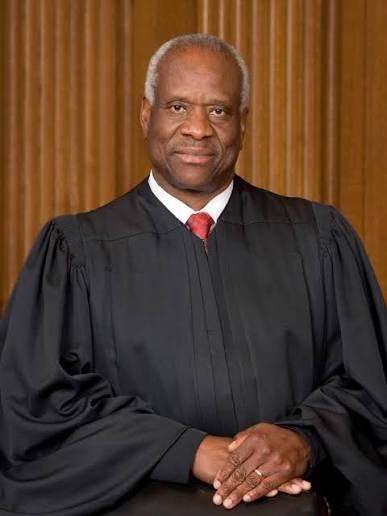
The Supreme Court on November 16, 2026, declined to hear a challenge to California’s requirement that licensed physicians complete continuing education courses addressing implicit bias, a decision that drew sharp dissent from Justice Clarence Thomas. Thomas warned the ruling could allow states to compel private citizens to communicate government viewpoints, potentially undermining First Amendment protections.
Background of the California Implicit Bias Training Requirement
California mandates that all licensed physicians complete 50 hours of state-approved continuing medical education (CME) every two years. Among these requirements is instruction on implicit bias, which must include examples of how such bias affects treatment decisions and health outcomes or strategies to address healthcare disparities. The law aims to reduce disparities in healthcare by educating physicians on implicit bias.
Dr. Azadeh Khatibi, a California physician and CME instructor, challenged the law alongside the nonprofit Do No Harm. Khatibi objects to including implicit bias discussion in her courses, arguing it is irrelevant to her topics and would reduce time available for other subjects. Furthermore, she disputes the premise that implicit bias is the primary cause of healthcare disparities.
Supreme Court Declines to Hear Case, Thomas and Alito Dissent
The Supreme Court’s refusal to hear the case was met with dissent from Justices Clarence Thomas and Samuel Alito. Thomas emphasized that when the government requires private speakers to convey its views, the First Amendment applies, stating, “A State cannot regulate its way out of First Amendment scrutiny.” He cautioned against using the government-speech doctrine as a tool for compelled speech or censorship.
California defended its law by asserting that instructors are not forced to endorse implicit bias personally and may express disagreement. The state also argued that CME courses constitute government speech due to extensive regulation, a position upheld by the Ninth Circuit last year. This classification exempts the requirement from First Amendment free speech scrutiny.
Thomas Warns of Broader Implications Beyond Medicine
Justice Thomas warned that permitting California’s implicit bias training mandate to stand could have far-reaching consequences beyond healthcare. He questioned whether other regulated professions, such as law, could face similar compelled speech requirements. For example, he asked if California could mandate a legal conference keynote speaker to oppose racial preferences in hiring, transforming private speech into government speech under the Ninth Circuit’s logic.
Thomas stated, “When, as here, the government does not issue its own messages but instead requires private speakers to communicate the government’s viewpoint, the First Amendment applies.” His dissent signals concern that government-imposed messaging in professional education risks eroding First Amendment protections for private individuals across many fields.
Legal and Political Context
The case highlights ongoing tensions regarding compelled speech and government regulation, especially in politically sensitive areas like race and healthcare. It also reflects the current Supreme Court’s conservative leanings, with Thomas and Alito representing the dissent against the Court’s majority decision to avoid this constitutional question.
While California maintains broad authority over medical licensure and education, the dissenters caution that unchecked regulatory demands on speech could set a precedent with significant constitutional implications for free speech rights nationwide.
The Supreme Court’s decision not to hear the case leaves California’s implicit bias training requirement intact for now, but the clear dissent from Justices Thomas and Alito signals that challenges over compelled speech in professional settings are likely to continue.
As the debate unfolds, many Americans and professionals in regulated fields will be watching closely to see how the balance between government regulation and First Amendment freedoms is navigated in future rulings.