Justice Department Files Third Criminal Charge Against James Comey Over 2016 Leak
The Justice Department criminally charged former FBI Director James Comey for a third time over a decade-old leak allegation.
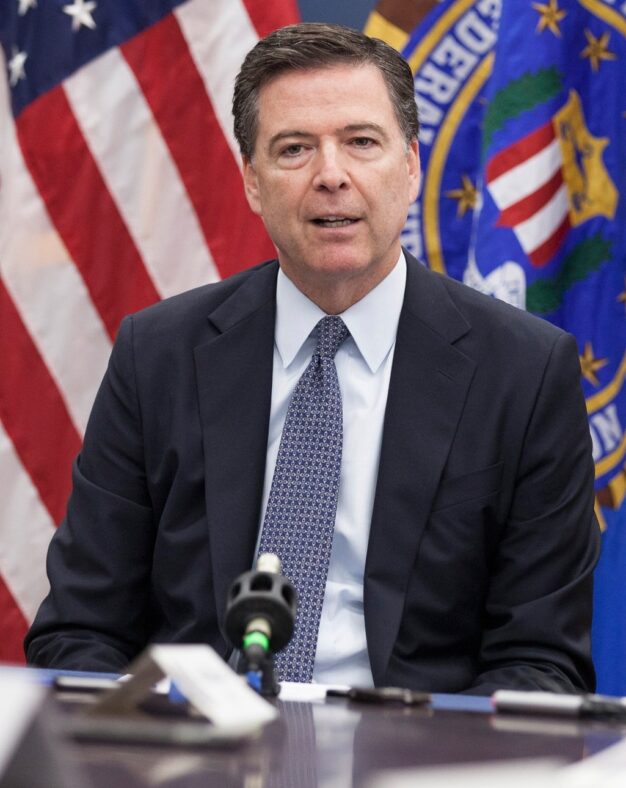
Federal Bureau of Investigation (FBI)/Wikimedia Commons
The Justice Department has filed criminal charges against former FBI Director James Comey, marking the third time prosecutors have brought allegations related to his conduct. The charges stem from a decade-old accusation that Comey ordered his staff to leak classified information to a reporter in October 2016, when he was FBI director.
Details of the New Charges and Legal Maneuver
Court documents made public on Monday reveal that Comey is accused of leaking a sensitive national security document during his tenure at the FBI. However, the Justice Department has not yet filed formal charges. Instead, the department submitted an “information” — a legal document outlining the two charges — which it claims is intended to toll, or pause, the statute of limitations on the case under the Espionage Act. This statute expired earlier this month, and the DOJ’s filing aims to preserve its ability to prosecute.
A Justice Department official explained, “Filing a criminal information to toll the statute of limitations is a widely recognized practice in federal court and has been approved by multiple Circuit Courts of Appeals. This is an ongoing criminal investigation, and we will not comment further.” The decision to use this legal tactic has drawn scrutiny, as it bypasses the usual requirement that a defendant consent to an information filing.
Comey challenged the DOJ’s maneuver, filing a motion to dismiss the case earlier this month. He argued that an indictment must be brought within 10 years and that the filing of a criminal information alone does not meet that standard.
Comey’s Response and Political Reactions
In a video posted on social media, Comey condemned the charges as an abuse of the Justice Department. He stated, “It would almost be funny if it weren’t such an appalling abuse of the Department of Justice, one that we cannot become numb to.” The case has drawn national attention given Comey’s prominent role in recent political controversies.
President Donald Trump, asked about the new charges upon returning to Washington, DC, from a rally in Mississippi, said he was unaware of the details. “I don’t know too much about it. I just heard about it,” Trump remarked. He added, “I think he’s a dirty cop, James Comey, but I know nothing about it.” This brief comment reflects ongoing tensions between Trump and Comey.
Background of Allegations and Related Investigations
The charges relate to leaks to The New York Times that occurred shortly after Comey was fired as FBI director by President Trump. According to reports, Comey shared at least one memo describing conversations with Trump with his team, information that was then passed to a Times reporter.
Comey’s conduct has been the subject of multiple investigations, including those by the Justice Department’s inspector general and Special Counsel John Durham, who reviewed the origins of the federal probe into Russian interference in the 2016 election. Durham charged three individuals connected to the Russia investigation but did not find sufficient evidence to prosecute Comey or other top officials.
Comey also faces a separate criminal charge in North Carolina related to allegedly threatening President Trump through a social media post featuring seashells arranged to spell “8647” last spring. A previous case accusing Comey of providing false testimony about leaks to Congress was dismissed.
Legal Experts Weigh In on DOJ Strategy
Legal analysts have criticized the Justice Department’s tactic of filing an information to avoid the statute of limitations. Elie Honig, former federal prosecutor and CNN senior legal analyst, called the approach “bizarre, and likely improper.” He explained, “Typically an information must be agreed to by a defendant — and Comey did not consent here. It therefore likely cannot extend the statute of limitations, which would have expired on October 5, 2026.”
The ultimate decision on whether the DOJ’s filing can effectively revive the expired statute of limitations will rest with a judge, who must rule on the validity of the legal maneuver.
As the case moves forward, it continues to stir political and legal debate over prosecution limits, government transparency, and the balance of justice in high-profile investigations.
Updates will follow as more information becomes available.