Gas Prices Now Higher Under President Trump Than Biden, Despite 2024 Promise
Nearly eight months into Trump’s second term, gas prices average $3.473 per gallon, now surpassing Biden’s $3.471 average.

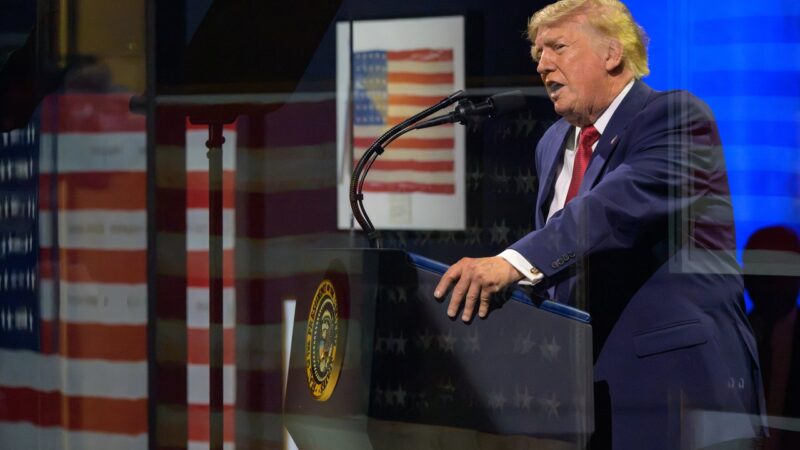
Shealeah Craighead/Wikimedia Commons
Nearly eight months into President Donald Trump’s second term, average gas prices have edged past the Biden era, contradicting his 2024 campaign pledge to make gasoline dirt-cheap again. This development comes amid a destabilizing war with Iran, which has disrupted global energy markets and driven costs upward.
Gas Prices Edge Above Biden’s Average Amid Middle East Conflict
According to a CNN analysis of AAA data, the average price of a gallon of regular gas since President Trump began his second term is $3.473, slightly higher than the $3.471 average during former President Joe Biden’s tenure. While the difference is minuscule — just a fraction of a penny — it marks a significant reversal for Trump, who promised a return to sub-$2 gas prices during his 2024 campaign.
Patrick De Haan, head of petroleum analysis at GasBuddy, described the situation as “pretty astonishing.” He noted, “I don’t think anyone would have predicted this 10 months ago.” The ongoing conflict with Iran has played a major role, destabilizing energy supplies and driving prices upward despite Trump’s efforts.
A War That Changed the Energy Landscape
President Trump’s second term has been overshadowed by a deeply unpopular war with Iran, which has unsettled global oil markets. The unprecedented closure of the Strait of Hormuz — a crucial shipping lane for Middle Eastern oil — has forced costly detours and increased tanker hire prices from $65,000 a day last year to $1.6 million earlier this month.
Refinery shortages have compounded the problem. Damage to refineries in the Middle East and Russia, coupled with China’s restrictions on fuel exports, have restricted gasoline, diesel, and jet fuel production. To compensate, the global market has tapped commercial and emergency stockpiles, leaving the system vulnerable to shocks, such as the recent ExxonMobil refinery outage in Illinois that caused spikes in Great Lakes states.
Trump’s Response and The Political Fallout
In response to soaring fuel prices, the White House has taken several measures. Spokesperson Taylor Rogers outlined steps including:
- Increasing U.S. refining capacity
- Releasing oil from the Strategic Petroleum Reserve
- Temporarily waiving the Jones Act
- Allowing the use of red-dyed diesel on highways
Despite these efforts, prices remain high, with the national average staying above $4 per gallon. President Trump has expressed support for a diesel export ban as prices surged amid the war. However, the spike has frustrated many voters who had expected lower fuel costs under his leadership.
Gregory Brew, senior analyst at Eurasia Group, observed that the market was oversupplied before the war and suggested that “If Trump really wanted to keep his promise to keep gas prices low, what he should have done was nothing.”
The Contrast With Trump’s First Term and Biden’s Peak Prices
During President Trump’s first term, gas prices averaged $2.47 per gallon nationally, with prices dropping as low as $1.77 amid the Covid-19 pandemic in April 2020. At that time, Trump urged Saudi Arabia and Russia to reduce oil production to stabilize the market.
In contrast, under Biden, gas prices reached a historic high of $5.02 per gallon in June 2022 following Russia’s invasion of Ukraine. However, prices declined more rapidly during Biden’s term compared to the current trajectory under Trump, with 2026 already recording more days above $4 per gallon than any previous Biden-era year.
The ongoing conflict with Iran and the resulting energy disruption have created an environment where the fuel costs that voters hoped would fall under President Trump’s renewed administration have instead climbed to new heights.