Justice Elena Kagan: Supreme Court Not a Rubber Stamp for Trump
Justice Elena Kagan says the Supreme Court remains independent despite conservative leanings and Trump’s frequent criticisms.
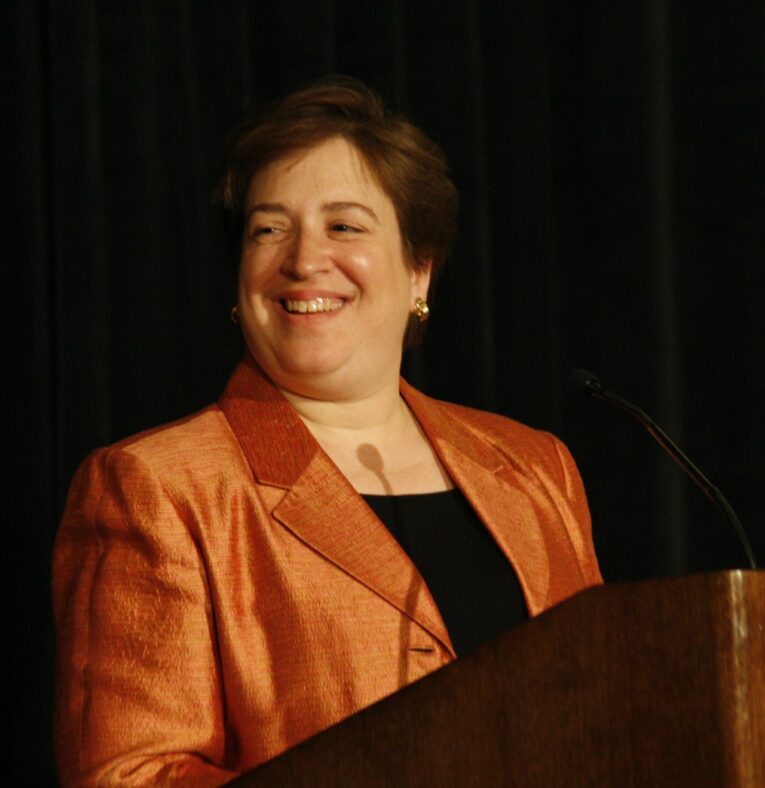
Doc Searls/Wikimedia Commons
In a rare public statement on the Supreme Court’s relationship with the Trump administration, Justice Elena Kagan affirmed on July 24, 2026, that the nation’s highest court, while conservative, is not a mere extension of President Donald Trump’s agenda. Speaking to a gathering of lawyers and judges in Bellevue, Washington, Kagan emphasized that the court has acted as a check on executive power at critical moments, despite ruling largely in favor of the Trump administration in many cases.
Supreme Court’s Balance on Trump-Era Cases
Justice Kagan acknowledged the court’s conservative makeup and its alignment with the conservative legal movement, but she underscored that this does not translate into unquestioning support for Trump. While the court upheld many policies from the Trump era—such as stringent immigration enforcement and expanded executive authority over federal agencies—it also rejected several of the president’s more sweeping initiatives.
Key rulings that went against Trump included decisions striking down his attempts to impose broad tariffs and efforts to revoke birthright citizenship for children born in the U.S. to undocumented immigrants. Kagan pointed out that these decisions represent moments when the court checked the executive branch’s reach, dispelling the notion that it functions as a political puppet.
Public Trust and Political Perceptions of the Court
Public confidence in the Supreme Court has reached historic lows in recent years amid widespread criticism and claims of politicization. Trump himself has publicly attacked justices who ruled against him, often in harsh terms. Justice Ketanji Brown Jackson, a fellow liberal justice, expressed concern earlier this year that some rulings risked painting the court as a political actor, especially after decisions that weakened the Voting Rights Act.
Chief Justice John Roberts has also pushed back on accusations that the court’s decisions are politically motivated, labeling such views as misunderstandings. Justice Kagan echoed this stance, highlighting the court’s commitment to impartial judgment despite ideological differences among the justices.
Kagan’s Call for Ethics Enforcement and Court Security
Beyond defending the court’s independence, Kagan reiterated her support for stronger enforcement of the Supreme Court’s ethics code, which was adopted in 2023 following controversies over undisclosed gifts and trips involving some justices. She advocated for the formation of a committee of retired judges tasked with oversight to ensure transparency and accountability within the court.
Additionally, Kagan discussed the importance of increased funding for Supreme Court security to safeguard justices amid growing threats and scrutiny. Her testimony on these matters came shortly after she and conservative Justice Amy Coney Barrett appeared before Congress to address security concerns and other challenges facing the judiciary.
Trump’s Historic Appearance at Oral Arguments
Kagan shared her unique perspective on a historic moment last term when Trump became the first sitting president to attend Supreme Court oral arguments, specifically those concerning his birthright citizenship directive. Rather than a grand spectacle, she described the event as subdued, with Trump seated away from the bench in an area typically reserved for members of Congress.
She noted that many in the courtroom barely noticed his presence. Trump stayed for only half of the arguments, leaving when the opposing side began presenting its case. Kagan said the experience was a “nonevent” for the justices and suggested that the president is unlikely to return for future arguments.
Justice Elena Kagan’s remarks provide a candid glimpse into the Supreme Court’s internal dynamics and its efforts to maintain judicial independence amid political pressure. Her comments come at a time when the court faces intense public scrutiny and ongoing debates over its role in American democracy.