Legal Battles Intensify to Preserve TPS for Thousands After Supreme Court Ruling
Thousands face uncertain futures as courts and advocates push back on TPS cancellations following Supreme Court limits.
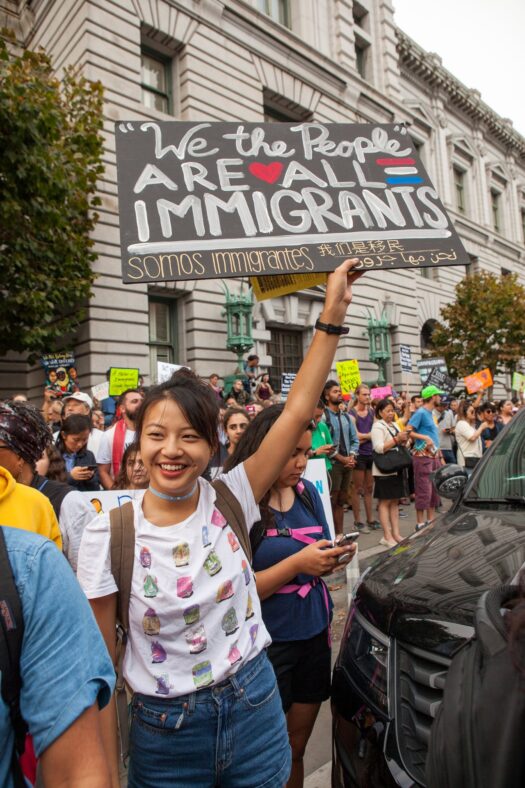
Pax Ahimsa Gethen/Wikimedia Commons
Thousands of immigrants protected under Temporary Protected Status (TPS) are fighting to maintain their status after a Supreme Court decision last month limited judicial review of the Trump administration’s efforts to end these humanitarian protections. The ruling, issued in late June 2026, has prompted a surge of legal challenges and heightened anxiety among TPS holders from countries such as Syria, Ethiopia, South Sudan, Burma, and Yemen.
Supreme Court Decision Narrows Judicial Oversight
On June 29, 2026, the Supreme Court, in a 6-3 conservative majority opinion authored by Justice Samuel Alito, ruled that federal courts cannot review procedural challenges to the Department of Homeland Security’s (DHS) termination of TPS designations. The court held that courts lack authority to question the Homeland Security Secretary’s decision-making process, particularly regarding alleged failures to consult other agencies before ending protections for several countries.
However, the ruling left open the possibility for TPS recipients to bring constitutional challenges, including claims under the Fifth Amendment’s Due Process Clause, which protects against deprivation of life, liberty, or property without due process of law.
Legal Advocates Shift to Constitutional Claims
Following the Supreme Court’s decision, attorneys representing nearly 10,000 TPS holders from Ethiopia, South Sudan, Burma, and Yemen have pivoted to new constitutional arguments. These claims assert that abruptly ending TPS status without proper procedures violates migrants’ rights to due process, as many have built lives in the U.S. over years or even decades.
Shane Kadidal, an attorney with the Center for Constitutional Rights, emphasized the urgency of these challenges. “The government is moving quickly to lift previous injunctions and begin deportations,” Kadidal said. “Everyone’s trying to keep those orders intact long enough to present the new constitutional claims. The Supreme Court decision has only intensified the legal battles.”
Federal Courts Issue Temporary Blocks on Terminations
Despite the Supreme Court’s ruling, several federal judges have temporarily halted the termination of TPS protections while evaluating the new claims. For example, Boston-based Judge Brian Murphy recently ordered the continuation of TPS for Ethiopian nationals during ongoing litigation. Similarly, Judge Patti Saris has kept TPS protections active for South Sudanese migrants, and Judge Matthew Kennelly in Chicago has blocked the termination for Burmese nationals until at least August 7, 2026.
These rulings provide critical breathing room for TPS holders facing imminent deportation, though final outcomes remain uncertain as courts continue to weigh the government’s authority and procedural fairness.
The Human Impact: Stories of Uncertainty and Fear
Dahlia Doe, a Syrian national who arrived in the U.S. in 2015 amid civil war, spoke about the stress caused by the looming end of TPS. “There’s nothing for us to do but to continue fighting and not give up,” she said, expressing the anxiety shared by thousands who rely on TPS to live and work legally in the United States.
TPS provides vital protections for individuals from countries experiencing armed conflict, natural disasters, or other extraordinary conditions that prevent safe return. The Trump administration’s efforts to terminate these designations have sparked widespread concern among immigrant communities and advocacy groups nationwide.
Administration’s Position and Next Steps
The Justice Department has argued that the Supreme Court’s ruling fully authorizes the government’s termination of TPS protections. A White House statement issued last month described the decision as “decisive,” affirming the administration’s “full authority to terminate” the program for affected countries.
Legal advocates continue to explore alternative legal theories, including challenges to DHS’s power to end TPS in the first place, and are preparing for extended litigation. The coming weeks will be critical as courts consider both procedural and constitutional arguments, with the futures of thousands hanging in the balance.
The fight over TPS highlights the ongoing tension between immigration enforcement policies and humanitarian concerns, underscoring the complex legal and human dimensions of immigration reform in 2026.