New Forensic Analysis Challenges Jeffrey Epstein’s Death Ruling as Suicide
A forensic expert’s new report disputes official findings, suggesting Jeffrey Epstein’s 2019 death was homicide, not suicide.
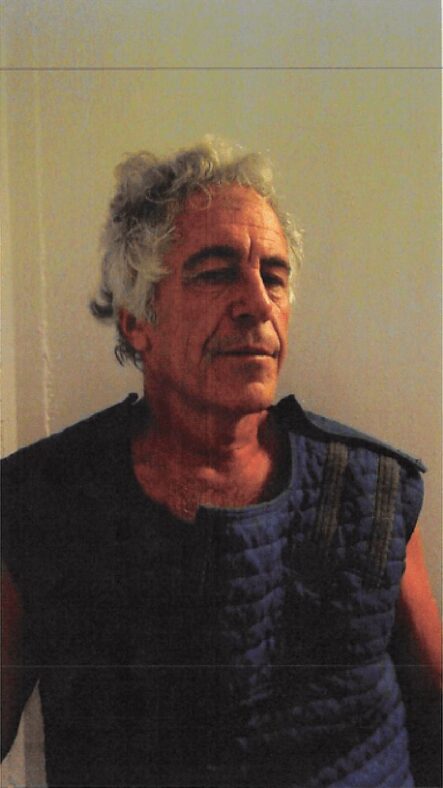
Unknown authorUnknown author/Wikimedia Commons
Jeffrey Epstein’s death in a Manhattan federal jail in August 2019, officially ruled a suicide, is now under renewed scrutiny as a forensic expert claims it was likely homicide. Dr. Michael Freeman, editor-in-chief of the Journal of Forensic and Legal Medicine, reviewed never-before-published autopsy photos and records provided by Epstein’s brother and concluded the injuries were inconsistent with suicide by hanging.
Forensic Expert’s Findings Dispute Official Autopsy
Dr. Freeman spent months analyzing Epstein’s autopsy documentation, which was conducted by the New York City Office of Chief Medical Examiner on August 11, 2019, a day after Epstein’s body was found. His report, presented in London alongside experts Anders Eriksson and Itiel Dror, asserts that Epstein was likely killed by another person. Freeman highlighted unusual ligature wounds on Epstein’s neck that do not match typical suicidal hanging injuries. He said, “The injuries that were documented by the medical examiner were not consistent with the suicidal hanging. And the injuries that were attributed to something other than potentially a physical struggle or assault were just overlooked.” Freeman’s biomedical reconstruction and photo analysis led him to believe the death was a homicide, contradicting the official ruling.
Previous Doubts and Controversy Around Epstein’s Death
This is not the first time outside experts have questioned the official conclusion. In 2020, Epstein’s brother hired forensic pathologist Dr. Michael Baden, who told “60 Minutes” that neck injuries raised doubts and pointed more toward murder than suicide. Despite these concerns, the New York City medical examiner’s office has stood by its determination. A spokesperson stated, “Our office stands by its determination,” when pressed on Freeman’s findings. Meanwhile, The New York Times’ June investigation, which reviewed tens of thousands of pages of documents, including Epstein’s handwritten jail notes, found indications he was intent on ending his life. However, many forensic experts interviewed by the Times expressed that the manner of death could not be conclusively settled by medical evidence alone.
Details of the Injuries and Forensic Analysis
Freeman described the ligature wounds on Epstein’s neck as unusual for a hanging. He observed two distinct marks, one above the other but angled differently, which would not occur from a single ligature tied at a single anchor point. “There is no mechanism to produce a second mark that would be lower,” he said. He also rejected the theory that Epstein made multiple attempts at suicide, explaining that the injuries—specifically the broken hyoid bone and thyroid cartilage—would require a forceful start and sustained consciousness, which contradicts typical suicidal hanging physiology. “That’s not what suicidal hangings do,” Freeman said, emphasizing that unconsciousness occurs first, and then the body’s weight produces the abrasion marks, not repetitive attempts.
Challenges in Forensic Pathology and Investigation Flaws
Freeman acknowledged forensic pathology is not an exact science and that credible experts often interpret evidence differently. Neck injuries from hanging or strangulation can be ambiguous. The investigation into Epstein’s death was further complicated by multiple errors in the hours, days, and weeks after his body was found. Freeman has testified as a forensic expert in high-profile cases and was part of a Maryland Attorney General audit team reviewing in-custody deaths. Despite his expertise, his report was initially rejected by an academic journal, whose reviewers felt it was inappropriate to criticize a medical examiner’s findings in peer-reviewed literature. Freeman plans to resubmit the report.
Jeffrey Epstein’s death remains one of the most controversial and heavily scrutinized cases in recent history. This new analysis by Dr. Freeman and colleagues adds to ongoing debate, challenging the official narrative and suggesting that the truth behind Epstein’s death may still be unresolved.