Pentagon Deputy Steve Feinberg Defends $300M Contract Amid Corruption Claims
Pentagon Deputy Steve Feinberg defends $300 million spent on consultancy linked to his old firm despite conflict concerns.
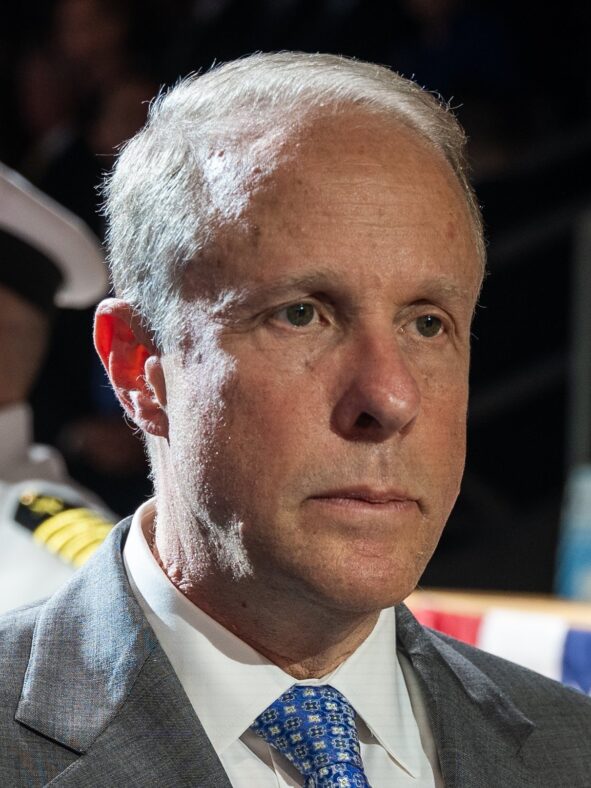
3d U.S. Infantry Regiment (The Old Guard)/Wikimedia Commons
Deputy Defense Secretary Steve Feinberg, the Pentagon’s billionaire second-in-command, is under fire after his department paid $300 million in taxpayer funds to Alvarez & Marsal, a consultancy tied to his former private equity firm Cerberus Capital Management. The payments, reported Thursday by The Wall Street Journal, have raised questions about potential conflicts of interest and duplication of government work.
Controversial $300 Million Contract
The Department of Defense has awarded Alvarez & Marsal a $300 million contract to assist in overhauling military weapons acquisition and production processes. Documents reviewed by The Wall Street Journal and sources familiar with the matter reveal the consultancy’s role supplements work already performed by government employees. Alvarez & Marsal, a corporate turnaround consultancy, has longstanding ties to Cerberus Capital Management, which Feinberg co-founded and previously led.
This contract is part of Feinberg’s broader initiative to revamp how the military builds and procures weapons systems, a critical element of Pentagon modernization efforts.
Deep Connections to Former Business
The relationship between Feinberg and Alvarez & Marsal extends beyond the contract. Two of Feinberg’s senior deputies have direct connections to the consultancy: Pete Guinto recently left the Pentagon to join Alvarez & Marsal, while George Kollitides was formerly a partner at Alvarez & Marsal Capital, an investment arm associated with the consulting firm.
These ties have fueled concerns among officials questioning the propriety of funneling taxpayer money to a company linked to Feinberg’s previous business interests rather than military contractors. Critics also highlight that the contract’s work overlaps with existing Pentagon resources, which include a dedicated team to improve arms production and thousands of employees embedded within contractor factories.
Feinberg’s Defense and Ethics Measures
Feinberg has defended the contract and his department’s arrangements, emphasizing the shortage of manufacturing expertise within the Pentagon. “There’s a big shortage in the department of capable operators,” he told The Wall Street Journal. “Our acquisition teams and our department people are terrific, but they’re not operational manufacturing people.”
To mitigate conflict concerns, Feinberg placed his Cerberus holdings into an irrevocable trust for his adult children upon taking his Pentagon role. A Cerberus spokesman stated Feinberg “is not involved in the operations of Cerberus or its portfolio companies in any way.” Additionally, McDermott Will & Schulte, the law firm representing Cerberus, has been hired by the Pentagon for deal negotiations, with a spokeswoman assuring the firm follows federal ethics reviews and recuses itself from transactions involving Cerberus affiliates.
Political and Public Scrutiny
Senator Elizabeth Warren (D-MA) expressed “ongoing concerns” about Feinberg’s ties in a July letter. Furthermore, reports surfaced that White House officials interviewed potential replacements for Feinberg, although the White House has denied these claims. Feinberg maintains he has “total support from the White House and the department” and is committed “all-in to the end of the term.”
The Pentagon’s use of taxpayer funds on a consultancy intimately connected to Feinberg’s former business, alongside questions about duplicated efforts and manufacturing expertise, continues to fuel debate over ethics and efficiency within the department.
As this story unfolds, the Pentagon and Feinberg’s office face increasing pressure to clarify and justify these arrangements amid heightened public and political scrutiny.