Pete Hegseth’s Office Reverses Course on Troop Role at Paris NFL Game
Defense Secretary Hegseth’s team sought to cancel U.S. troops at Paris NFL game but relented after State Department objections.
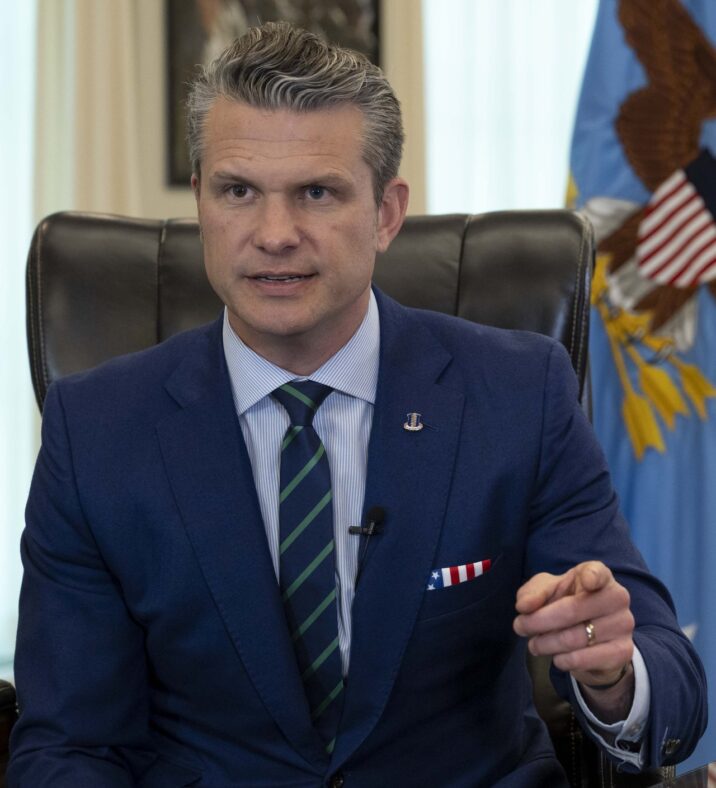
U.S. Secretary of Defense/Wikimedia Commons
Defense Secretary Pete Hegseth’s office initially tried to cancel all U.S. military involvement in the NFL’s first-ever game in Paris but reversed this decision following objections from the State Department, The Washington Post reported. The game, held Sunday between the Pittsburgh Steelers and New Orleans Saints at Stade de France, was set to include dozens of service members before Hegseth’s team attempted to pull them all amid unrest in Paris.
Military Participation and Internal Dispute
Officials who spoke anonymously to The Washington Post revealed that Hegseth’s inner circle sought to remove all military presence from the event after a weekend of protests in Paris. The unrest sparked concern within the Defense Department, especially since President Donald Trump had publicly criticized the situation in France. However, the State Department pushed back strongly against the removal of U.S. troops.
State Department officials argued that a visible U.S. military presence at the event carried significant diplomatic weight. They also indicated that their department had not determined that Americans or U.S. personnel in Paris faced a high risk of danger. This assessment was a key factor in their insistence on maintaining some military involvement.
Compromise and Military Role Restored
Following the State Department’s objections, Hegseth’s office agreed to reinstate a limited military role at the game. This included a color guard, a ceremonial unit typically consisting of fewer than 10 personnel who carry the American and service branch flags. The decision represented a scaled-back involvement compared to the initial plan to deploy dozens of service members.
Attempts to clarify which members of Hegseth’s office initiated the cancellation or the reasons for the sudden change were unsuccessful. Pentagon spokespeople declined to name individuals or explain the shift, instead providing an unattributed statement echoing President Trump’s remarks about the situation in France.
Presidential Comments and Context
President Trump weighed in on the controversy, suggesting the NFL should have postponed the Paris game. He stated, “I would have said the NFL could have probably postponed that match if you want to know the truth, because France is really in trouble.” He attributed the unrest to political decisions, adding, “That’s what happens when you go left.”
The State Department and the NFL declined to comment on the matter when approached by The Washington Post. Meanwhile, protests over school funding and living costs continue in Paris and other French cities, prompting U.S. officials to warn Americans attending the game to avoid demonstrations.
U.S. Military and International NFL Games
The NFL’s Paris game is part of a series of international matches this season involving U.S. military participation. Earlier games in London and Melbourne featured military presence, with upcoming games scheduled in Madrid and Munich. The decision to maintain a ceremonial role at the Paris game reflects the ongoing balance between showcasing American support and addressing security concerns amid foreign unrest.
The dispute between Defense Secretary Pete Hegseth’s team and the State Department highlights the complexities of military involvement in high-profile international events during times of political tension. Though the initial attempt to cancel troop participation was reversed, the resolution underscored the importance of diplomatic considerations in such decisions.