President Trump Arrives at Irish Open with Armored Golf Buggy Amid Protests
President Trump’s visit to the Irish Open featured his armored golf buggy as protests erupted in Dublin and Doonbeg.
NASA/Bill Ingalls/NASA
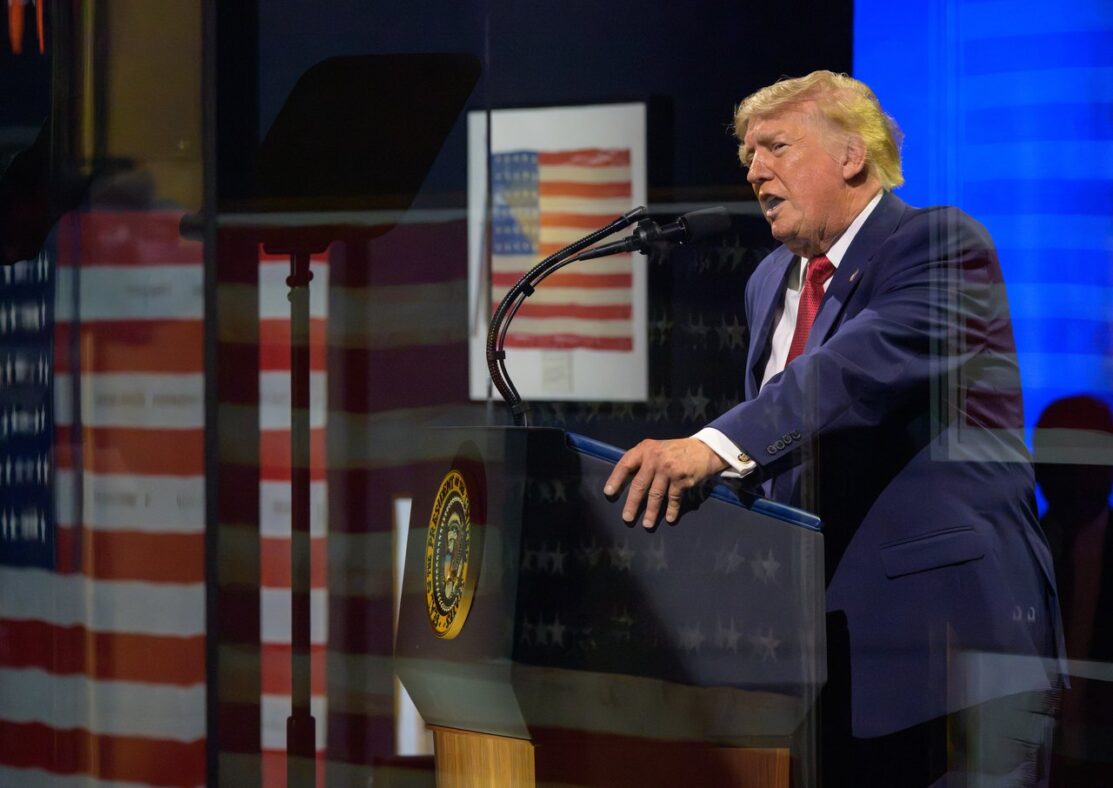
President Donald Trump made a high-profile appearance at the Irish Open on September 12, 2026, arriving at his golf course in Doonbeg, Ireland, aboard his heavily armored golf buggy. The visit sparked widespread protests across Dublin and near the Trump International Golf Links and Hotel Ireland as demonstrators voiced strong opposition to the U.S. president’s presence in the country.
Armored Golf Buggy Highlights Trump’s Security Measures
Trump’s arrival at the Irish Open was marked by a notable display of presidential security. His helicopter, Marine One, landed on a secure helipad near the third tee, prompting a brief suspension of play that drew lighthearted remarks from Irish golfing star Shane Lowry. Alongside Marine One, Trump’s customized armored golf buggy, dubbed “Golf Force One,” was parked prominently at the resort. This vehicle, featuring reinforced armor and bullet-resistant glass, is part of the White House’s presidential fleet of specialty vehicles, having first been used by Trump during his visit to Turnberry, Scotland, last year.
The use of the armored golf buggy underlines the heightened security surrounding President Trump’s travels. The buggy’s presence garnered significant attention from media and attendees, symbolizing the unique blend of luxury and protection that accompanies the president.
Diplomatic Meetings and Remarks in Ireland
Earlier in the day, President Trump visited Phoenix Park in Dublin where he was warmly welcomed by Irish President Catherine Connolly. Following this, Trump met with Taoiseach Micheal Martin, expressing optimism about the future of Irish unity. Trump praised Martin as “the right man” to drive progress, stating, “It’s going to happen eventually. I think it will happen now.”
Trump also emphasized the strong ties between the United States and Ireland, declaring, “We have a big relationship with Ireland. The two countries do very well together. It’s never been as good as it is right now.” Despite these diplomatic overtures, the president’s remarks hinted at the complexities involving the United Kingdom’s position on Irish affairs.
Mass Protests Erupt Across Ireland
While official meetings projected a tone of cooperation, public sentiment told a different story. Thousands of protesters gathered near the Garden of Remembrance in Dublin and at sites close to the golf course, holding banners reading, “Trump out of Ireland. US military out of Shannon.” Inflatable caricatures of President Trump and Israeli Prime Minister Benjamin Netanyahu were displayed as chants of “Donald Trump, can you hear? We don’t want you here” echoed through the crowds.
One demonstrator told CNN, “We don’t want him here. We respect the President of America always. But not this President.” The protests reflected deep dissatisfaction with Trump’s policies and presence amid ongoing geopolitical tensions.
President Trump, when asked about the protests during his meeting with Taoiseach Martin, appeared unfazed, remarking, “I haven’t seen any protests,” before joking, “It’s a friendly protest.”
Irish Open Play and Public Reactions
The president’s arrival disrupted the Irish Open temporarily but also provided a moment of levity. Shane Lowry, Ireland’s celebrated golfer, referenced the Marine One landing in good humor, highlighting the unusual nature of the event. The golf tournament continued with heightened security measures in place, ensuring the safety of players and attendees alike.
Public reactions remained sharply divided, with some expressing concern over the U.S. president’s impact on Ireland’s international image, while others focused on the economic benefits of hosting such a high-profile event. The controversy surrounding Trump’s visit underscores the ongoing polarized views of the president’s global influence.
President Trump’s visit to Ireland, marked by his armored golf buggy and mass protests, reflects the complex intersection of diplomacy, security, and public dissent in 2026. As the Irish Open proceeds, the country continues to grapple with the implications of hosting one of the world’s most polarizing leaders.