President Trump Officially Bans ‘AI’ and ‘Artificial Intelligence’ Terms
President Trump bans terms ‘AI’ and ‘Artificial Intelligence,’ promoting ‘Super Intelligence’ to emphasize U.S. tech leadership.
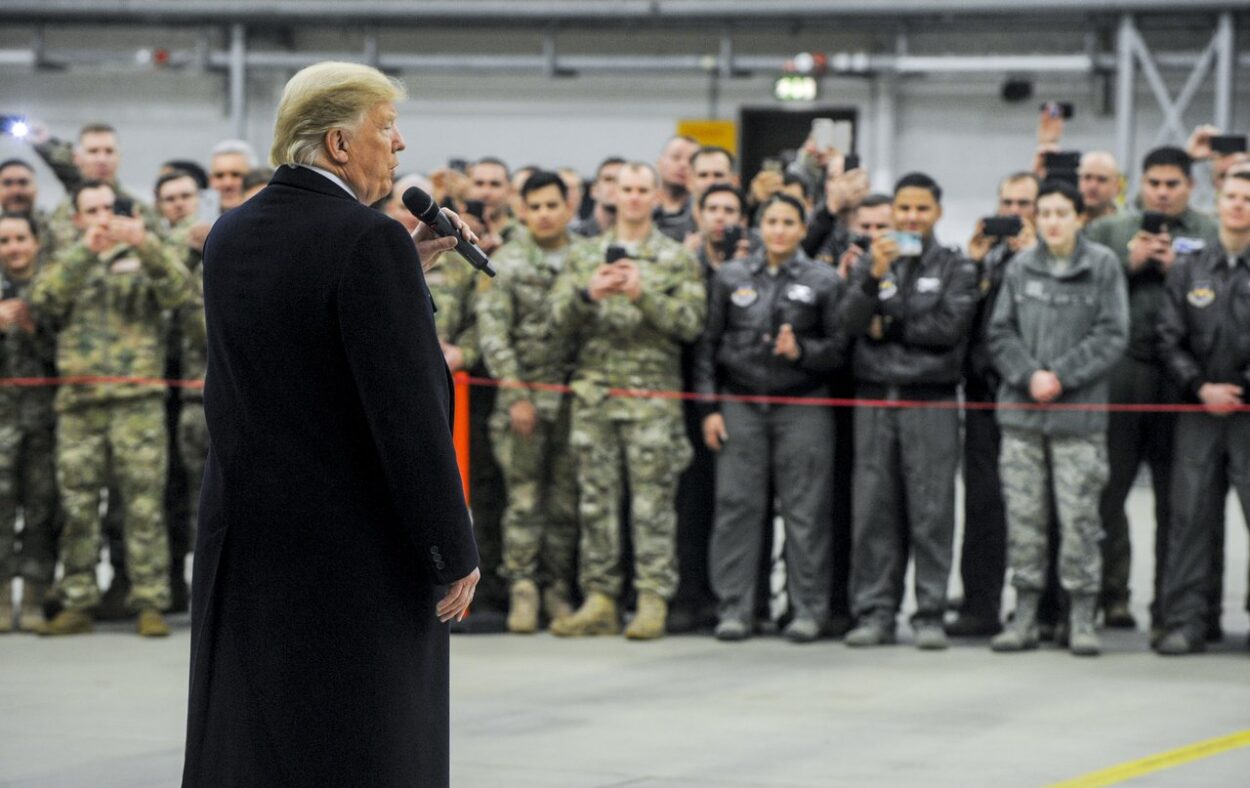
U.S. Air Force photo by Staff Sgt. Timothy Moore/Wikimedia Commons
President Donald Trump announced on Tuesday that the terms “AI” and “Artificial Intelligence” will be banned across the executive branch, replaced by “Super Intelligence” or “SI.” This move is part of the administration’s effort to rebrand the technology and highlight American leadership in the field.
Trump’s Push for Terminology Change
On Truth Social, President Trump criticized the term “Artificial Intelligence” as “a very bad and inaccurate name,” advocating instead for “Super Intelligence,” which he says better reflects the technology’s capabilities. He predicted that “virtually everyone else” would adopt the term soon. The White House confirmed the change in an emailed statement to Newsweek, emphasizing the desire to focus on the technology’s promise and opportunities.
Executive Order Mandates New Language
In September, President Trump signed an executive order directing all executive branch agencies to replace “Artificial Intelligence” and “AI” with “Super Intelligence” and “SI.” The administration’s spokesperson Liz Huston said the terminology underscores the United States’ position as the world leader in this technology and aligns with goals to advance innovation, strengthen the economy, and improve American lives.
Industry Concerns and Risks Amid Rebranding
The rebranding occurs amid growing debate over the pace and risks of increasingly powerful AI systems. Experts such as OpenAI CEO Sam Altman have warned that the future of AI could be problematic if safety measures do not keep up with development. Altman has stressed the need for AI to remain under human control to avoid dystopian outcomes. Former Anthropic researcher Jacob Coxon has also expressed concern about the rapid advancement of AI heading into 2027.
Legal and Practical Limits of the Ban
While the president can direct terminology within the executive branch, his authority does not extend to private entities or media organizations. Constitutional law expert Jamal Greene stated that the president has some, but not unlimited, control over the words the federal government itself uses in its official documents but he has no legal or constitutional authority to police the language choices of the Wall Street Journal or any other private institution or person. The government’s speech doctrine allows it to decide how it speaks for itself, but presidential directives cannot override existing laws or constitutional rights.
The rebranding effort does not restrict AI development but aims to emphasize American innovation and leadership through the new terminology.
President Trump’s move highlights a unique approach to managing the public discourse around advanced technologies at a time when experts and policymakers debate their impact and governance.