President Trump Questions Timing of Sharp Gas Price Drop After Midterms
President Trump questions why U.S. gas prices fell sharply only after Republicans lost midterms, as prices dip below $4 per gallon.
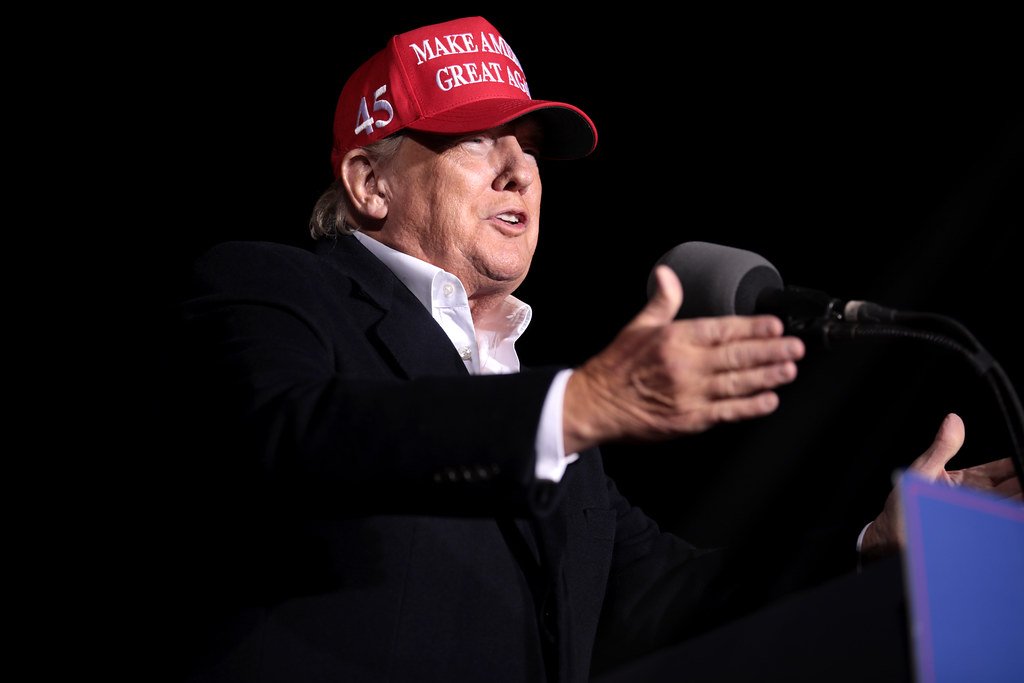
Gage Skidmore/Flickr
President Donald Trump has raised questions about the timing of a significant decline in U.S. gasoline prices, which came only after Republicans suffered heavy losses in the recent midterm elections. On Tuesday, Trump took to Truth Social to highlight the largest single-day drop in gas prices in 18 years, suggesting the price drop was strategically delayed until after the vote.
Trump Highlights Biggest Gas Price Drop in Nearly Two Decades
In his Truth Social post on Tuesday, President Trump wrote, “Biggest drop in gasoline in 18 years. Notice that they waited until after the ‘Election?” This comment came in response to reports that the national average price of regular gasoline dropped sharply last Wednesday, marking the largest single-day decline in nearly two decades.
According to the American Automobile Association (AAA), the national average price of regular gasoline stood at $3.78 a gallon on Tuesday, the first time prices had fallen below $4 since July. Prices across the country vary widely, with North Carolina averaging $3.09 per gallon while Hawaii remains the highest at $5.60 per gallon.
Market Factors Behind the Price Drop
Bloomberg energy columnist Javier Blas noted that Wednesday’s price drop was the largest in 18 years, with Thursday following as the second-largest single-day decline. Blas added, “If (yes, a big if) the wholesale market holds at current levels, American gasoline retail prices would be at a 8-month low by Thanksgiving weekend.”
Despite the sharp recent declines, analysts point to a combination of factors driving prices down, including reduced seasonal demand and the completion of refinery maintenance that increased fuel production. Additionally, crude oil prices have fallen amid growing optimism that the U.S. would not escalate military operations against Iran.
Impact of the Iran Conflict and Election Outcomes
Gas prices surged earlier in the year following the outbreak of war with Iran in February, which disrupted oil supplies and shipping through the Strait of Hormuz. President Trump has acknowledged that the unpopular war contributed to the Republicans’ poor showing in the midterm elections, where Democrats won decisively, citing affordability and cost of living concerns as key voter issues.
Patrick De Haan, head of petroleum analysis at GasBuddy, told Newsweek that increased oil flows through the Strait of Hormuz in recent weeks have helped ease energy price pressures. Gulf producers have adapted shipping practices in the face of ongoing threats to vessels in the region, allowing exports to recover.
However, De Haan cautioned that gas prices are unlikely to return to pre-war levels until there are sustained months of uninterrupted oil shipments without escalations or a diplomatic deal with Iran.
Controversy Over Timing and Price Trends Before Midterms
President Trump’s suggestion that gas prices were deliberately kept high before the election lacks evidence. In fact, prices began falling weeks before the vote. Analysts attribute this earlier decline to typical seasonal changes and refinery activity rather than political manipulation.
Despite recent price drops, November remains the most expensive on record for gas prices, AAA reported, with this November’s average of $3.78 per gallon far exceeding last year’s $3.08 average for the same month.
The ongoing fluctuations in gas prices continue to be a significant factor influencing voter sentiment and the political landscape as the country approaches the holiday season.
President Trump’s comments and the recent market shifts illustrate the complex interplay between geopolitics, election outcomes, and energy costs in the United States.