President Trump Voices Support for a Unified Ireland During Dublin Visit
President Trump says he would “love” to see a unified Ireland during his visit, sparking reactions from political leaders and locals alike.
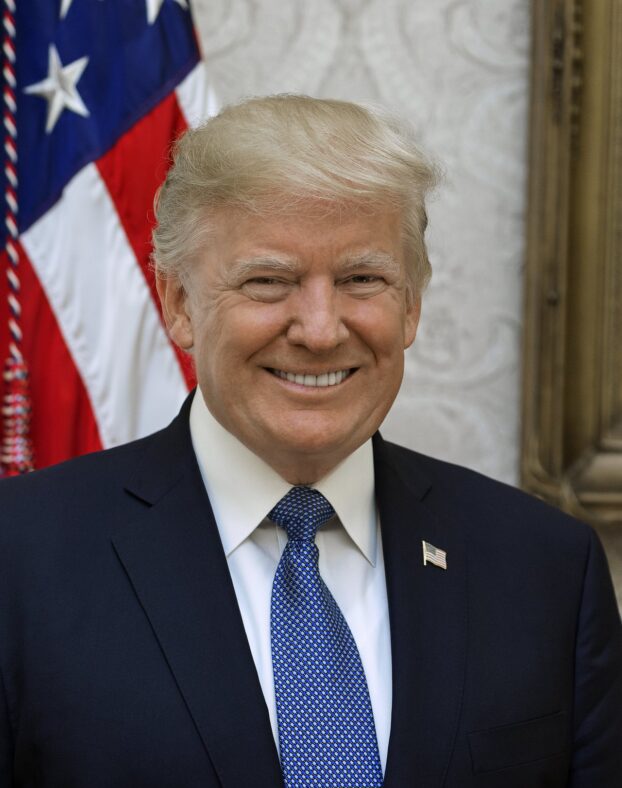
Shealeah Craighead/Wikimedia Commons
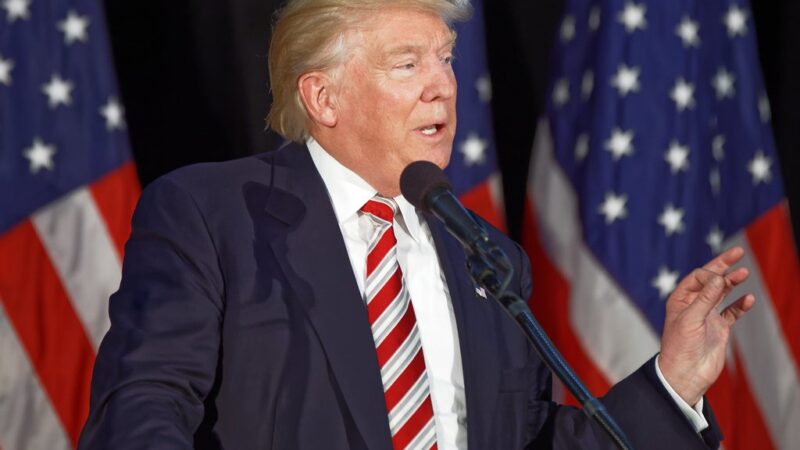
President Donald Trump expressed his support for a unified Ireland on September 12, 2026, as he kicked off his official visit to Dublin, where he met with Irish leaders and attended the Irish Open golf tournament at one of his courses. His remarks on Irish unity drew immediate attention amid ongoing political tensions in Northern Ireland.
Trump’s Comments on Irish Unification
During a meeting with Irish Prime Minister Micheál Martin, President Trump stated that the unification of the Republic of Ireland and Northern Ireland “may as well happen now.” He emphasized that while he did not want to cause any trouble, he would “love to see it unified,” calling it “a fantastic thing.” Trump acknowledged that the United Kingdom would have an important role in the matter, saying, “the U.K. will have something to say about it, obviously.”
The comments came against the backdrop of a complex history involving Northern Ireland. Since Ireland’s independence a century ago, Northern Ireland – with its Protestant majority – has remained part of the United Kingdom, while the predominantly Catholic Republic of Ireland has been a separate nation. The divide has fueled decades of conflict, culminating in the 1998 Good Friday Agreement, which helped bring peace but left the question of Northern Ireland’s ultimate status unresolved.
Reactions from Irish and UK Political Leaders
Trump’s remarks drew swift responses from political figures on both sides of the Irish Sea. UK Prime Minister Andy Burnham reiterated last month that a referendum on Irish unity is “off the table,” a stance that has been met with strong opposition by Sinn Féin, the pro-unity party in Northern Ireland.
Gavin Robinson, leader of the Democratic Unionist Party (DUP), voiced his opposition directly on social media, stating, “As unionists we are not interested in the destruction of our country by joining with the Irish Republic.” His comments underscore the deep-rooted divisions between unionists who want to remain part of the UK and nationalists who support a united Ireland.
Meanwhile, President Trump also met with Irish President Catherine Connolly in Dublin, where the two leaders discussed bilateral relations before Trump addressed a gathering of U.S. and Irish business leaders at the U.S. ambassador’s official residence.
Trump’s Visit to Doonbeg and the Irish Open
Following his engagements in Dublin, President Trump traveled to his oceanfront golf club in Doonbeg, County Clare, to attend the Irish Open. Known for his passion for golf, Trump has frequently played at courses he owns in the United States and Europe. In 2026 alone, his clubs in Doral, Florida, Bedminster, New Jersey, and Aberdeen, Scotland, have hosted major professional tournaments, blending his political profile with his business interests.
The Irish Open is the second European Tour event held at a Trump-owned property this year, with the Nexo Championship taking place in Scotland last month. The president’s presence at such events continues to draw attention for the intersection of his political role and private business ventures.
Local Sentiments and Planned Protests
Not all locals have welcomed President Trump’s visit. Some residents expressed frustration at the disruptions caused by the visit, particularly the travel to Doonbeg for the golf tournament. Taxi driver Christopher Fox remarked, “He’s causing mayhem in this city because he wants to go down to Doonbeg and play golf. The world’s in turmoil and this fella’s down playing golf.”
University student Mina Petrovski criticized Trump’s views on women, immigrants, and minorities, calling them “abhorrent” and describing the Irish government’s warm welcome as “shameful.” Meanwhile, a coalition of left-leaning opposition parties, anti-military groups, pro-Palestinian organizations, and environmentalists plan to hold protests in Dublin during the president’s visit.
President Trump’s visit to Ireland marks a high-profile moment in U.S.-Irish relations, with his comments on Irish unity adding a new dimension to ongoing discussions about the future of Northern Ireland. As the visit continues, attention will remain on how his statements resonate across political and public spheres both in Ireland and the UK.