President Trump’s Approval Rating Hits Career Low at 32%, Poll Shows
President Donald Trump’s approval rating falls to a record low of 32% amid economic and foreign policy challenges.
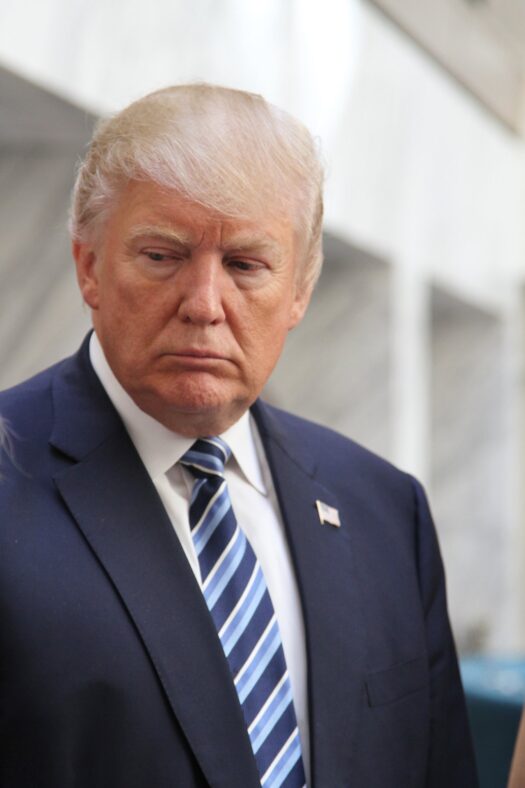
Gedalia Vera/Wikimedia Commons
A new Reuters/Ipsos poll released on September 21, 2026, reveals that President Donald Trump’s approval rating has fallen to the lowest point of his political career, with just 32% of Americans approving of his job performance. This marks a significant decline from his initial 47% approval rating shortly after taking office in January 2025 and reflects growing public dissatisfaction with his handling of key issues such as the cost of living and the ongoing conflict in Iran.
Record Low Approval Rating Amid Economic Struggles
The latest poll results highlight President Trump’s worsening public standing as economic concerns intensify nationwide. Only 17% of respondents expressed approval of his management of the cost of living, a critical factor weighing heavily on voters. Inflationary pressures and escalating gasoline and diesel prices have contributed to this discontent, affecting households across the country, including communities in North Carolina’s Wayne and Duplin counties.
This drop to 32% approval sets a new low for Trump during both his first and second terms, barely edging below his previous career floor of 33%, last recorded in December 2017 and again in August 2026. The decline is indicative of growing frustration among Americans as they grapple with rising expenses and economic uncertainty heading into the November midterm elections.
Republican Support Shows Signs of Erosion
While President Trump continues to maintain majority support within the Republican Party, the poll signals a noticeable erosion of enthusiasm among GOP voters. Support among Republicans fell to 73%, down nine points from the previous week’s poll, as increasing criticism mounts over Trump’s handling of the economy and the war in Iran.
Notably, 51% of Republicans now disapprove of Trump’s approach to the cost of living, marking a rare moment of intra-party discontent. The ongoing conflict in Iran has also contributed to Republican unease, particularly as rising fuel prices impact daily life and the broader economy.
Historical Context and Political Implications
President Trump’s current approval rating of 32% is the lowest recorded for any sitting president since he took office for his second term in January 2025. This rating places him below former President Joe Biden’s lowest rating of 35% in October 2026, underscoring the challenges Trump faces in maintaining public confidence.
Poll averages from major outlets reinforce this trend, with RealClearPolitics showing a 40.1% approval versus 58.5% disapproval, the New York Times at 38% approval and 59% disapproval, and Silver Bulletin at 38.6% approval against 58.9% disapproval as of September 21, 2026.
These figures could have significant consequences for the upcoming 2026 midterm elections, where Democrats currently hold leads of 5 to 8 points in generic congressional ballot polls, according to NBC News, Fox News, and the Reuters/Ipsos survey. The president’s declining approval may bolster Democratic efforts to regain control of Congress.
Economic Worries and Foreign Policy Fuel Discontent
The cost of living crisis remains the most pressing issue for voters, with widespread concerns over inflation, housing costs, and energy prices. President Trump’s low approval on this front reflects public skepticism about his administration’s ability to address these challenges effectively.
Meanwhile, the ongoing war in Iran has become increasingly unpopular, even within Republican ranks, as military engagement and its economic ramifications weigh on Americans. Rising fuel prices linked to the conflict have further strained public opinion, contributing to the president’s slipping numbers.
As President Trump continues his second term, these approval trends will be closely watched by political analysts and voters alike, especially with the 2026 midterms just weeks away. The evolving dynamics within the Republican Party and among the broader electorate suggest a turbulent political environment ahead.