Trump’s Claims on Kennedy Center Funding Don’t Hold Up Under Scrutiny
President Trump’s demand to rename the Kennedy Center faces legal rejection as financial claims fall apart under court scrutiny.
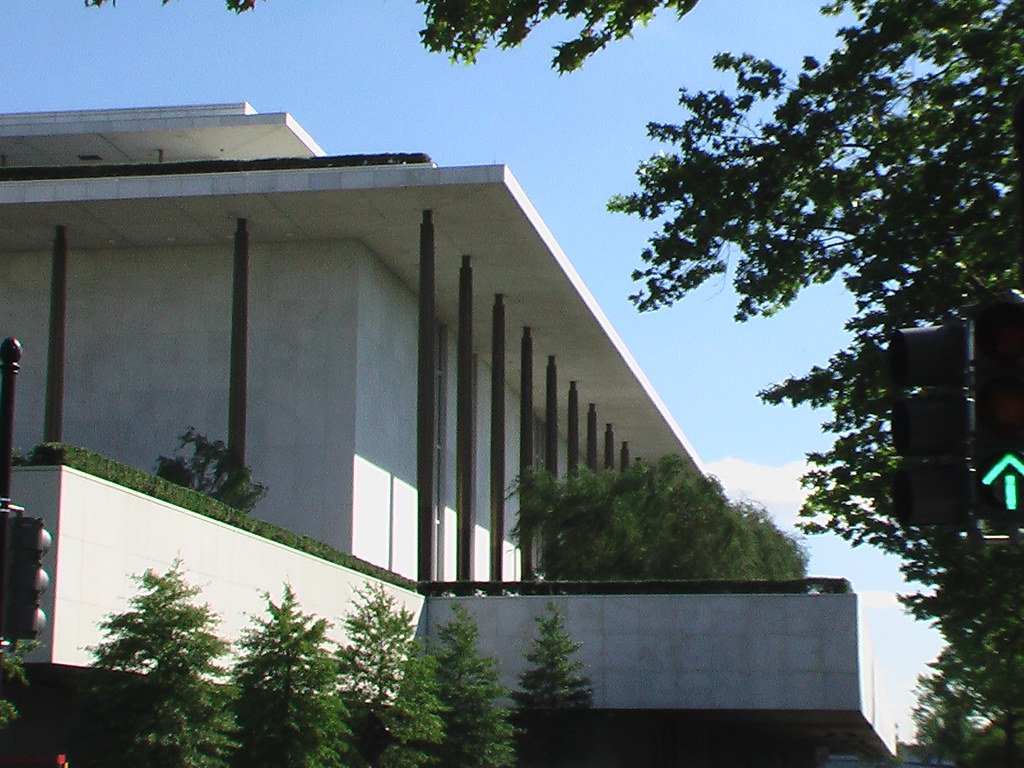
pingnews.com/Flickr
President Donald Trump’s ongoing effort to rename the Kennedy Center after himself has drawn sharp criticism and legal setbacks, with both courts and financial experts disputing his claims that the center’s survival depends on carrying the Trump name. As of September 2026, Trump has threatened to abandon the institution or let it be “ripped down” if his demands are not met, but closer examination reveals contradictions and inconsistencies in his reasoning.
Trump’s Argument: The Kennedy Center Needs the Trump Name to Survive
In multiple court filings this summer, the Trump administration argued that without the president’s name on the building, fundraising at the Kennedy Center would collapse. The administration claimed that all current donations would need to be refunded or terminated, putting the center on a “financial and structural death spiral.” President Trump himself echoed this narrative in a Charlotte press event, warning that the center “will close” if the Trump name is not recognized and that his involvement was contingent on having that recognition.
Trump also asserted that $17 million raised by him had been deposited to keep the center afloat. However, this figure is misleading as Congress had already appropriated $257 million for renovation efforts, a budgetary decision independent of Trump’s direct actions. The administration’s attempt to link this federal funding to the Trump name appears intended to leverage congressional appropriations for personal branding rather than actual financial necessity.
Financial Reality Contradicts Trump’s Claims
Financial documents from as recently as September 2026 show the Kennedy Center had been operating with a surplus before Trump’s board overhaul. In late 2024, the center reported over $41 million in surplus, with revenues surpassing expenses by millions. Yet after Trump replaced the board with loyalists following his second inauguration, financial troubles seemingly emerged.
Artists canceled performances, and ticket and fundraising revenue declined sharply, particularly after the controversial December 2025 vote to rename the center. A Washington Post investigation in August 2026 revealed that the center was projected to miss its revenue target by nearly $100 million for the fiscal year, a stark contrast to the healthy finances just two years prior.
Interestingly, Trump had previously painted a much rosier picture earlier in 2026, claiming significant fundraising success and a stable financial outlook. These conflicting narratives raise questions about the true motivation behind the renaming campaign.
Legal Rulings Reject Trump’s Claims
U.S. District Judge Christopher R. Cooper has dismissed the administration’s arguments as unsupported by evidence. The judge noted that the alleged financial crisis coincided with Trump’s takeover efforts rather than preceding them. In his ruling, Cooper highlighted that the renaming led to a decline in revenue, cancellations of performances, and even the departure of the Washington National Opera after a 50-year residency.
Furthermore, Judge Cooper pointed out that the Kennedy Center has access to the $257 million in congressional funds for renovations, which Commerce Secretary Howard Lutnick confirmed Trump is willing to use to complete the work. This undermines the administration’s claim that the center’s survival hinges on the Trump name.
What’s Really at Stake?
Trump’s insistence on renaming the Kennedy Center appears to be more about personal legacy than genuine concern for the institution’s financial health. The legal defeat shows that the administration’s arguments are not only flawed but also disconnected from reality.
Critics argue that this high-profile standoff risks damaging a cherished cultural institution for political and personal gain. Meanwhile, the Kennedy Center’s leadership and supporters must focus on stabilizing its finances and restoring public confidence without the distraction of political theatrics.
President Trump’s approach to the Kennedy Center saga reveals a troubling mix of self-promotion and misinformation, ultimately putting a national cultural landmark at unnecessary risk.