Secret Files in Hegseth’s Office Blocked Navy Promotions, May Violate Law
Secret paper files kept by Defense Secretary Pete Hegseth’s office blocked Navy promotions, raising legal concerns over possible violations.
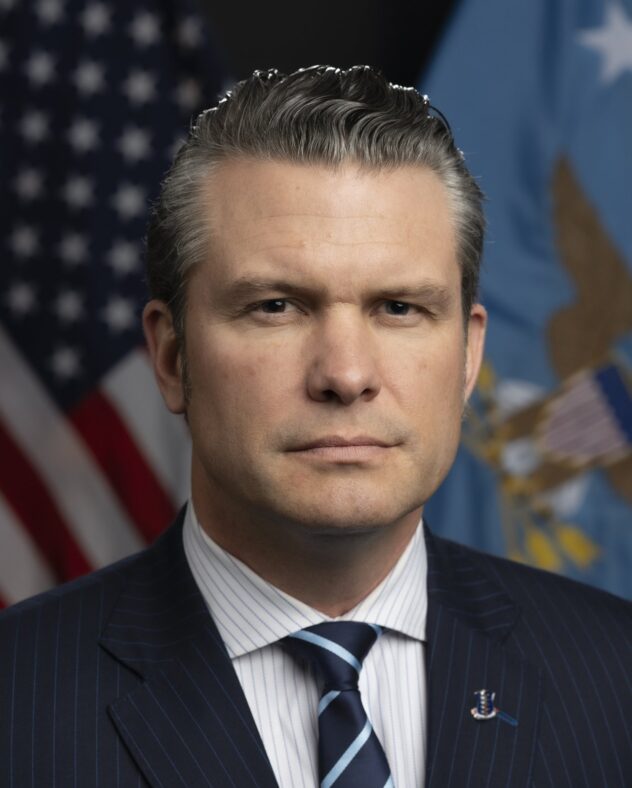
(DoD photo by Chad J. McNeeley)/Wikimedia Commons
Secret paper files maintained by Secretary of Defense Pete Hegseth’s office were used to block the promotions of senior Navy officers, primarily women and people of color, according to a new report. The process, which involved undisclosed internet search printouts, may have violated federal law and threatens to cause lasting damage within the Navy’s promotion system.
Secret Paper Files and Promotion Blocks
A senior official with deep knowledge of flag and general officer selections told MS NOW that Hegseth’s executive office created “paper-only files” containing internet search results about the officers under consideration—files the officers themselves could not access. Instructions on the new criteria for promotion reviews were provided only verbally over the phone rather than in writing. Two officers who had their promotions withheld confirmed this account.
The officers had originally been selected by the Navy’s official selection boards, which by law must assess candidates based on performance, experience, and education. However, Hegseth’s office intervened to target officers for reasons including allowing a celebration with rainbow flags, speaking at a Hispanic Heritage Month event, participating in an International Women’s Day panel, or encouraging sailors to receive COVID-19 vaccines.
Impact on Women and Minorities
The report revealed that out of 31 officers selected for one-star rank, about 15 received reports and nine had their promotions withheld. All but one woman and minority on that list were removed. On the two-star promotion list, the only woman selected and every person of color were also taken off. According to the senior official, this was the largest number of officers withheld in Navy history, surpassing the six officers removed in 2016 over the Fat Leonard bribery scandal.
Legal Concerns and Political Reactions
Legal experts warn that the method used to withhold promotions could be a serious legal violation. Federal law stipulates that only the president can remove individual names from one- and two-star promotion lists, while the defense secretary may only approve or reject the entire list. Additionally, officers facing delayed promotions are legally entitled to written notice and an opportunity to respond—protections reportedly denied in this case.
Cody Harnish, a military defense attorney and former Army judge advocate general, criticized the removals as “illegal,” stating, “If ‘professionally unqualified’ can mean ‘executed a lawful program the current Secretary opposes,’ the promotion system and law has no function left.”
Democratic lawmakers had already begun scrutiny months earlier. In July, Senators Brian Schatz (D-HI) and Cory Booker (D-NJ) requested an investigation by the Pentagon’s inspector general, calling Hegseth’s actions “highly irregular” and saying they “completely nullify” the merit-based promotion process. Meanwhile, Chief Pentagon spokesperson Sean Parnell declined to comment on whether any laws were broken but asserted that Hegseth “has acted and will continue to act within his authority and will not retreat from the historic transformation he has undertaken.”
Long-Term Consequences for the Navy
The senior official warned that the damage caused by these actions could take a decade to repair. The official emphasized the importance of fairness and inclusivity within the military promotions system, stating, “We don’t want second class citizens, right? We want everybody to think they can succeed.”
As the Pentagon faces increased oversight from a newly Democrat-controlled Congress, the controversy surrounding Hegseth’s secret files and promotion interference is likely to deepen, raising questions about the future of military leadership and equity.
The unfolding situation shines a spotlight on the opaque processes within the Department of Defense and underscores the legal and ethical challenges posed by secretive interventions in military promotions.