Trump’s Threat to Target Iranian Bridges, Power Plants Sparks War Crime Debate
President Trump’s threat to strike Iran’s civilian infrastructure raises serious war crime concerns under international law.
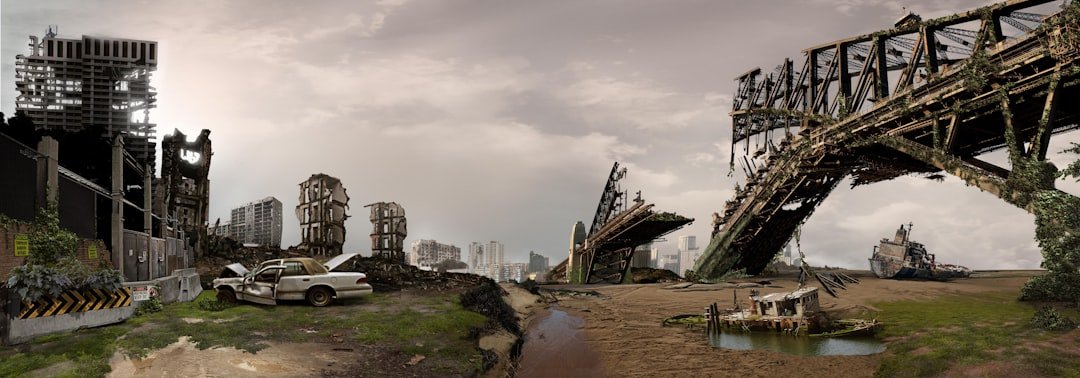
Romeo Varga/Unsplash
President Donald Trump’s recent threats to target Iran’s bridges and power plants have reignited intense debate over the legality and morality of such military actions. Delivered amidst escalating tensions in the Strait of Hormuz in July 2026, these threats have raised alarm among international law experts who warn that deliberate attacks on civilian infrastructure may constitute war crimes under established treaties and conventions.
Trump’s Threats and the Context of Rising Tensions
In a Fox News interview aired late Tuesday, Trump warned that unless Iran returns to peace talks with the U.S., American forces would “knock out” critical Iranian infrastructure, including power plants and bridges. This statement came as U.S. and Iranian military engagements have intensified, with strikes and counterstrikes around the strategic Strait of Hormuz—the vital shipping lane through which roughly 20% of the world’s oil supply transits. Earlier in April 2026, the U.S. struck a bridge in Karaj, northwest of Tehran, symbolizing a shift toward targeting infrastructure rather than solely military assets.
International Law and the Definition of War Crimes
Under multiple international agreements, including the Geneva Conventions and the United Nations Charter, the deliberate targeting of civilian infrastructure that is essential for the survival of the population is prohibited. The Geneva Conventions specifically forbid attacks on sites indispensable to civilian life, such as power plants, water supplies, and transportation networks unless they are used for military purposes.
Legal experts emphasize that bridges and power plants generally do not qualify as legitimate military targets unless directly supporting military operations. Targeting such sites risks severe humanitarian consequences, including widespread civilian suffering and disruption of essential services, and can be classified as war crimes. The Pentagon’s own guidelines reinforce protections for civilians and non-combatants, stating that military action must always discriminate between lawful military targets and protected civilian objects.
Military and Political Ramifications of Targeting Civilian Infrastructure
Trump’s open threats have sparked bipartisan condemnation from lawmakers and human rights advocates who argue that such rhetoric undermines international norms and endangers both civilian populations and U.S. service members. Military personnel are legally bound to refuse unlawful orders, and following directives to strike protected civilian infrastructure could expose soldiers to prosecution under military law.
Defense Secretary Pete Hegseth’s recent dismissal of senior military legal advisors has fueled concerns about the erosion of checks that ensure compliance with international law. Critics argue that sidelining military lawyers may increase the risk of unlawful orders being issued and executed without proper legal scrutiny.
Impact on U.S.-Iran Relations and Global Stability
The escalation of threats and military actions around the Strait of Hormuz threatens to derail the fragile peace negotiations that began with the interim agreement in June 2026. Iran’s control over the strait and the U.S.’s efforts to reopen the shipping lane have led to repeated clashes, with casualties mounting on both sides. The reinstatement of a naval blockade by the U.S. has further heightened tensions amid ongoing diplomatic deadlock.
International observers warn that the continuation of these hostilities and threats against civilian infrastructure risks destabilizing the broader Middle East region and disrupting global energy markets. Calls for renewed diplomatic engagement and adherence to international law have intensified as the conflict shows no sign of abating.
The Legal and Moral Debate Moving Forward
More than 100 international law experts issued an open letter in April 2026, cautioning that U.S. strikes on Iranian targets risked serious violations of humanitarian law and potential war crimes. Despite this, Trump has publicly dismissed international legal constraints, stating that his decisions are guided solely by his “own morality.”
This stance raises unresolved questions about the accountability of political leaders in wartime and the protections afforded to civilians under international law. As military operations continue, the global community watches closely to see whether these threats materialize and how the U.S. government and armed forces will navigate the complex legal landscape.
As the situation evolves, it remains critical for all parties to uphold the rules of war designed to protect civilian lives and infrastructure, ensuring that military necessity does not override humanitarian imperatives.