Tucker Carlson Sparks Conservative Backlash Over WWII Hitler Remarks
Tucker Carlson’s comments challenging Britain’s WWII fight against Nazi Germany have drawn sharp rebukes from prominent conservatives.
Gage Skidmore/Flickr
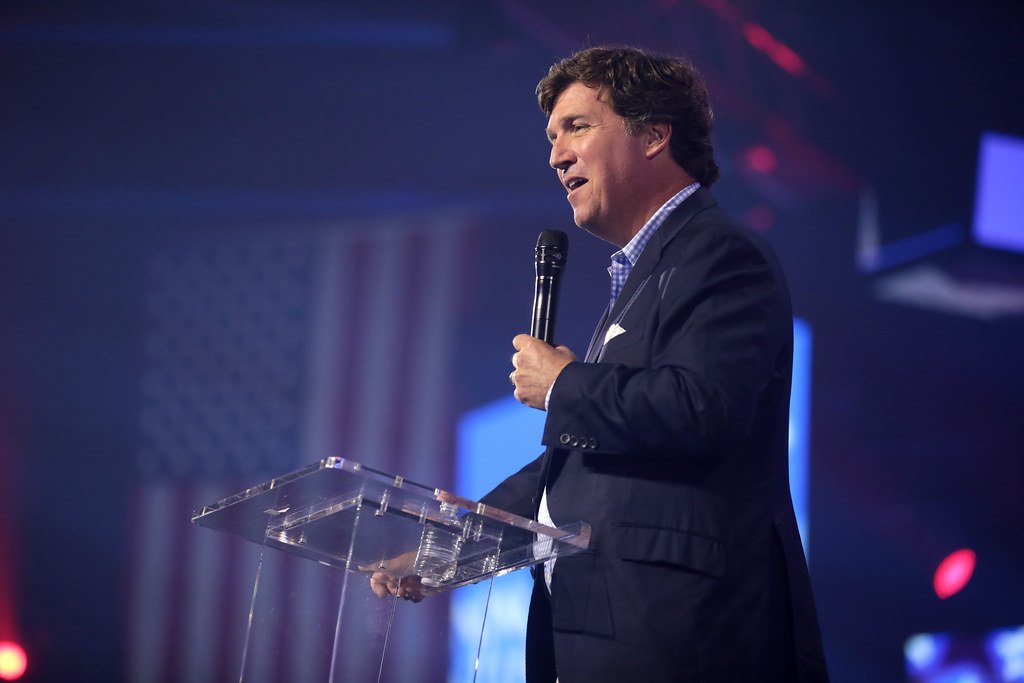
Tucker Carlson ignited controversy among conservatives after an interview released Friday, September 29, questioned Britain’s decision to fight Nazi Germany in World War II. The exchange, posted on Carlson’s X account, featured a wide-ranging discussion with former British lawmaker Sir Jacob Rees-Mogg and challenged one of the West’s most widely held historical views.
Contentious Exchange on WWII and National Interest
The hour-long conversation touched on Britain’s military preparedness and the logic behind entering the Second World War. Carlson disputed the rationale for fighting the war initially, stating, “I never understood why fight the Second World War in the first place.” He referenced the Treaty of Versailles’ territorial penalties on Germany as context for Hitler’s invasion of Poland but rejected the idea that Nazi aggression was random. Carlson argued the war ultimately weakened Britain’s imperial power without clear benefits for its citizens.
Rees-Mogg countered by framing the war as a battle of “classic good versus evil,” emphasizing the importance of defeating Nazism and preserving Britain’s sovereignty. When Carlson questioned whether Britons might otherwise be speaking German, he replied, “Who cares?” The debate grew personal as Carlson highlighted the sacrifices families made, arguing that such sacrifices should yield demonstrable improvements for citizens.
Conservative Backlash and Public Rebuke
Carlson’s remarks sparked swift criticism from notable conservatives who typically share his political alignment. U.S. Ambassador Mike Huckabee accused Carlson of seemingly suggesting Britain should have allowed Nazi rule, writing: “Forget that Hitler murdered 11 million people?” and adding that Carlson “needs help.” Former British MEP Lance Forman, who is Jewish, wrote beneath Huckabee’s post: “I think he is beyond help.” Texas Senator Ted Cruz succinctly responded: “Yes, Tucker, the UK is better off for winning WWII. America is better off for winning WWII. And the world would be much worse off if the Nazis had won WWII.” British commentator Christopher Snowdon highlighted a contradiction in Carlson’s sovereignty argument, noting the inconsistency in condemning foreign troops except when Nazis occupy a country.
Conservative TV personality Meghan McCain also commented on X, calling the conversation “one of the all time dumbest conversations that has ever been filmed in the history of the camera.”
Carlson’s Position on Nazi Ideology and Noninterventionism
While Carlson made clear he was “certainly not here defending Hitler,” he plainly argued Britain made a mistake by entering the war, challenging the widely held view that stopping Nazi conquest was a moral imperative. His stance reflected a broader noninterventionist philosophy: governments should ensure wars materially benefit their own people before asking for their lives.
Rees-Mogg disputed this economic test, asserting that confronting an expansionist dictatorship was itself a vital national benefit. Their disagreement raised a key question at the center of the backlash: whether national survival should be judged solely by the country’s outcome after war or also by the future that was prevented.
Broader Topics Covered in the Interview
The interview also addressed Britain’s support for Ukraine and military readiness as a deterrent to aggression. Rees-Mogg stated, “We’re not picking a fight with Russia. We just want to be strong,” while Carlson warned of risking uncontrollable nuclear conflict. They briefly discussed the atomic bombings of Hiroshima and Nagasaki, with Rees-Mogg calling the bombings “unquestionably just.”
Carlson’s remarks have placed him at odds with many conservatives who view the defeat of Nazism as a crucial moral victory, provoking an intense debate about the costs and justifications of war.
The controversy highlights ongoing tensions within conservative circles about military intervention, historical memory, and the principles guiding national security decisions.