Trump Urges ICE to Maintain Traffic Stops Amid Recent Fatal Shootings
President Trump insists ICE should keep traffic stops as a key enforcement tool despite recent deadly shootings sparking protests nationwide.
Michael Vadon/Flickr
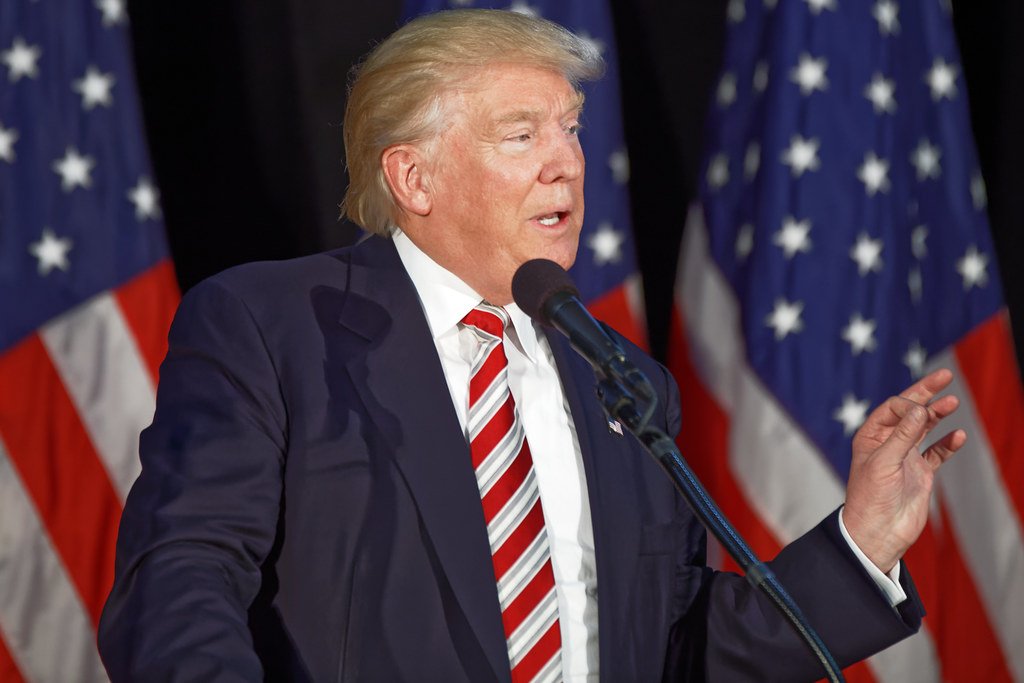
President Donald Trump has publicly urged US Immigration and Customs Enforcement (ICE) agents not to abandon traffic stops, calling them one of the agency’s “most important and effective Crime Fighting tools.” His remarks come in the wake of a nationwide suspension of most vehicle stops announced after two recent fatal shootings involving ICE officers in Texas and Maine.
Suspension of Traffic Stops and Recent Fatalities
Earlier this week, ICE ordered a halt to most vehicle stops across the country following two deadly encounters that have intensified scrutiny of the agency’s tactics. The suspension excludes cases involving serious criminal targets and is described as a temporary pause to review enforcement procedures. The move followed fatal shootings in Biddeford, Maine, and Houston, Texas, where ICE officers shot and killed two men during traffic stops.
These incidents have reignited public debate over ICE’s use of force and have triggered protests in multiple cities, including nationwide demonstrations earlier this year after the deaths of Renee Good and Alex Pretti in Minneapolis. Both were US citizens fatally shot during confrontations with ICE agents.
Trump’s Response and ICE Leadership Statements
On Wednesday morning, Trump posted on social media emphasizing that ICE should not relinquish traffic stops, warning that doing so would “play right into the criminal’s hands.” He praised ICE agents for their work, claiming crime rates in the US have dropped to levels unseen in decades. Trump did not mention that ICE leadership had already characterized the suspension as temporary.
Tom Homan, Trump’s border enforcement adviser and former ICE director, told Fox News that agents are well-trained for vehicle stops and that each arrest presents unique challenges requiring rapid decisions. He added that deportations would continue uninterrupted despite the stop on most vehicle checkpoints. Homeland Security Secretary Markwayne Mullin released a statement reiterating that “illegal aliens will be arrested and deported wherever they are,” cautioning that attempts to evade arrest are dangerous.
Details of the Fatal Shootings That Prompted the Suspension
The Maine shooting involved a 26-year-old Colombian national, identified by local sources as Joan Sebastian Guerrero, who was fatally shot after fleeing an immigration operation in Biddeford. DHS stated the officer fired fearing for public safety but did not specify the exact threat. Immigration advocates noted Guerrero was authorized to work in the US and had a Social Security number.
In Texas, 52-year-old Lorenzo Salgado Araujo was killed during a traffic stop in Houston. ICE said the stop targeted a vehicle with a person resembling a wanted subject. The officer opened fire claiming self-defense, but Araujo was not the intended target. Family members and witnesses dispute ICE’s account, and the agency’s internal watchdog is investigating the shooting.
These incidents are part of a troubling pattern: at least seven people have died in immigration enforcement operations so far in 2026. Another recent death occurred in St. Augustine, Florida, when a person fleeing ICE agents was hit by a tractor-trailer.
Political and Public Reactions
Democratic Senator Dick Durbin, a senior member of the Senate Judiciary Committee, criticized ICE’s enforcement practices, warning that arrest and deportation “quotas” are pushing agents to disregard policing principles. He described the situation as fostering “a wave of terror and fear” among immigrant communities and called for more substantive reforms beyond temporary policy adjustments.
Meanwhile, immigration advocates and local lawmakers continue to call for greater accountability and transparency following the deaths, emphasizing the need for ICE to adopt less aggressive tactics and to build trust with immigrant populations.
As the debate over ICE’s enforcement methods intensifies, the agency faces the challenge of balancing public safety goals with community concerns about excessive force and civil rights. For now, President Trump’s firm support for traffic stops signals that the agency’s traditional tactics will remain central to immigration enforcement in the months ahead.