Glacier Collapse Triggers Massive Flood in Nepal, Leaving Hundreds Missing
A massive glacier collapse in Nepal unleashed a devastating flood, killing at least 165 and leaving nearly 1,500 missing.
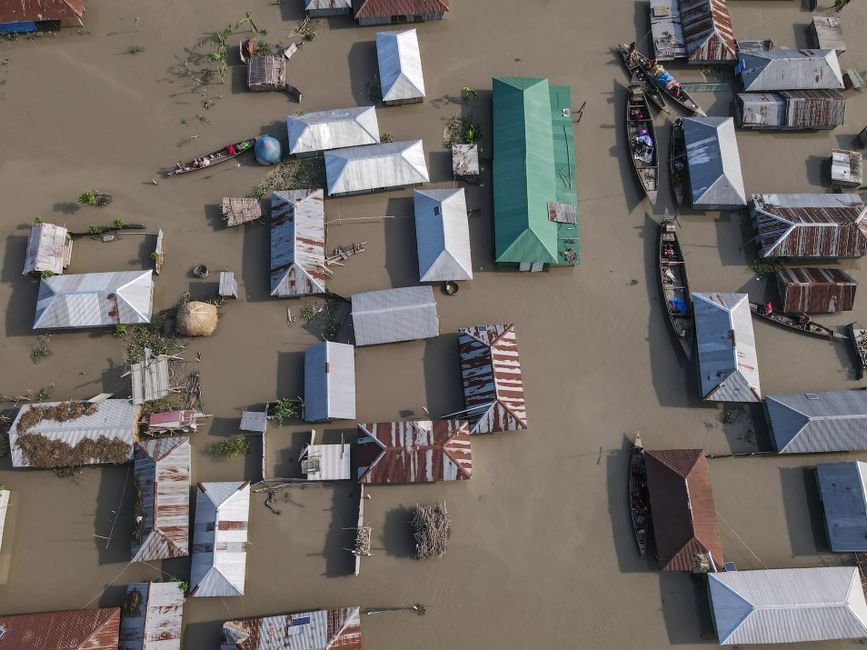
Muhammad Amdad Hossain/Pexels
A catastrophic flood triggered by a glacier collapse swept through Nepal on August 26, 2026, devastating communities and leaving at least 165 people dead and nearly 1,500 missing, including hundreds of foreigners. The flood surge, driven by a torrent of mud, debris, and boulders, rushed more than 60 miles downstream, shocking scientists with its intensity and speed.
Unprecedented Force and Scale of the Disaster
Researchers studying the Himalayan region described the flood as one of the most powerful and destructive events they have witnessed in decades. Alton Byers, a seasoned glaciologist at the University of Colorado’s Institute of Arctic and Alpine Research, called the event “almost incomprehensible” in its force. The debris flow, consisting of millions of cubic yards of rock, ice, and mud, reportedly reached speeds of up to 186 miles per hour, equivalent to a rushing slurry of cement-like material carrying enormous boulders along its path.
Videos and satellite imagery captured the scale of destruction as homes, vehicles, and infrastructure were obliterated. The floodwaters surged rapidly, with water levels in downstream rivers climbing by more than 27 feet in just 30 minutes, according to the International Centre for Integrated Mountain Development.
Scientific Insights Into the Glacier Collapse
While the exact sequence of events remains under investigation, preliminary assessments suggest the disaster originated near Langtang Lirung peak along the Nepal-Tibet border. Analysis by Jeffrey Kargel of the Planetary Science Institute and international colleagues points to two main failure sources: a rockslide near the summit and a simultaneous collapse of glacier ice and snow a few kilometers to the east. Extensive failure likely occurred across the intervening terrain.
A seismic event recorded at 8:37 a.m. local time was initially classified as an earthquake but later identified as a 5.2 magnitude landslide triggered by the glacier collapse. This massive displacement sent an enormous volume of ice and rock downhill, melting as it descended and releasing the water that fueled the flash flooding.
Dan McGrath, a geosciences professor at Colorado State University, noted that the glacier collapse produced a hyper-concentrated flow—a dense slurry moving with tremendous speed and destructive power, capable of carrying boulders as large as houses.
Human Toll and Ongoing Rescue Efforts
The flood has had a devastating human impact. Local authorities report at least 165 fatalities with nearly 1,500 people still unaccounted for. Among those missing are approximately 800 foreigners, including dozens of Americans, many of whom were hikers or tourists in the popular trekking region. Rescue operations are ongoing despite challenging terrain and the scale of destruction.
Survivors have been evacuated using heavy machinery, including backhoe loaders, as ground access remains limited. The Nepalese government, supported by international aid organizations, has mobilized resources to provide relief and search for those trapped or injured.
Climate Change and Increasing Risks in the Himalayas
Although scientists caution that it is too early to definitively link this specific event to climate change, experts say the frequency and magnitude of such disasters are rising in the Himalayas—a region warming faster than most of the world. The melting of glaciers and destabilization of mountain slopes increase the risk of collapses and flash floods.
Byers emphasized that as global temperatures continue to rise, communities in high mountain areas face growing hazards. Improved monitoring and early warning systems are crucial to mitigate future risks, but the rapid onset of events like this glacier collapse makes preparation difficult.
The Nepal flood disaster of August 26, 2026, stands as a stark reminder of the vulnerability of mountain regions to climate-driven changes and the profound consequences they can have on human lives and ecosystems.