NC Democrats Demand Transparency on Alleged GOP Pressure Over Campus Voting Site
North Carolina Democrats are calling for answers regarding alleged Republican pressure on local election officials concerning a campus voting site.
Associated Press
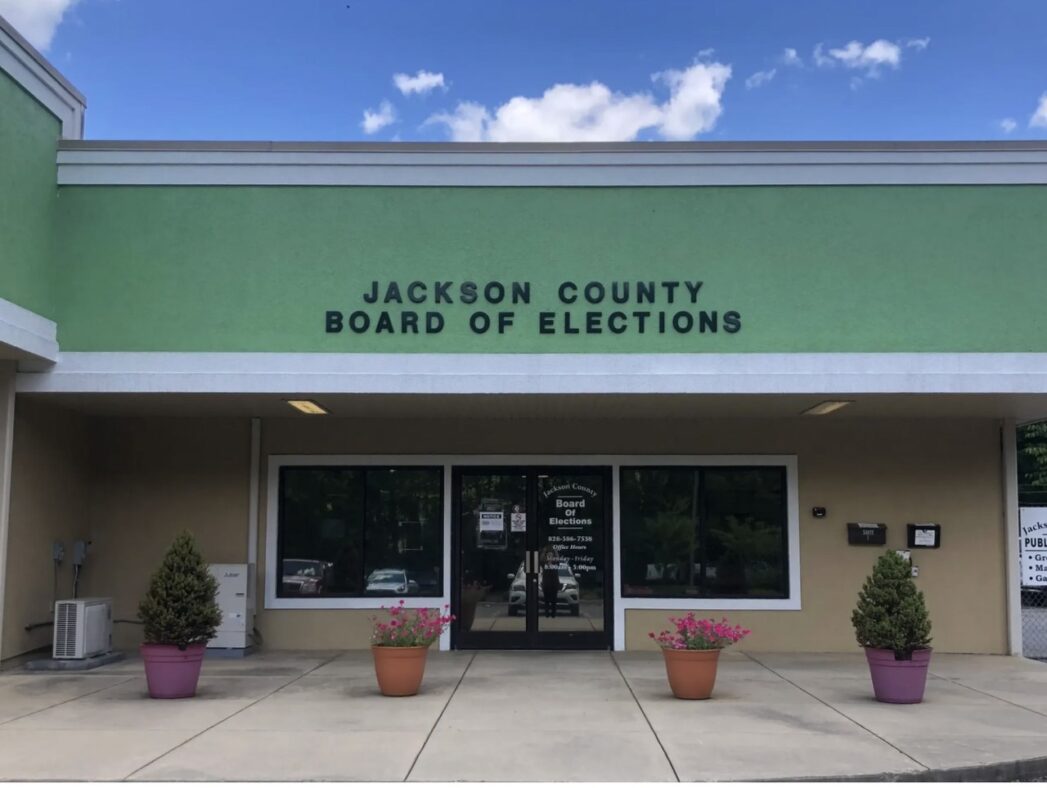
A brewing controversy in Jackson County, North Carolina, has prompted top Democratic state leaders to demand greater transparency regarding alleged pressure exerted by the Republican party on local election board members. At the heart of the matter is a contentious decision to approve or reject an early voting location at Western Carolina University, a move that has exposed deep partisan divisions within local election administration.
Accusations of Party Coercion Emerge
The public spotlight intensified this week after Republican members of the Jackson County Board of Elections revealed they had faced significant pressure from within their own party to oppose a proposed early voting site on the Western Carolina University campus for the upcoming fall elections. Board Chairman Bill Thompson and member Jay Pavey both stated during a recent board meeting that they were instructed by party officials in Raleigh to vote against the campus location. Pavey went further, alleging he was explicitly warned of potential removal from his position if he did not align his vote with the party’s directive.
This unusual public admission of party coercion has galvanized state-level Democrats, who are now calling for a thorough investigation into the matter. North Carolina Democratic Party Chairwoman Anderson Clayton and N.C. House Democratic Leader Robert Reives have publicly stated their belief that the public has a right to know the extent and nature of this alleged influence. Their concerns extend beyond Jackson County, with questions being raised about whether similar pressures are being applied to Republican election board members in other counties across the state.
Democratic Leaders Seek Accountability
In response to the revelations, House Democratic Leader Robert Reives issued a strong statement expressing his dismay. “It is troubling to hear that members of the Jackson County Board of Elections are receiving pressure and apparently threats of removal if they do not vote in lockstep with how Republicans in Raleigh tell them,” Reives stated. He emphasized the need for accountability, adding, “Taking these claims at face value, North Carolinians deserve to know who communicated these ‘orders’ and under what authority, and whether this is happening in other counties as well.” The call for transparency aims to shed light on the inner workings of election board decisions and to ensure that these critical processes are free from undue partisan interference.
Despite the reported pressure, Jay Pavey ultimately cast his vote with the board’s two Democratic members to approve the early voting site at Western Carolina University. Chairman Bill Thompson stood as the sole dissenting vote against the campus location. Adding another layer to the situation, the board’s third Republican member, Wes Hanemayer, who had also supported the WCU site, resigned from the board last week. Pavey indicated that both he and Hanemayer had been summoned before the Republican Party Executive Committee to explain their support for the campus polling location, further underscoring the internal party scrutiny.
Questions Raised About State Auditor’s Involvement
During the board meeting, Democratic Jackson County Elections Board member Roy Osborn directly challenged Chairman Bill Thompson, asking if he had received a directive from the office of State Auditor Dave Boliek to support an alternative voting site to the WCU campus. Thompson’s response was affirmative, stating, “I will state that. Let’s get it out… I’m going to vote for the rec center.” This exchange directly implicated the State Auditor’s office in the pushback against the campus voting site, prompting condemnation from Democratic leadership.
Senate Democratic Leader Sydney Batch characterized Boliek’s alleged involvement in local election matters as “ridiculous” and “absolutely scandalous.” Speaking to reporters, Batch emphasized the importance of impartiality in election administration, stating, “To have political pressure put on you when you’re supposed to be impartial is absolutely scandalous, scandalous.” The comments from Democratic leaders highlight a broader concern that partisan politics is encroaching upon the independent functions of local election boards, potentially compromising the integrity of the voting process.
State Elections Board Chairman Acknowledges Partisan Pressure
Francis De Luca, the Republican Chairman of the State Board of Elections, acknowledged on Wednesday that political parties, both Republican and Democratic, do exert pressure on local election board members. While he stated he was unaware of the specific details surrounding the Jackson County decision, De Luca conceded that such pressure is a common occurrence. “The parties on both sides put pressure on local members to do what they want. Both Republicans and Democrats,” he told NC Newsline. De Luca was appointed to the state board by Auditor Dave Boliek after legislative Republicans altered appointment powers previously held by the governor, shifting the state board to Republican control.
Earlier in the year, De Luca had expressed personal reservations about campus voting sites, citing difficulties with parking. However, he maintained on Wednesday that his appointment by Boliek did not come with any expectation or implication that he would vote against campus polling locations. “There was never any discussion of that,” De Luca said, adding that Boliek’s sole directive to him was to “try and bring accountability and make sure the law was applied evenly.”
Democrats Assert Voters’ Interests vs. Alleged GOP Obstruction
North Carolina Democratic Party Chairwoman Anderson Clayton issued a statement asserting that Democratic election board members are acting in accordance with the public’s desires. “We don’t have to threaten Democratic board members to keep polling locations open longer, allow for campus voting sites, and extended early voting,” Clayton stated. “That’s what the public is asking for at these meetings.” She contrasted this with the alleged actions of Republicans, particularly Dave Boliek, whom she accused of “actively threatening their own members not to listen to the majority of those who are showing up at these meetings.” Clayton called for transparency from Boliek and former Republican operative Dallas Woodhouse, who was hired by Boliek to assist county election boards, regarding “what other demands they’ve made to limit access to ballot boxes across the state.”
Historically, Republicans have shown a greater tendency to oppose campus voting locations, while Democrats generally support them. This partisan divide was evident in the March primary when the Republican majority on the state board rejected early voting site proposals on four college campuses. The College Democrats of North Carolina and students who challenged this decision were represented by a Democratic law firm specializing in voting rights cases.
Concerns Over Access and Voter Demographics
In his interview with NC Newsline, Jackson County Board Chairman Bill Thompson reiterated his primary objection to the WCU site, citing parking challenges and the physical accessibility of the proposed location at the Health and Human Services Building, particularly for older voters. He also mentioned concerns about voters being unfamiliar with the new location, which would be used for the first time. Thompson pointed out that WCU had previously hosted a polling place at its university center from 2016, which had been utilized in multiple elections without issue.
Thompson also expressed his belief that the campus site would disproportionately favor Democratic voters, citing the voter registration data on campus. While he did not explicitly mention threats during the board meeting, Thompson acknowledged on Wednesday that he, too, could face removal if he deviated from the Republican party’s stance. “It’s just part of the party,” he remarked, adding, “I serve at their pleasure a little bit. They can do away with me. It is a part of it. It’s like the Democrats — they listen to their party. That’s just politics.” His comments suggest a resigned acceptance of partisan influence within election board operations, framing it as an inherent aspect of political life.
The ongoing dispute in Jackson County highlights the broader tensions surrounding election administration in North Carolina. As Democrats call for greater transparency and accountability, the alleged instances of party pressure raise significant questions about the independence and impartiality of local election boards, and the potential impact on voter access and democratic processes across the state.