North Carolina Governor Unveils Executive Order to Confront Housing Crisis
Governor Josh Stein signs executive order to boost housing supply and affordability, addressing a projected shortage of over 750,000 homes.
Associated Press
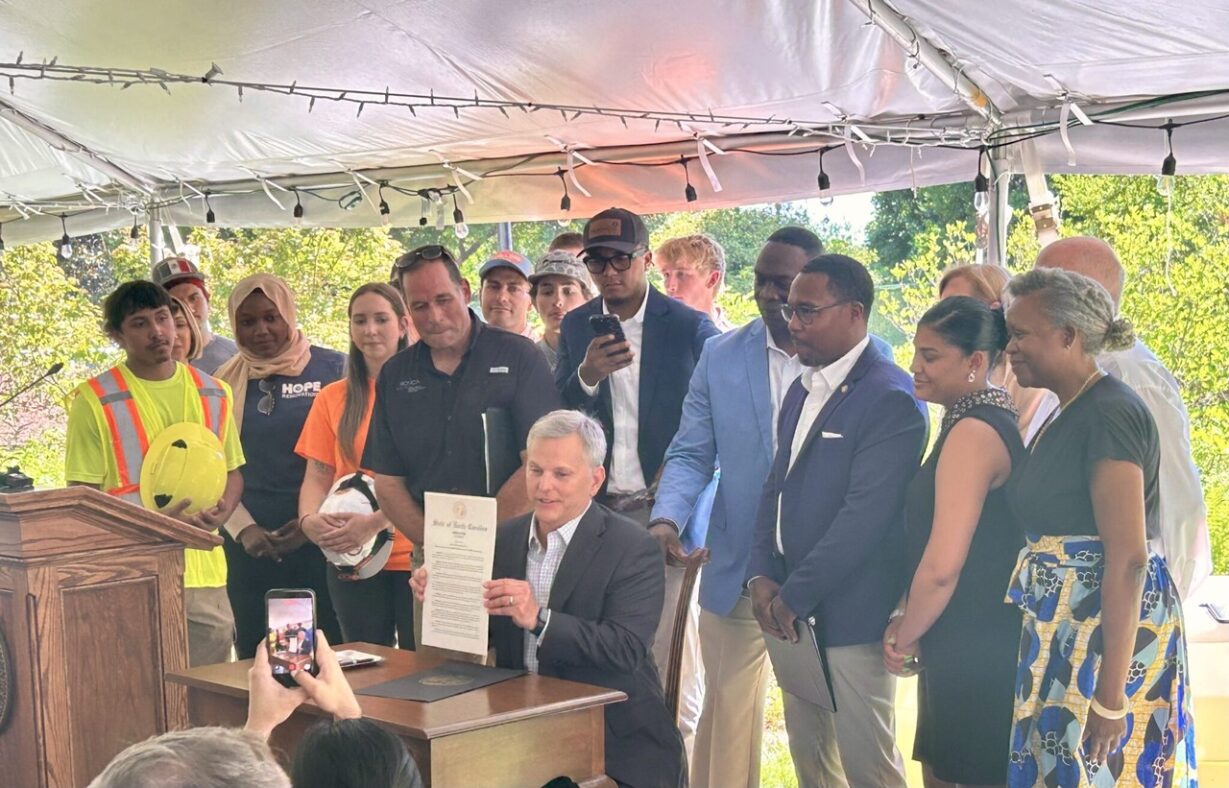
Governor Josh Stein has initiated a significant statewide effort to address North Carolina’s escalating housing affordability challenges. On Tuesday, he signed an executive order that mandates state cabinet agencies to collaborate on strategies aimed at increasing both the supply and affordability of housing across the state.
The governor highlighted the urgency of the situation, noting that projections indicate North Carolina will face a deficit of more than 750,000 housing units by 2029. “People want to live and work here, but we simply do not have enough homes to meet that growing demand,” Stein stated. He emphasized that housing costs represent the most substantial expense for many families, and when rent or mortgage payments consume an excessive portion of income, it leaves less for other necessities.
A comprehensive study, “2024 Housing Supply Gap Analysis, State of North Carolina,” commissioned by key industry stakeholders, confirmed this critical shortfall. The analysis anticipates a gap of 764,000 total housing units by 2029, encompassing 322,000 rental units and 442,000 units available for purchase.
Addressing the Needs of Essential Workers
Governor Stein underscored the necessity for more housing options accessible to middle-income professionals, including educators, healthcare providers, and public safety officers. He pointed out that in 23 of North Carolina’s 100 counties, teachers’ salaries are insufficient to cover the average rent. Furthermore, the data reveals stark disparities for skilled tradespeople, with carpenters in Charlotte able to afford only about 20% of entry-level homes, and in Raleigh, that figure drops to a mere 8%.
“They can build the homes, they just can’t afford to live in the homes they’re building,” Stein remarked, illustrating the disconnect between labor and housing costs.
Strategic Appointments and Initiatives
During a press conference attended by a diverse group of housing advocates, policymakers, and local officials, Governor Stein announced the appointment of Janneke Ratcliffe as his Senior Advisor for Housing. Ratcliffe will be instrumental in fostering collaborations with private, nonprofit, philanthropic, academic, and faith-based organizations to advance the administration’s housing objectives and expedite the development of affordable housing solutions.
Ratcliffe, formerly Vice President of the Housing and Communities Division at the Urban Institute, acknowledged the varied and extensive housing needs across North Carolina. She cited examples such as Jones County requiring only a few hundred homes, while Chatham County faces a significant 33% deficit. Wake County, she noted, needs over 100,000 units by 2029.
“We can’t just build more high-end homes and luxury apartment buildings,” Ratcliffe stated. “We need multigenerational options, like backyard cottages, low-cost infill; and we need starter homes so that our young households can put down roots right here in our communities.”
Community-Level Solutions and Legislative Support
Maysville Town Manager Schemata Brown was invited to the signing, highlighting her town’s proactive approach. Maysville is developing a $10 million, 40-unit workforce and senior housing complex designed to be affordable for entry-level professionals. This initiative is part of the “Our State, Our Homes” program, which supports communities across North Carolina in addressing housing shortages.
“For communities like Jones County and the town of Maysville, housing is not an abstract policy discussion,” Brown commented. “It’s about whether families can stay, grow and thrive in places they call home.” She described Maysville’s revitalization efforts, including downtown building conversions for affordable housing, and its strong school district and new workforce development center.
Governor Stein also indicated bipartisan support for legislative measures aimed at increasing housing supply, such as bills that would ease parking restrictions and eliminate minimum lot-size requirements in new developments. He expressed hope that the legislature would collaborate to implement proposals that boost housing availability.
Yolanda Winstead, president of the nonprofit Downtown Home Improvement Corporation Inc. (DHIC), a prominent affordable housing developer, shared that a major hurdle for organizations like hers is the limited capacity to meet the overwhelming demand. “As successful as organizations like ours have been in adding to the [housing] stock, we’re losing affordable housing stock just as quickly as we can, probably faster than we can build,” she noted, referencing the expiration of federal affordability restrictions on existing properties.
Minimum Wage and Future Outlook
Addressing broader affordability concerns, Governor Stein voiced strong support for increasing North Carolina’s minimum wage, which has remained at $7.25 per hour since 2009. He described the current wage as “incredibly much too low” and called for a significant increase. Proposed legislation, the Fair Minimum Wage Act (House Bill 1059), aims to raise the minimum wage to $15 per hour, with annual adjustments for inflation, while offering a slightly lower rate for small businesses to account for their differing financial capacities.
The governor’s executive order and subsequent announcements signal a multi-faceted approach to tackling North Carolina’s housing crisis, combining administrative action, strategic appointments, community partnerships, and legislative advocacy.