Algae Blooms Turn Lincoln Memorial Reflecting Pool Green After Renovation
Experts attribute the green hue to common algae growth, citing factors like sunlight, stagnant water, and the pool’s newly repainted, darker surface.
Rachel Treisman/NPR
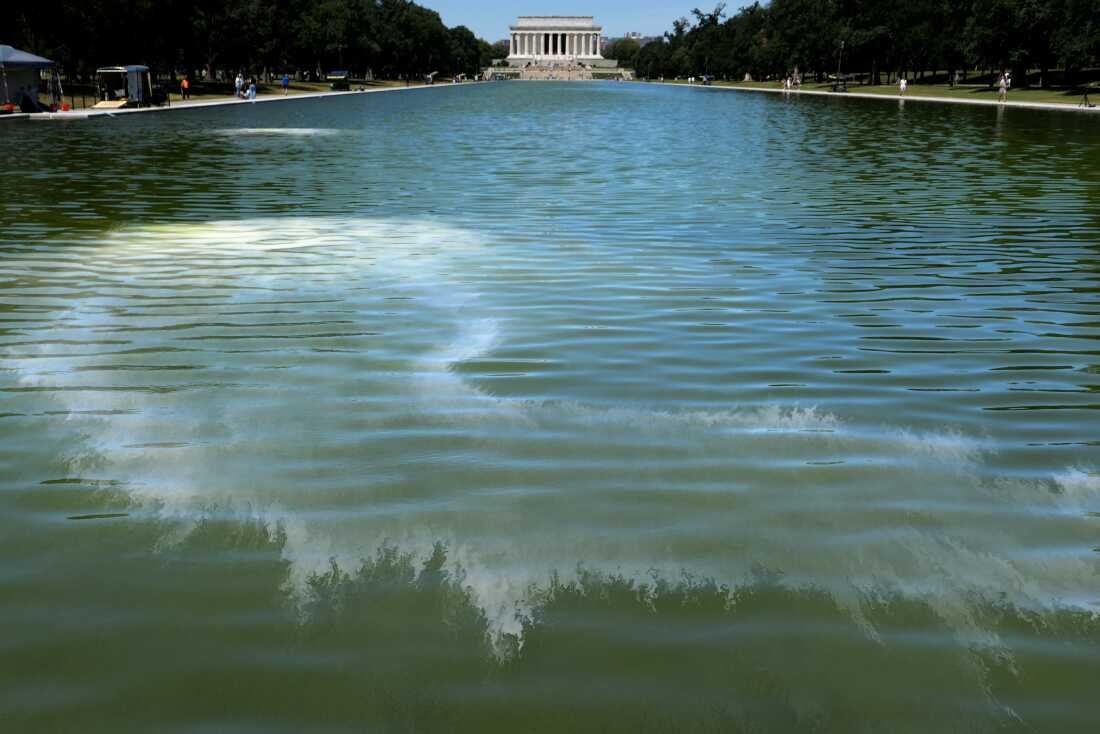
The Lincoln Memorial Reflecting Pool in Washington, D.C., has turned green due to algae blooms, a phenomenon experts say is to be expected under the current conditions. The pool was recently refilled with water after President Trump oversaw a renovation that repainted its bottom “American flag blue.” While the multi-million dollar project was touted as a success, the pool has since developed a verdant color.
Aquatic ecology professor Rosalina Stancheva Christova of George Mason University confirmed that the algae is from the genus Desmodesmus, which is growing in excessive amounts but is not toxic. She noted that this common green algae is prevalent in the region, especially at this time of year, and the reflecting pool offers “excellent conditions” for its growth due to shallow, stagnant water, strong sunlight, and lack of shade.
Christova suggested that disturbances from the recent renovations may have accelerated the algae blooms by affecting the balance of nutrients in the pool. Steve Goodale, a swimming pool specialist known as “Swimming Pool Steve,” agreed, stating that the new, darker interior surface will absorb more sunlight, leading to warmer water and more prolific algae growth. The Trump administration attributed the algae to residual material in supply lines, exacerbated by extreme temperatures that reached heat index values of 95 degrees and above.
Algae has periodically affected the reflecting pool over the years, including after its last major renovation in 2012 and in 2019 when a broken water line required draining millions of gallons. An Interior Department spokesperson stated that algae and other contaminants have “long plagued the Reflecting Pool since 1922.”
To combat the algae, the Trump administration is using hydrogen peroxide, described as a milder treatment than chlorine with no harmful side effects to marine life or the environment. They are also employing “high-tech nanobubble ozone technology,” which the department claims is validated by universities and NOAA. According to the Interior Department’s X post on Wednesday, this nanobubble technology had “very effectively killed the algae,” with National Park Service crews scheduled to vacuum the dead algae.
Despite these efforts, much of the pool remained bright green as of Thursday morning. Workers were seen using nanobubble machines and mobile vacuuming systems, known as “trash pumps,” to remove the algae. Passersby, including civil engineer Loay Hidmi, observed the ongoing work and noted a gradual change, expressing hope for sustained clarity. Hidmi, however, raised concerns about the potential for algae to return given the favorable conditions, questioning the overall process and underlying filtration issues.
Goodale echoed the sentiment, comparing the current approach to mowing the lawn instead of addressing the root cause of nutrient imbalances, suggesting that pipes should be flushed before refilling and that underlying filtration issues need to be resolved.