Canada’s Defense Minister Rejects Pentagon Criticism Over Military Spending
Canada’s Defense Minister David McGuinty responds to Pentagon memo criticizing defense funding and strategy, affirming Canada’s sovereignty and spending goals.
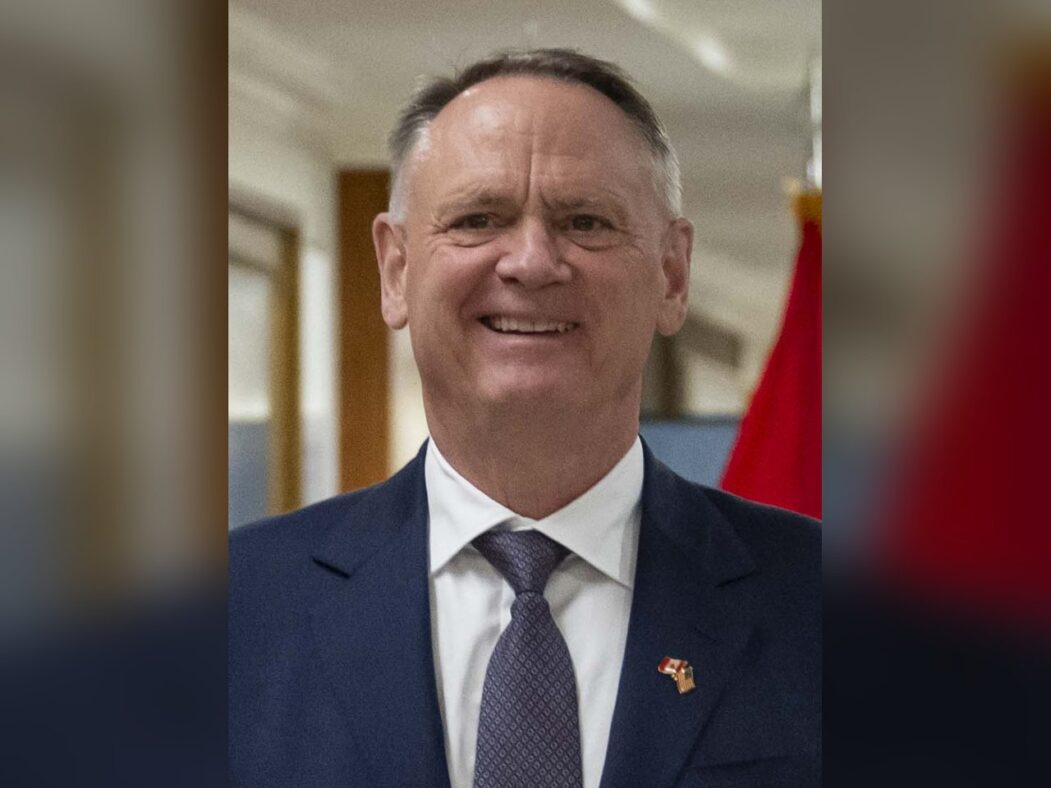
SECWAR/Wikimedia Commons
Canada’s Defense Minister David McGuinty strongly rejected criticism from the Pentagon regarding Canada’s defense spending and strategy during remarks on November 24, 2026. The dispute intensified after a Pentagon memo accused Ottawa of failing to adequately contribute to North American defense and relying on U.S. taxpayers for decades.
Pentagon Criticizes Canada’s Defense Strategy and Spending
The Pentagon issued a blunt fact sheet highlighting what it described as Canada’s defense shortfalls. The memo stated, “Canada’s defense shortfalls speak for themselves,” and urged Canada to “get serious and focused.” The Pentagon accused Ottawa of lacking a realistic plan to meet NATO military targets and criticized delays in major defense funding increases until after Canada’s 2029 election. It also warned that reassessing the acquisition of 88 U.S.-built F-35 fighter jets could cause operational uncertainty for the North American Aerospace Defense Command (NORAD).
Canada’s Defense Minister Asserts Sovereignty and Spending Commitments
Responding to the memo, McGuinty emphasized Canada’s sovereignty, stating, “Canada is a sovereign nation. I’ll be very direct. We don’t report to the United States.” He highlighted that Canada is on track to allocate 5% of its gross domestic product (GDP) toward defense and security by 2035, in line with NATO commitments. McGuinty noted that NATO members agreed to reassess this target during a 2029 review, saying, “We also said by 2029 we would be examining that 5% commitment.” He further pointed out that Canadian projections expect defense spending to reach 4% of GDP by 2030, a significant increase from 1.25% recorded 14 months earlier.
Impact of U.S. Policy on Canada-U.S. Defense Relations
The Pentagon’s critical tone coincided with a secret memo from Pete Hegseth that restricted American officials from participating in Canadian defense and policy forums. Since 2025, U.S. policy prohibits defense staff from attending the Halifax International Security Forum, a major annual gathering of defense personnel and experts. Democratic U.S. Sen. Andy Kim publicly criticized this policy, noting, “Hegseth did not allow a single American servicemember in uniform to show up.” Meanwhile, Republican U.S. Sen. Mike Rounds stated that the policy should not affect routine military operations or intelligence sharing between the two countries. McGuinty reassured that operational collaboration through NORAD and NATO continues without interruption, affirming, “We’re making the investments we announced. We’re executing on those plans.”
Canadian Fighter Jet Acquisition Reassessment
Canadian Prime Minister Mark Carney initiated a reassessment of the scheduled purchase of 88 U.S.-built F-35 fighter jets following President Donald Trump’s threats against Canadian sovereignty and the imposition of trade tariffs. This evaluation considers alternatives such as the Swedish-produced Gripen aircraft, which offers domestic manufacturing advantages. American officials have cautioned that a mixed fleet could exacerbate staffing challenges and complicate NORAD operations.
The ongoing exchange highlights the complex dynamics between Canada and the United States regarding defense commitments, expenditures, and operational cooperation amid evolving geopolitical challenges.