Democrats Push to Reverse Trump’s Expansion of Presidential Powers
Democrats prepare bills and ethics rules aiming to rein in President Trump’s expanded executive powers and emergency authorities.
NASA/John Kraus/NASA
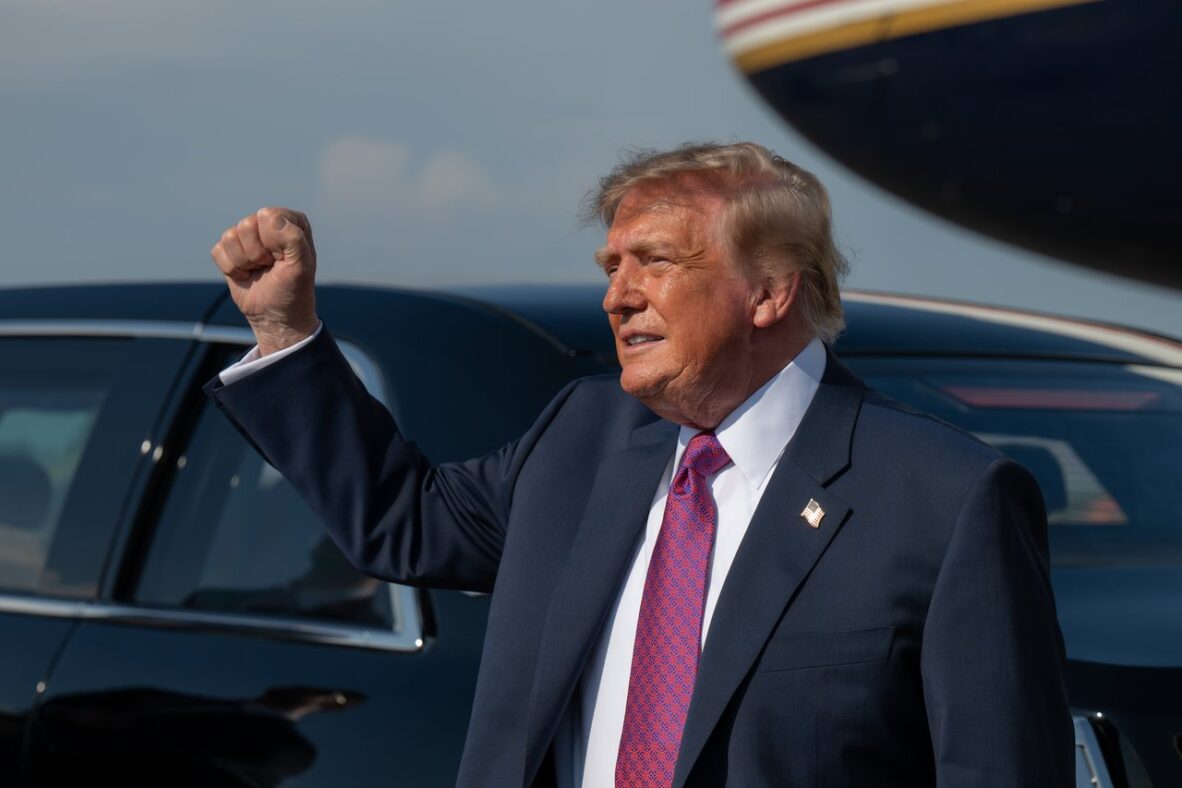
Across Washington, Democratic lawmakers and legal experts are mobilizing to undo the extensive changes President Donald Trump has made to the presidency. As the midterm elections approach, Democrats seek to limit the sweeping executive authority Trump exercised, aiming to restore traditional checks and balances on presidential power.
Legislative Efforts Target Emergency Powers and Ethics
Several House Democrats are drafting legislation to curtail the president’s emergency powers, which Trump employed aggressively and in new ways. Representative Suzan DelBene of Washington and Don Beyer of Virginia have introduced a bill to prohibit a president from imposing tariffs under the guise of a national emergency without explicit congressional approval. Trump has declared about a dozen emergencies to justify diverse policies, including tariffs, deportations, and National Guard deployments.
Rep. Jamie Raskin, Maryland Democrat and top House Judiciary Committee member, has also introduced bills aimed at restricting presidential abuses. These include requiring public review of White House renovations. One bill would block presidents from negotiating monetary settlements with their own government, a response to a federal judge’s recent criticism of Trump’s attempts to shield himself from IRS scrutiny through court settlements.
Historical Context and Partisan Responses
The struggle over presidential power is not new. Past presidents like Ronald Reagan and George W. Bush also expanded executive authority, sometimes controversially. Reagan’s firing of over 11,000 air traffic controllers in 1981 and Bush’s secret approval of harsh interrogation tactics after September 11 highlight this trend. Barack Obama further extended presidential reach with programs like DACA and drone strikes. Conservative voices, like Tiffany Justice of Heritage Action, dismiss the Democrats’ reform plans as hypocritical, arguing that Democratic presidents would resist similar limits.
White House officials defend Trump’s record, emphasizing adherence to legal processes. A spokesman noted the administration’s compliance with appellate courts, while Communications Director Steven Cheung asserted that Trump’s policies will leave a lasting imprint on future presidencies.
Ethical Reforms to Prevent Self-Dealing
Beyond emergency powers, Democrats are also targeting ethics reforms to prevent conflicts of interest and self-dealing by future presidents and first families. Rahm Emanuel, former Chicago mayor and potential presidential candidate, unveiled a proposal that would ban all three branches of government from trading stocks or participating in prediction markets. His plan also calls for blind trusts for officials worth over $1 million, aiming to increase transparency and curb financial conflicts.
The Challenge Ahead
Raskin acknowledges the enormity of the task, comparing the effort to a “massive reconstruction” that will take decades. “We will have to go department by department, subject by subject, and public purpose by public purpose to determine what we salvage and what we re-create,” he said. Whether Democrats can succeed depends in part on their expected gains in Congress, which could provide the legislative muscle to impose meaningful reforms on the presidency.
As President Trump continues to wield expansive executive power, Democrats’ push to reverse his changes will shape the future balance of authority in Washington and the limits placed on the office of the president.