Denmark Rejects Trump’s Claim of US Control Over Greenland After Security Deal
Denmark refutes President Trump’s claim that the US gained control of Greenland after a security agreement signed on September 22.
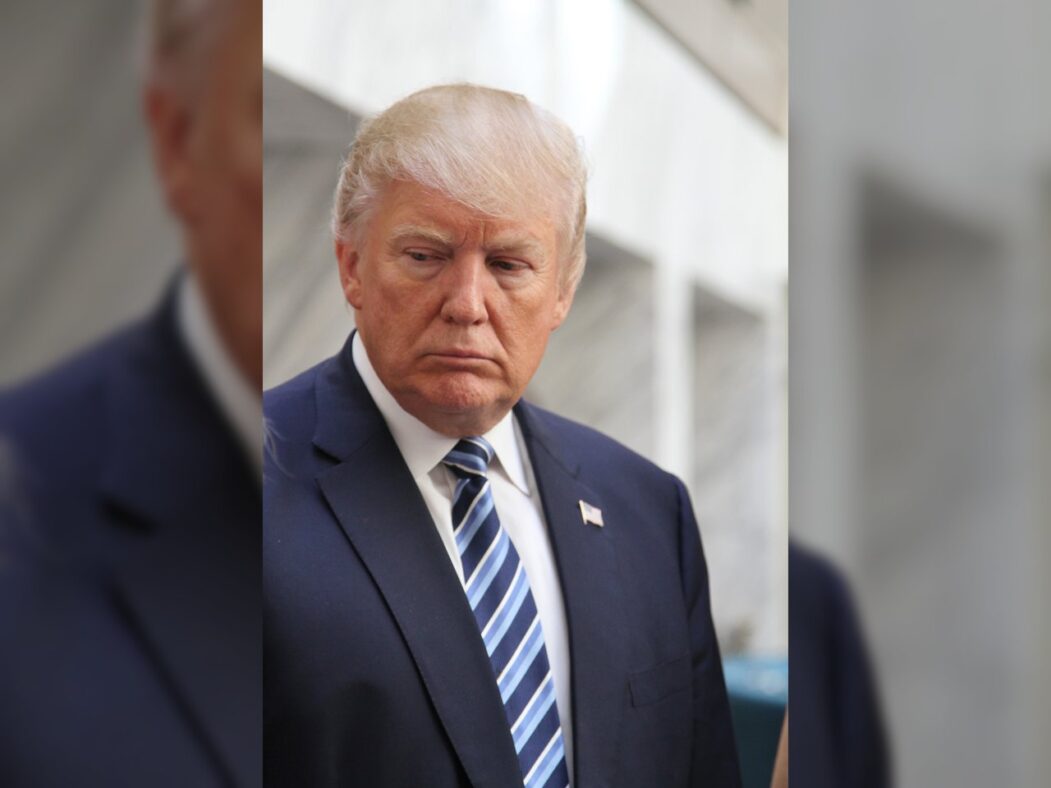
Gedalia Vera/Wikimedia Commons
Denmark has publicly challenged President Donald Trump’s statement claiming the United States has “got Greenland” following a recent security agreement. The controversy arose after Trump made remarks about the deal in connection with NATO discussions, prompting Danish officials to clarify the island’s status within the Kingdom of Denmark.
Trump’s Remarks on Greenland and NATO Discussions
On Thursday evening, President Trump spoke to reporters about the possibility of reducing U.S. troop levels in Europe after talks with NATO Secretary-General Mark Rutte. During the discussion, he criticized NATO’s handling of Iran and cited the Greenland agreement as a factor influencing his stance toward European allies. Trump said, “We discussed it at length. They weren’t very helpful to us on, you know, Iran. They weren’t very helpful. But, we got Greenland, and we got Greenland. That’s three times the size of Texas, and that made me feel a little bit differently, to be honest.”
Danish Officials Reject Claims of US Ownership
The following morning, Danish officials responded firmly to Trump’s assertions. Speaking to Newsweek on condition of anonymity, one official stated, “Greenland is part of Denmark. Trump hasn’t got Greenland.” Another added, “Greenland is a part of the Kingdom of Denmark and the Security Agreement that the US signed states that.” These remarks underline the Danish government’s position that sovereignty over Greenland remains with the Kingdom of Denmark despite the new agreement.
Details of the Security Agreement Signed in New York
The security agreement in question was signed on September 22 in New York by President Trump, Danish Prime Minister Mette Frederiksen, and Greenlandic Prime Minister Jens-Frederik Nielsen. It explicitly recognizes the Greenlandic people’s right to self-determination and affirms the sovereignty and territorial integrity of the Kingdom of Denmark, as stated by Frederiksen at the time.
The deal revises the 1951 defense agreement concerning the U.S. military presence in Greenland, allowing for a substantial expansion of American operations. The U.S. is permitted to increase activities at the Pituffik Space Base and establish two additional defense areas in Narsarsuaq and Mestersvig, pending mutually agreed technical arrangements. The agreement further facilitates accelerated approval for unmanned facilities outside existing defense zones and opens the possibility for new military installations, contingent on negotiations.
Notably, the agreement references the Trump administration’s proposed Golden Dome missile defense system, highlighting Pituffik’s potential strategic importance. It also includes commitments to award military construction and maintenance contracts to Greenlandic businesses “to the maximum extent possible.”
Political Response and Parliamentary Approval
The agreement followed months of diplomatic tension caused by President Trump’s repeated demands for American control over Greenland, which were met with resistance from Nuuk and Copenhagen. Nevertheless, the Danish parliament unanimously approved the security agreement on November 19 with a 109-0 vote, signaling hopes to move past diplomatic difficulties with Washington.
Greenland’s parliament also backed the deal on November 3, with 16 votes in favor, none against, and seven abstentions. Danish Foreign Minister Lars Løkke Rasmussen welcomed the parliamentary support, stating the agreement “removes all uncertainty surrounding Greenland and establishes a proper framework for future cooperation.” However, Rasmussen acknowledged the need to rebuild relations with Washington, noting “there is a significant task of rebuilding ahead.”
Despite diplomatic assurances, Rasmussen confirmed that Washington had not yet informed Copenhagen of any plans to establish new military bases beyond those outlined in the agreement. Washington, however, is pursuing a notable expansion of its military and diplomatic presence in Greenland.
Greenlandic Prime Minister Praises the Agreement Despite Concerns
Greenlandic Prime Minister Jens-Frederik Nielsen described the security pact as “a fantastic agreement for Greenland” in an interview published on November 23. He emphasized the island’s benefit from enhanced protection through closer military cooperation with the United States. Addressing criticism regarding the lack of direct financial compensation for hosting American bases, Nielsen stated, “We receive our payment in the form of protection.”
Nielsen also shared his initial apprehension about dealing with President Trump, expecting difficult questions and behavior, but found the American president to be “polite and nice.”
The Trump administration’s security deal marks a significant shift in U.S. military engagement in Greenland but remains clear that the island’s sovereignty continues under Danish authority, despite President Trump’s repeated claims to the contrary.