Far-Right AfD Triumphs in Saxony-Anhalt, Chancellor Merz Dismisses Majority Hopes
Alternative for Germany scores major win in Saxony-Anhalt; Chancellor Merz warns party won’t secure majority nationwide.
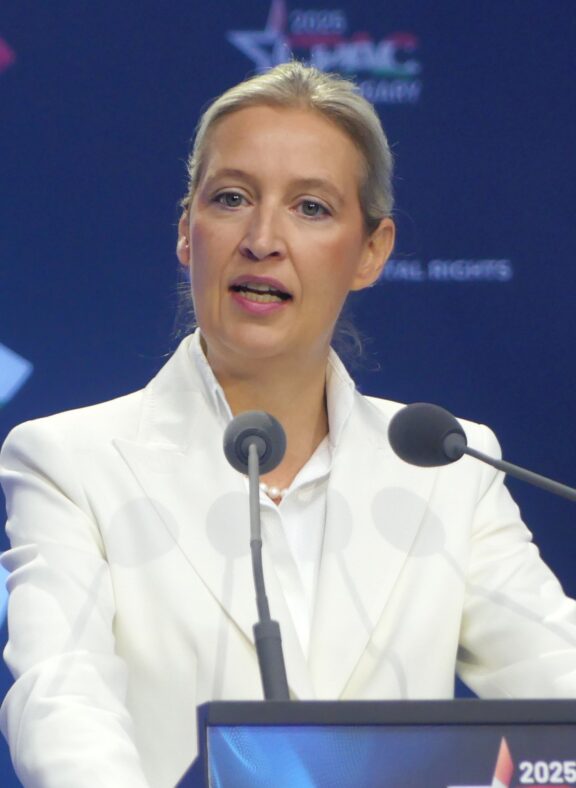
Elekes Andor/Wikimedia Commons
In a stunning regional election upset on Sunday, the far-right Alternative for Germany (AfD) party achieved its largest victory to date in Saxony-Anhalt, dealing a heavy blow to Chancellor Friedrich Merz’s Christian Democratic Union (CDU). Despite the AfD’s surge, Merz remains firm that the party will not secure a majority in Germany’s national parliament, criticizing its stance on Ukraine and migration policies.
AfD’s Breakthrough in Saxony-Anhalt
The AfD’s electoral success in Saxony-Anhalt marks a watershed moment for the party, which capitalized on widespread voter dissatisfaction amid Germany’s sluggish economy and contentious national issues. With the CDU losing nearly half its previous support in the state, AfD co-leader Alice Weidel boldly declared in parliament that the election result signaled a broader desire for political change across Germany.
Weidel taunted Chancellor Merz directly, stating that Saxony-Anhalt voters had not only punished the CDU but effectively “pulverized” it. She predicted that upcoming elections in Berlin and Mecklenburg-Western Pomerania on September 20 would further cement AfD’s mandate to govern, reflecting a growing populist momentum in parts of eastern Germany.
Merz’s Rebuttal: No Majority for AfD
In a combative response, Chancellor Merz acknowledged the AfD’s impressive showing but emphasized that the party fell short of securing an absolute majority required to form a government. He dismissed AfD’s policies as divisive and destructive, warning that their approach would not resonate with the broader German electorate.
Merz sharply criticized the AfD’s opposition to aid for Ukraine and their push to lift sanctions against Russia, framing these positions as dangerously out of step with Germany’s commitment to international security and freedom. He underscored recent tensions, including a thwarted drone attack at Leipzig/Halle airport attributed to Russia, to highlight the risks of AfD’s alignment.
Controversy Over Migration and ‘Remigration’
Migration policy remains a contentious issue in Germany’s political landscape, with AfD advocating for aggressive deportations under the controversial term “remigration.” Chancellor Merz condemned this rhetoric as a euphemism for ethnic cleansing, warning it would disrupt essential services and businesses if implemented.
While Merz supports tightening immigration rules and increasing deportations within coalition consensus, he stresses a distinction between immigrants contributing to society and those without legal residence rights. This nuanced stance contrasts sharply with AfD’s hardline approach, which critics argue fuels division and xenophobia.
International Reactions and U.S. Attention
AfD’s victory attracted applause from far-right groups across Europe and caught the eye of U.S. President Donald Trump. On his Truth Social platform, President Trump celebrated the party’s success, highlighting voter frustration with Germany’s immigration policies and declaring that populist movements are “on the rise.”
Trump’s remarks underscored the transatlantic resonance of nationalist and populist sentiments amid shifting political dynamics in Europe and the United States.
As Germany prepares for crucial state elections later this month, the political landscape remains volatile, with Chancellor Merz facing mounting pressure to navigate the challenges posed by AfD’s ascendance and national policy debates on security and immigration.