Former Officers Allege Defense Secretary Hegseth Fired Them for Questioning Orders
Two former military officers say Defense Secretary Pete Hegseth forced them out for raising concerns about his orders, sparking controversy over Pentagon leadership.
Gage Skidmore/Flickr
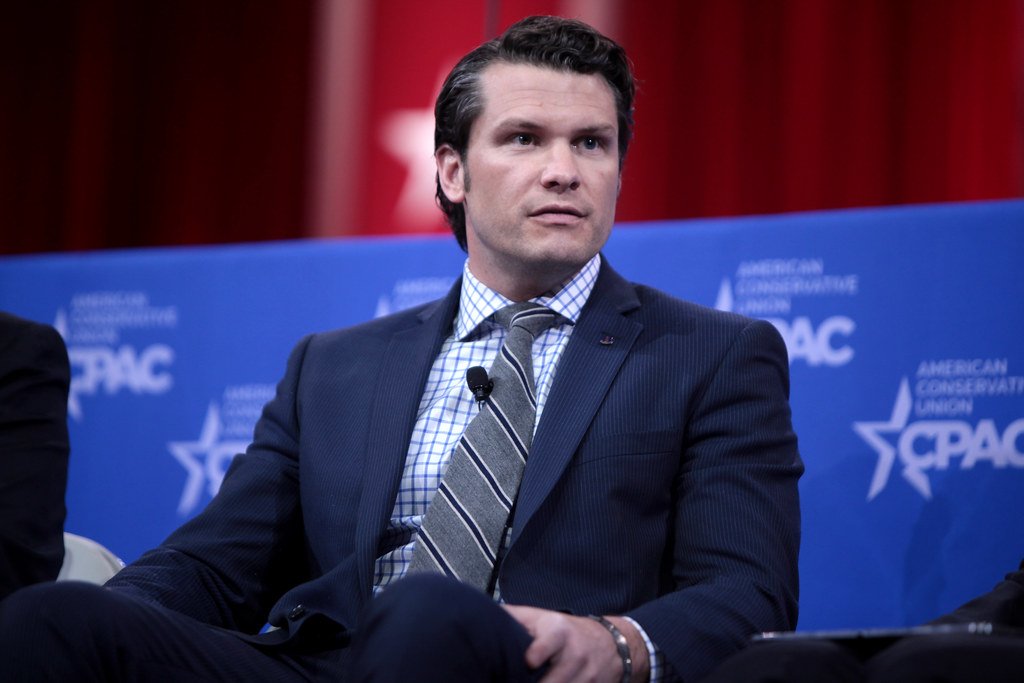
Two former U.S. military officers have come forward anonymously to allege that Defense Secretary Pete Hegseth forced them into early retirement after they questioned his orders, claiming their dissent was considered insubordination. The accusations add fuel to ongoing debates about leadership and personnel changes within the Department of Defense under Hegseth’s tenure, which began early last year.
Allegations of Intimidation and Early Retirement
The officers, who spoke to media anonymously out of concern for possible retaliation, described a Pentagon climate where questioning directives is met with swift and harsh consequences. One officer stated, “Hegseth is intimidated by people who have real warfighting background and don’t just talk about the warrior ethos. I think he just can’t stand people around who will call him on his bulls***.” They emphasized that rather than fostering open dialogue, the Defense Secretary has used his authority to push out those who challenge him.
High-Profile Removals and Blocked Promotions
These claims come amid a broader pattern of personnel shifts at the Pentagon. Nearly three dozen generals and admirals have been fired or sidelined since Hegseth assumed office in early 2025, with an additional 40 senior colonels or Navy captains having their promotions to flag rank blocked. Among the most notable was the removal of Gen. Christopher Donahue, the respected Army commander for Europe and Africa, who had a storied career including leading Delta Force and overseeing the final U.S. troop withdrawal from Afghanistan in 2021.
Critics argue that Hegseth’s actions disproportionately affect women, people of color, judge advocate generals, and officers connected to events the secretary publicly criticizes, such as the Afghanistan withdrawal, which Hegseth has labeled as “chaotic” and “disastrous.” The firings and blocked promotions have raised questions about the Defense Secretary’s true motives, whether reform or consolidation of power.
Leadership Style and Congressional Scrutiny
Observers note that Hegseth’s leadership style appears focused on tightening control rather than encouraging candid discourse. One anonymous officer described a 2025 speech at Marine Corps Base Quantico as a clear signal of intent: “What he was trying to do was establish primacy over the armed forces in a public way. ‘We can get the most senior people in the military to do exactly what we’re going to tell them to do.'”
Hegseth’s approach has not gone unnoticed on Capitol Hill. During a tense Senate Appropriations Committee hearing in July 2026, lawmakers criticized Hegseth’s handling of the ongoing Iran war and challenged the justification for an additional $67 billion in defense funding. The secretary faced harsh accusations, including being called a “failure” and accused of “gross negligence.” Protesters outside the hearing accused him of having “blood on his hands.”
Denials and Calls for Transparency
In response to the allegations, Acting Pentagon Press Secretary Joel Valdez firmly denied that any general or flag officer had been fired for raising concerns, labeling the claims as “completely false.” Valdez urged accusers to come forward publicly if they believed their statements were true, emphasizing the importance of transparency. However, the officers who spoke out said they remain anonymous to protect their pensions and avoid politicizing their service.
Two officers have publicly criticized what they describe as a “Pentagon purge”: Nancy Lacore, now a Democratic congressional candidate in South Carolina, and Charles Q. Brown, former chairman of the Joint Chiefs of Staff, who recently penned an op-ed on the military’s relationship with democracy.
Impact on Troops and Pentagon Culture
The allegations suggest a growing unease among active-duty personnel, with some reportedly conflicted about remaining in service under Hegseth’s leadership. One former officer reflected, “For many of us, part of it is a sense of loyalty to the organization that is bigger than these clowns. We know that in the organization, there are still good people trying to do good things and we don’t want to say things that might hurt them.” This tension underscores the ongoing challenge of balancing leadership authority with morale and institutional integrity within the military.
As the Pentagon navigates these internal controversies amid significant global challenges, the spotlight remains on Secretary Hegseth’s approach and the future direction of U.S. military leadership.